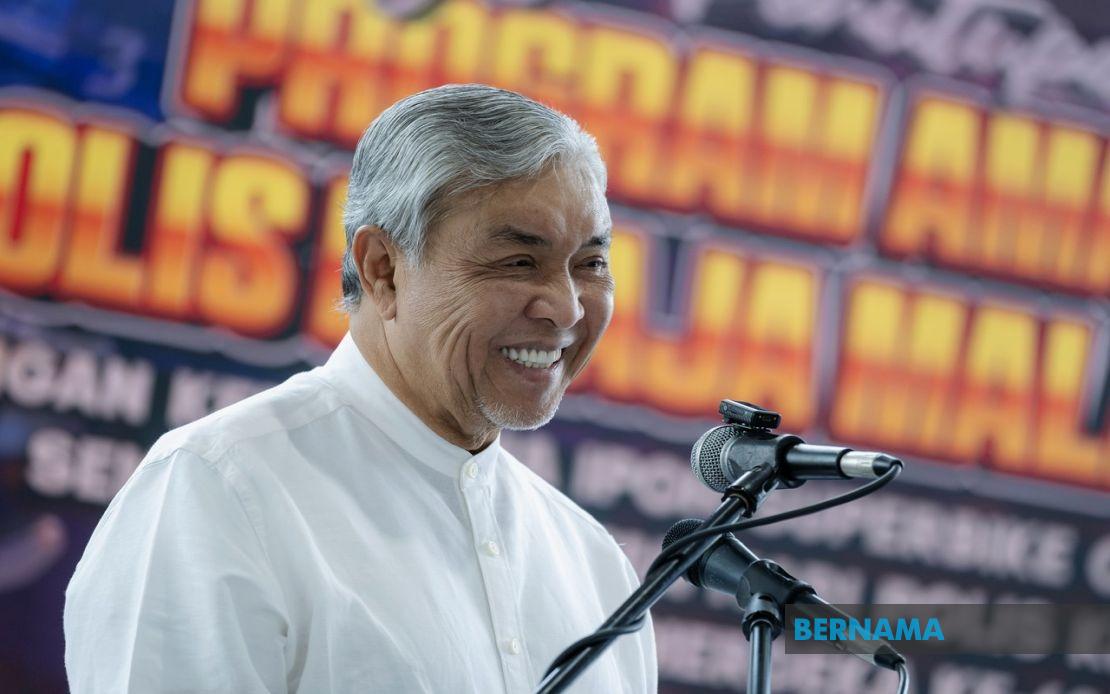
Deputy Prime Minister Datuk Seri Dr Ahmad Zahid Hamidi has underscored the importance of Malaysian motorcyclists adhering strictly to the traffic laws and regulations governing the countries they visit abroad. In addressing the matter, Ahmad Zahid stressed that such compliance forms a cornerstone of maintaining constructive diplomatic relations across Southeast Asia and demonstrating respect for neighbouring nations' sovereignty.
The Deputy Prime Minister's comments emerged during remarks made at the closing ceremony of the Negeri Sembilan Contingent Charity Ride programme, held in partnership with the Ipoh Super Bike Club at the Kuala Lumpur Police Contingent Headquarters. His statements reflected broader concerns about ensuring harmonious cross-border relations among ASEAN member states, particularly as motorcycle tourism and group riding activities have grown in popularity throughout the region.
Ahmad Zahid articulated a straightforward position, asserting that Malaysian citizens must observe the regulatory frameworks established by whatever jurisdiction they enter. He emphasised that the expectation of reciprocal respect—combined with cultural tolerance and comprehension of neighbouring states' legal requirements—formed the bedrock upon which positive ASEAN partnerships could be sustained. His remarks carried an implicit message that voluntary compliance with foreign laws represents not merely a legal obligation but a diplomatic responsibility.
The Deputy Prime Minister's intervention directly addressed a contentious incident that had captured public attention when a group of Malaysian high-powered motorcycle enthusiasts encountered Thai traffic authorities in Hat Yai. Following their interaction with Thai police, the riders received summonses for various traffic violations. Footage and accounts from the incident subsequently circulated widely across social media platforms, with some narratives suggesting that the Malaysian riders had been treated unfairly or subjected to aggressive enforcement.
Thai law enforcement officials subsequently clarified the circumstances surrounding the fines, explaining that the penalties were issued in response to legitimate traffic infractions rather than any form of discriminatory treatment. Specifically, Thai police cited violations including the unauthorised use of flashing warning lights and modifications to motorcycle exhaust systems that generated noise levels surpassing permitted thresholds. This official account underscored that the enforcement action reflected standard regulatory compliance procedures rather than targeted harassment.
Despite the clarifications provided by Thai authorities, the incident highlighted broader tensions that can arise when motorcycle enthusiasts from different nations traverse international borders with vehicles or riding practices that may not conform to local standards. The viral spread of the incident on social media platforms amplified perceptions of unfairness and underscored how regulatory disparities between countries can generate diplomatic friction, particularly when involving popular recreational activities.
Acknowledging that cross-border traffic compliance concerns operate bidirectionally, Ahmad Zahid indicated that Malaysian authorities were simultaneously examining the converse problem: instances where foreign-registered vehicles entering Malaysian territory violated domestic traffic laws. This mutual recognition of regulatory challenges suggested a willingness to address the issue through bilateral cooperation rather than defensive positioning, positioning the matter as a shared challenge requiring coordinated solutions.
The Deputy Prime Minister referenced the Annual Consultation Meeting platform, which regularly brings together Prime Minister Datuk Seri Anwar Ibrahim with other ASEAN leaders, as an appropriate forum for discussing and resolving traffic-related disputes. This institutional framework offers a diplomatic mechanism through which countries can address recurring regulatory conflicts systematically rather than allowing isolated incidents to escalate into broader relationship tensions. The suggestion implicitly acknowledged that ASEAN integration requires ongoing dialogue regarding practical matters affecting cross-border movement.
Beyond addressing the contentious incident, Ahmad Zahid commended the Charity Ride programme for its community-oriented outcomes. The initiative successfully generated RM102,000 in donations through contributions from 53 participating companies. These funds are designated for distribution to 120 Royal Malaysia Police families and 12 welfare institutions situated along the convoy's route, demonstrating how motorcycling activities can serve charitable purposes and strengthen community bonds.
Looking forward, the Deputy Prime Minister expressed enthusiasm for expanding motorcycling-based collaborative initiatives, indicating his intention to participate in an expanded motorcycle convoy programme scheduled for next year. The proposed event would coincide with celebrations marking the 70th National Day and the 220th Police Day anniversary, with Ahmad Zahid suggesting a target participation of at least 220 riders. This forward-looking proposal demonstrates commitment to channelling motorcycle enthusiasm toward organised, law-abiding activities that garner official sponsorship.
The incident and subsequent diplomatic handling underscore an emerging challenge for Southeast Asian governments: reconciling the growing popularity of cross-border motorcycle tourism and recreational riding with the necessity of maintaining robust traffic safety standards. As ASEAN integrates economically and socially, citizens increasingly undertake leisure activities spanning multiple jurisdictions, yet regulatory frameworks remain distinctly national. Ahmad Zahid's intervention effectively framed compliance not as constraint but as prerequisite for sustaining the regional trust essential for continued cooperation.
For Malaysian motorcyclists contemplating international group rides or extended trips through ASEAN countries, the Deputy Prime Minister's message carries unmistakable weight: understanding and respecting each nation's traffic regulations forms a responsibility that extends beyond legal compliance to encompass broader diplomatic considerations. The framework he outlined—mutual respect, tolerance, and dialogue through established consultation mechanisms—provides both guidance for individuals and a policy template for managing comparable cross-border issues that will inevitably arise as regional integration deepens.

