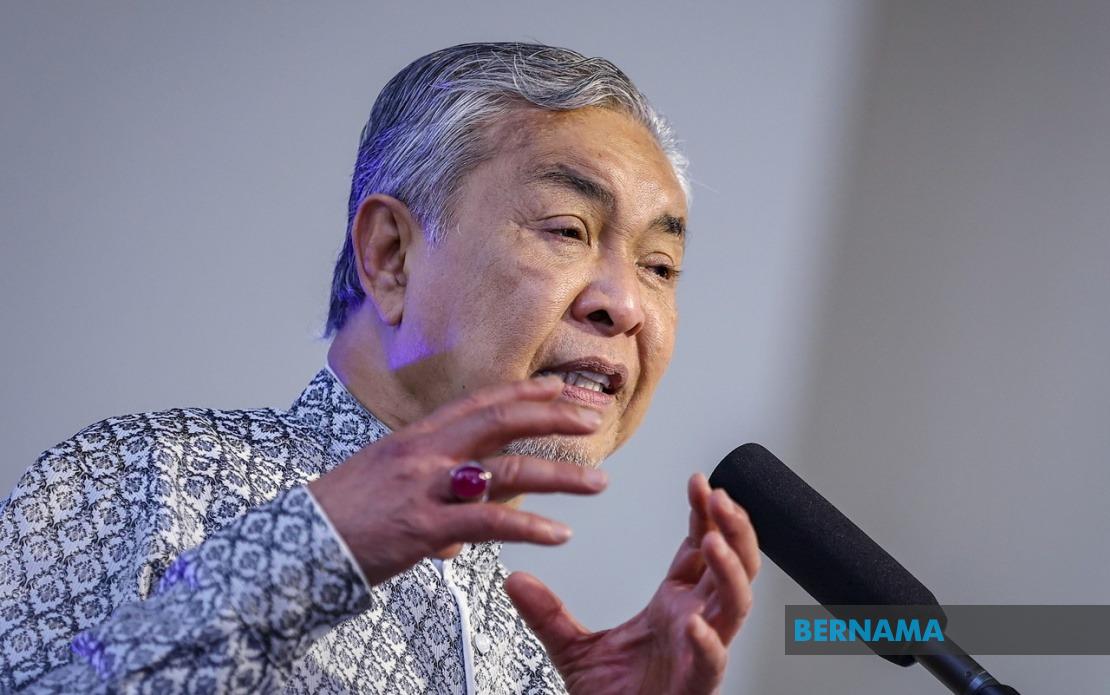
With the Johor state election approaching, Barisan Nasional chairman Datuk Seri Dr Ahmad Zahid Hamidi has sounded a call for restraint and decorum on the campaign trail, urging all contesting parties to abandon the practice of weaponising historical grievances that bear no relevance to the state contest. Speaking after a community event in the Kempas constituency, the Deputy Prime Minister framed the election as an opportunity for a mature political engagement focused on what candidates and parties can deliver to voters, rather than a vehicle for settling old scores or reopening past disputes.
Ahmad Zahid's appeal carries particular weight given the complex political relationships at play in the current contest. Several of the parties running in Johor maintain coalition arrangements at the federal level, meaning their leaders share Cabinet responsibilities and regular ministerial meetings despite competing fiercely in this state election. The BN chairman suggested that dredging up unresolved issues from the past threatens to create awkwardness and tension among politicians who are expected to collaborate constructively in government. His comments reflect a growing recognition that Malaysia's political system, characterised by complex alliances and multi-level governance, requires a degree of professional distance between state-level competition and federal-level cooperation.
Critically, Ahmad Zahid rejected suggestions that Barisan Nasional enters the contest as the favourite, instead characterising the party as an underdog facing a fundamentally altered political landscape in Johor. This framing is significant given BN's mixed electoral fortunes in recent years and the demographic shifts reshaping voter composition across the state. The party secured 40 seats in the previous state election, a respectable but not commanding result, and now faces the challenge of improving that tally in an environment where political allegiances are more fluid and voter expectations have become more demanding.
The Deputy Prime Minister identified a crucial demographic reality shaping the campaign strategy: more than half of Johor's voters are now young people, a generation that came of age during periods of significant economic and political change. This youthful electorate brings different priorities and sensibilities compared to their elders, demanding that political parties articulate clear, forward-looking agendas rather than dwelling on historical divisions. BN appears to have tailored its approach accordingly, with Menteri Besar Datuk Onn Hafiz Ghazi's manifesto placing particular emphasis on addressing youth concerns, most notably through targeted employment opportunities and skills development programmes.
The employment landscape has shifted noticeably in recent months, with the national unemployment rate declining to 2.9 per cent, a figure Ahmad Zahid highlighted as evidence of improving economic conditions. However, he acknowledged that statistical improvements in joblessness mask a deeper concern among young workers: the availability of quality, premium-wage employment that offers genuine career progression and financial security. This distinction between jobs and good jobs represents a sophisticated understanding of what young voters actually want from government, moving beyond crude employment figures to focus on the quality and sustainability of work opportunities.
Barisan Nasional's response to these youth employment concerns centres on Technical and Vocational Education and Training, or TVET, programmes that the party argues can equip young people with skills aligned to high-demand sectors of the economy. This strategic focus on vocational pathways reflects broader regional trends in Southeast Asia, where countries like Singapore and Thailand have demonstrated the economic and social benefits of comprehensive technical education systems. The manifesto explicitly emphasises that BN will expand these opportunities, positioning skills training as a cornerstone of its appeal to younger voters in Johor.
The election itself represents a significant moment for Barisan Nasional as it attempts to consolidate its position in one of Malaysia's most important states. BN is contesting all 56 seats in what is designated the 16th Johor state election, indicating a comprehensive commitment to presenting voters with choices across the entire state assembly. The competition will occur against the backdrop of broader questions about BN's electoral viability, given demographic changes, shifting political preferences, and competition from resurgent opposition coalitions that have demonstrated surprising strength in recent contests.
Voting is scheduled for July 11, with early voting already under way on July 7, meaning the campaign period is compressed and intense. In this compressed timeframe, Ahmad Zahid's appeal for parties to avoid historical recriminations takes on added urgency—there is limited time for candidates to present substantive platforms if much of the campaign becomes bogged down in recycled controversies and old accusations. His intervention suggests that BN intends to run a forward-focused campaign centred on deliverables and policy rather than retrospective arguments.
The broader context for Ahmad Zahid's remarks includes recognition that coalition politics at the federal level has created unusual campaign dynamics in Johor. Parties that cooperate in Putrajaya must simultaneously compete vigorously in Kuala Lumpur, managing tensions between competitive instincts and collaborative obligations. This balancing act has become increasingly common in Malaysian politics, where national coalitions spanning multiple parties create situations where allies compete in state elections while maintaining federal partnerships. Ahmad Zahid's call for decorum acknowledges this awkward reality and proposes that professionalism and focus on policy can accommodate both competition and cooperation.
For young voters in Johor, Ahmad Zahid's messaging emphasises that Barisan Nasional recognises their centrality to the state's future and has structured its platform accordingly. By highlighting unemployment data, skills training commitments, and manifesto provisions specifically targeting youth needs, BN is attempting to establish relevance with a demographic cohort that might otherwise dismiss the coalition as a relic of Malaysia's political past. Whether this messaging resonates will be revealed when Johor voters cast their ballots in the coming days, potentially reshaping the state's political trajectory for the next electoral cycle.

