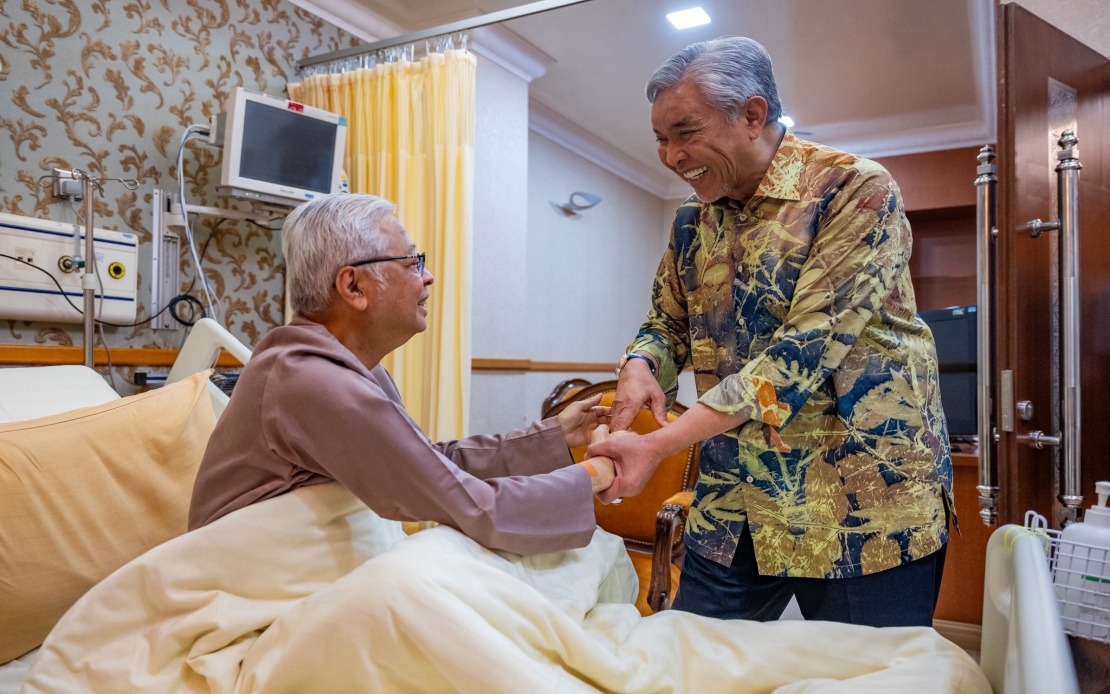
Deputy Prime Minister Datuk Seri Dr Ahmad Zahid Hamidi made a courtesy visit to former Prime Minister Datuk Seri Ismail Sabri Yaakob at the National Heart Institute (IJN) here on August 10, demonstrating continued solidarity within Malaysia's political leadership during a period of medical challenge for the Bera Member of Parliament.
Through a statement posted on social media, Ahmad Zahid conveyed his best wishes for his predecessor's swift recovery and return to full health. The Deputy Prime Minister's gesture reflects the importance placed on maintaining supportive relations across political circles during times of personal difficulty, a particularly significant development given the scrutiny that has surrounded Ismail Sabri's recent activities.
Ismail Sabri's unexpected health episode occurred on August 6 while he was at the Malaysian Anti-Corruption Commission (MACC) headquarters providing a statement as part of an official investigation. The former Prime Minister experienced acute cardiac symptoms that necessitated immediate medical intervention and emergency transportation to the specialist cardiac facility.
Medical professionals at the National Heart Institute subsequently determined that Ismail Sabri required implantation of a wireless pacemaker to address an underlying abnormal heart condition. The procedure represents a significant intervention and suggests that underlying cardiac issues may have been developing undiagnosed over time. Wireless pacemakers represent modern cardiac technology and typically require specialist implantation and ongoing monitoring.
The convergence of Ismail Sabri's MACC appearance and his sudden medical crisis raises questions about the stress and strain associated with ongoing investigations into his administration. Throughout 2023 and 2024, Ismail Sabri has faced various inquiries related to governance matters from his tenure as Prime Minister from 2021 to 2022, creating a prolonged period of legal and administrative scrutiny.
In his well-wishes statement, Ahmad Zahid specifically prayed that Ismail Sabri would be "granted strength and good health, that all his affairs will be eased, and that he will be granted a full recovery." These comments carry particular weight given their specificity about easing "all his affairs"—language that could reference both medical recovery and the broader legal matters that have occupied much of the former leader's attention in recent months.
The Deputy Prime Minister further expressed hope that his predecessor would regain capacity to resume his duties and normal daily routines without ongoing impediment. Such sentiments underscore the acknowledgment that Ismail Sabri's health challenges represent a disruption to his intended activities and responsibilities as a Member of Parliament representing the Bera constituency.
For Malaysian political observers, the episode highlights how health challenges can intersect with political accountability processes. The timing of Ismail Sabri's medical emergency during an MACC investigation has inevitably drawn attention to the pressures faced by senior political figures undergoing intense scrutiny. While such investigations are essential for institutional integrity, they frequently create significant personal and psychological strain on those involved.
The hospitalisation also underscores the importance of comprehensive medical care and the sophisticated facilities available within Malaysia's healthcare system. The National Heart Institute's capability to rapidly diagnose complex cardiac conditions and deploy advanced treatment options such as wireless pacemaker implantation demonstrates the quality of tertiary care available domestically, reducing the need for medical tourism in cases of serious cardiac pathology.
Fromm a leadership perspective, Ahmad Zahid's decision to visit his predecessor publicly and extend formal wishes for recovery sends a signal about political maturity and the ability to maintain collegial relationships transcending party or factional divisions. In many democracies, such visits during times of medical vulnerability are understood as fundamental expressions of human solidarity, regardless of political disagreements or competition.
The recovery period ahead for Ismail Sabri will require careful medical management alongside his ongoing involvement with parliamentary duties and legal proceedings. Pacemaker patients typically require extended recovery periods and ongoing cardiac monitoring to ensure the device functions optimally and that the underlying heart condition remains stable.
As Ismail Sabri convalesces, his parliamentary role representing Bera constituency and any remaining investigative or legal matters will likely be adjusted to accommodate his medical requirements. The incident demonstrates that even prominent political figures remain vulnerable to serious health episodes, reinforcing the universal nature of health challenges across all social strata in Malaysia.

