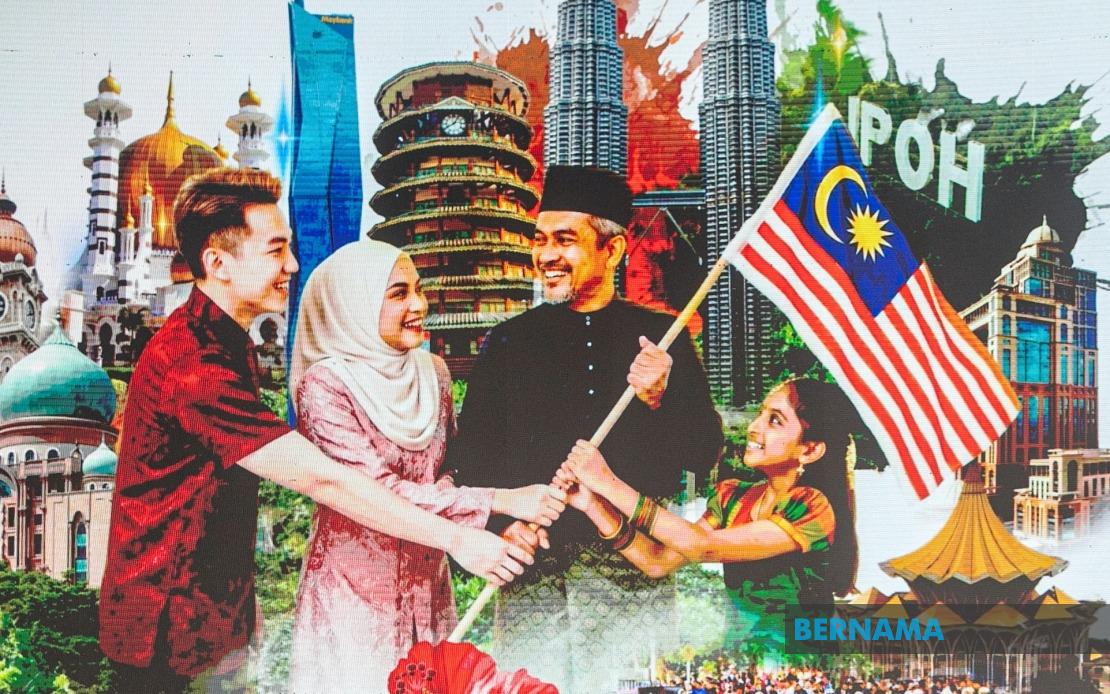
Communications Minister Datuk Seri Fahmi Fadzil has issued a pointed reminder to content creators and the general public about the risks of deploying artificial intelligence technology to generate images and materials featuring Malaysia's national flag, urging greater vigilance to preserve the integrity of the Jalur Gemilang's iconic design.
The warning emerged during the launch of the 2026 National Month and Fly the Jalur Gemilang campaign at the Sultan Azlan Shah Ministry of Health Training Institute in Tanjung Rambutan, Ipoh, an event formally opened by Prime Minister Datuk Seri Anwar Ibrahim. The gathering also featured National Unity Minister Datuk Aaron Ago Dagang and Perak Menteri Besar Datuk Seri Saarani Mohamad, underscoring the government's commitment to flag stewardship as a national priority.
Fahmi pinpointed a specific and recurring technical flaw in AI-generated flag representations: the consistent miscounting or omission of the Jalur Gemilang's 14 stripes, a foundational element that distinguishes Malaysia's flag from other national standards. This problem, he explained, stems from how artificial intelligence systems are trained and their tendency to oversimplify or distort repeated visual patterns, particularly when rendering fine details at scale. The minister emphasised that such errors, however unintentional, undermine the flag's symbolic power and dignity at a time when national sentiment should be paramount.
Beyond mere technical correction, Fahmi proposed a comprehensive public education initiative. He encouraged Malaysians to dedicate time to understanding and mastering proper flag etiquette—knowledge that extends beyond simply recognising the flag but encompasses the protocols governing its display, care, and representation in various contexts. This educational thrust reflects a broader concern that rapid technological adoption has outpaced cultural literacy, leaving citizens unprepared to leverage tools like AI responsibly within a framework of national values.
The ministry has committed to enlisting media sector partners in this endeavour, forging collaboration with the Malaysian Press Institute and the Malaysian Media Council to establish editorial standards around AI-generated flag imagery throughout the National Month period. Such institutional partnerships are crucial because media organisations function as primary amplifiers of visual content; a single published error can propagate rapidly across digital platforms and shape public perception of how the flag should appear.
When pressed on enforcement mechanisms, Fahmi adopted a measured tone, signalling the government's preference for persuasion over coercion. The initial response to flagged errors will be advisory in nature, with ministry representatives reaching out to content creators or organisations to request voluntary corrections. This soft-touch approach acknowledges that most breaches likely stem from technological limitations rather than malicious intent, and that education often proves more effective than penalties in shifting behaviour.
The minister did not rule out stricter interventions should voluntary compliance fail. Malaysia maintains specific legislation pertaining to the flag, and these legal instruments remain available as a secondary enforcement option. However, Fahmi's framing suggests the government recognises the optics risk of heavy-handed regulation in the digital age; publicly prosecuting an amateur content creator for an AI glitch would likely generate backlash and overshadow the patriotic messaging the campaign intends to promote.
The broader context for these warnings lies in Malaysia's ambitious National Month and National Day programming. The 2026 celebrations will see the National Day observance centred in Putrajaya, while Malaysia Day festivities will migrate to Sarawak, though the precise venue remains under finalisation. These flagship events traditionally trigger an outpouring of flag-related content across social media, billboards, home decorations, and institutional displays—a proliferation that amplifies both the opportunity for patriotic expression and the risk of inadvertent desecration through technological error.
The "Fly the Jalur Gemilang" campaign encourages citizens to display the national flag continuously from the launch date through at least September 16, Malaysia Day. This extended visibility period transforms the flag from an occasional ceremonial object into an everyday feature of the urban and residential landscape. In doing so, it elevates the stakes for accuracy; inconsistent or flawed representations, whether AI-generated or otherwise, become impossible to ignore and may normalise inferior versions of the flag in the public consciousness.
The emergence of AI-generated flag imagery as a policy concern reflects a uniquely contemporary governance challenge. Unlike previous eras when flag representation remained largely controlled through official printing standards, print media guidelines, and institutional oversight, the democratisation of generative AI has placed high-quality image creation tools in the hands of millions of users with minimal training or institutional gatekeeping. This shift has compelled governments across the region to grapple with how to maintain symbolic standards in an age of decentralised content production.
For Malaysian readers and content creators, the practical implications are substantial. Those planning to produce patriotic materials—whether for business, civic organisation, educational institution, or personal expression—should verify AI-generated flag imagery against official standards before publication. The Ministry of Communications and its partners will likely continue refining these standards and distributing them through media councils and digital platforms. Meanwhile, citizens engaging with National Month campaigns would be wise to familiarise themselves with the flag's proper design, not merely to avoid inadvertent error but to participate authentically in a tradition that connects Malaysia's present to its founding heritage.
Fahmi's intervention signals that as Malaysia navigates rapid technological change, questions of national identity and symbolic integrity remain non-negotiable. The government's preference for collaborative, education-first approaches suggests confidence that appeals to patriotism and cultural pride will prove more persuasive than legal sanctions. Whether this strategy succeeds in maintaining flag integrity amid the proliferation of AI tools will offer valuable lessons for other Southeast Asian nations facing comparable challenges.

