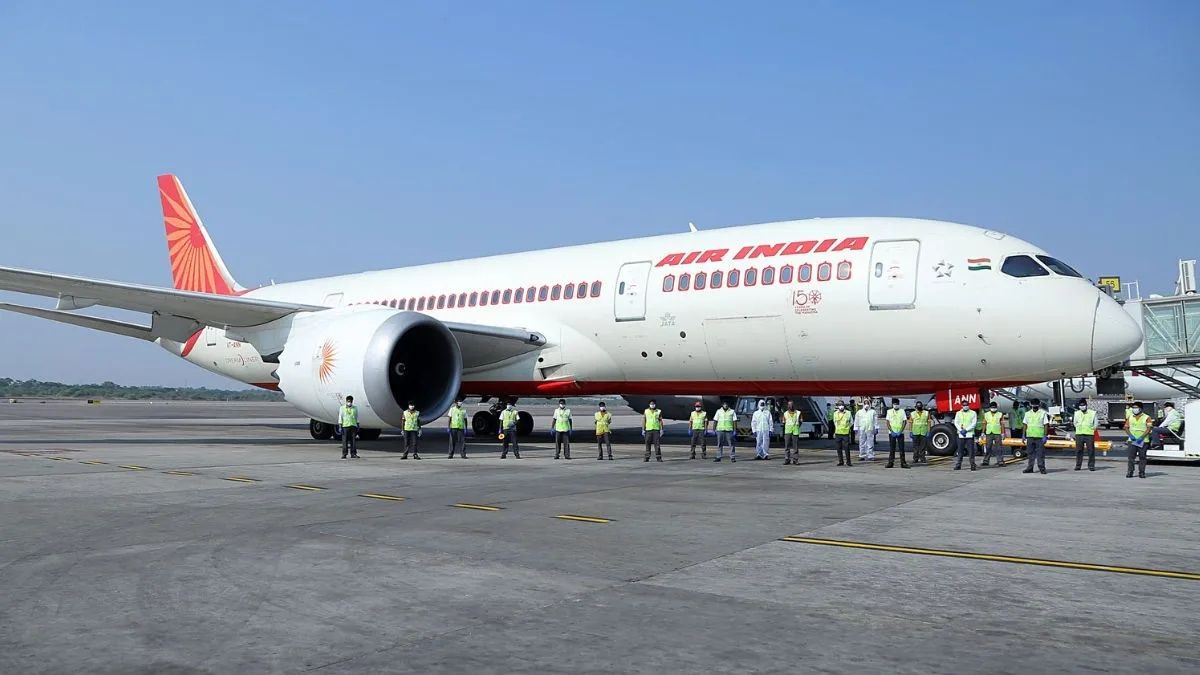
An Air India passenger flight inadvertently strayed into Pakistani airspace on Monday evening following a malfunction in its navigation system, though the aircraft was safely guided back into Indian territory within minutes of the breach. The Airbus A321, operating as flight AI-463 on the Delhi-Amritsar sector, experienced the technical fault shortly after departing from Indira Gandhi International Airport at 9:18pm on June 22. The incident, confirmed by official sources on Wednesday June 24, highlights the critical importance of real-time coordination between neighbouring air traffic control systems and the robust monitoring mechanisms that exist across South Asian airspace.
The flight's technical troubles began when the onboard navigation system malfunctioned during the early stages of the journey to Punjab's capital city. This equipment failure caused the aircraft's flight path to drift progressively westward, carrying it across the International Border separating Indian and Pakistani territory. The deviation was not prolonged, however, as Pakistani Air Traffic Control detected the airspace breach almost immediately and moved swiftly to alert the flight crew to their navigational error. Such detection systems represent a critical safeguard against unintended airspace violations, particularly in sensitive border regions where geopolitical sensitivities run high.
Pakistani air traffic authorities coordinated directly with the pilots of flight AI-463, providing them with the necessary information to understand and correct their course. The flight crew responded immediately to the alert, taking corrective action to steer the aircraft back across the border into Indian airspace. According to a senior airport official speaking on condition of anonymity, the pilots executed the course correction efficiently and the aircraft returned to its proper flight path without incident. The incident underscores the professional protocols that exist between Indian and Pakistani aviation authorities despite broader geopolitical tensions, and demonstrates that aviation safety transcends political boundaries in South Asia.
However, the flight's troubles were far from over once it had safely returned to Indian airspace. As the aircraft approached Sri Guru Ram Dass Jee International Airport in Amritsar around 10:30pm, the airport's airspace was experiencing significant traffic congestion. The combination of heavy air traffic volume and operational constraints meant that no immediate landing slot was available for the incoming aircraft. Rather than hold the aircraft in a holding pattern that could have consumed fuel and extended passenger discomfort, air traffic controllers made the pragmatic decision to instruct the flight to return to Delhi, where landing facilities would be readily available.
The decision to divert the aircraft back to the national capital represented standard operational procedure when facing congested airspace conditions at the destination airport. The flight retraced its route southwards and landed safely in Delhi, where the aircraft was subjected to technical inspection. Ground engineers examined the navigation system that had failed earlier in the flight, identifying and addressing the underlying technical issues that had caused the westward deviation. The inspection and necessary repairs were completed, and the aircraft received all necessary operational clearances to resume its journey.
Once the technical remediation was complete and the aircraft had been cleared for flight, the crew prepared for a second departure towards Amritsar. The flight took off again from Delhi for its original destination and finally completed its journey, touching down safely in Amritsar at approximately 2:20am on Tuesday morning. This represented a delay of nearly four hours from the flight's originally scheduled arrival time, a significant setback for passengers who had endured the overnight diversion and subsequent return journey. The extended delays would have caused considerable disruption to passenger schedules, though safety considerations necessarily took precedence over punctuality.
Neither Air India nor the Directorate General of Civil Aviation (DGCA), India's aviation regulatory authority, has yet released an official public statement detailing the specific technical nature of the navigation system failure that triggered the incident. Such detailed information is typically withheld during the early phases of an investigation to avoid premature conclusions or speculation about root causes. The DGCA and Air India's internal investigations will likely examine multiple factors including equipment maintenance records, pilot training protocols, and procedural compliance to establish exactly how and why the navigation system malfunctioned during what should have been a routine short-haul flight.
Aviation authorities have initiated what officials have characterised as a routine investigation into the circumstances surrounding the route deviation and subsequent operational complications. This investigation will examine not only the navigation system failure itself but also the flight crew's response to the initial technical anomaly and the broader operational decisions made during the incident. Such investigations are standard practice following any significant deviation from planned flight operations, regardless of whether the incident resulted in any safety risk to passengers and crew. The findings will likely be incorporated into Air India's safety protocols and may inform industry-wide guidance on similar technical scenarios.
The incident is the latest in a series of airspace breaches involving commercial aircraft over South Asia, a region where international borders and air routes often run in close proximity. Just one month prior to this Air India deviation, a Pakistan International Airlines flight briefly entered Indian airspace while operating in adverse weather conditions. Indian air traffic controllers identified the breach and coordinated with PIA to guide the aircraft back to its designated route, demonstrating a reciprocal commitment to aviation safety cooperation. These recurring incidents, though typically resolved without serious consequences, underscore the complexities of managing air traffic in one of the world's most densely populated regions where numerous commercial routes must navigate around sensitive border areas.
For Malaysia and other Southeast Asian nations that participate in the broader regional aviation community, incidents such as this carry important lessons about the necessity of maintaining robust air traffic management systems and fostering professional relationships between neighbouring aviation authorities. The resolution of the Air India incident demonstrates that despite political tensions between India and Pakistan, both nations' aviation professionals maintain protocols that prioritise flight safety and passenger security. This sets an important precedent for regional cooperation across Southeast Asia, where similar geographic and geopolitical complexities require equivalent levels of professional coordination and commitment to internationally agreed aviation standards.

