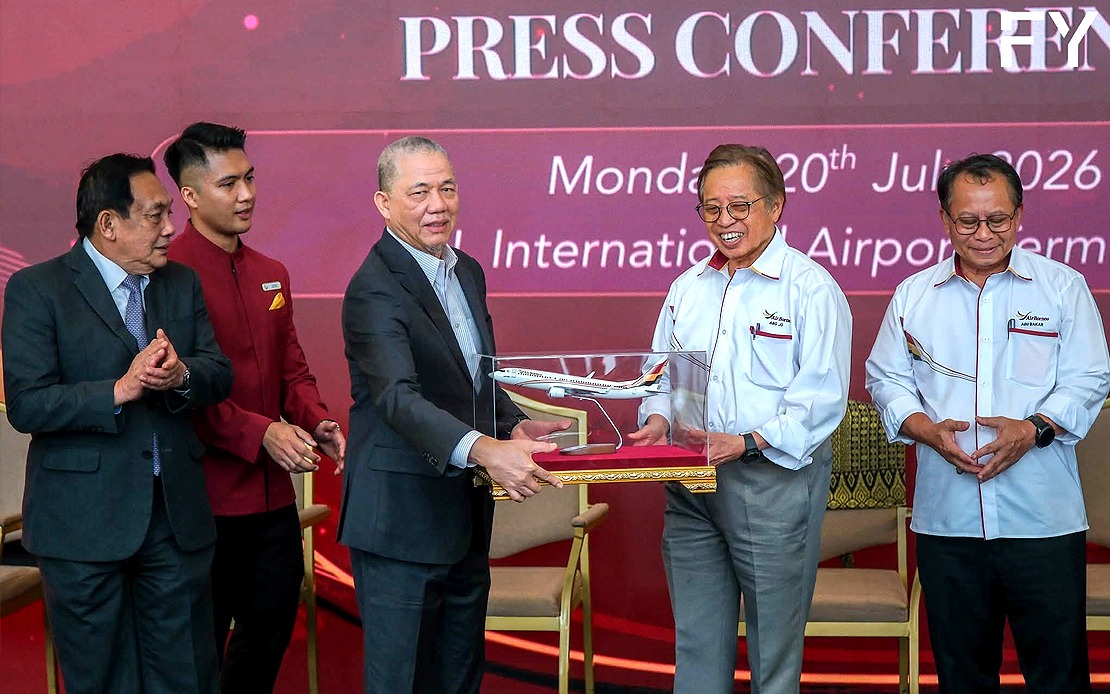
Sarawak has taken a significant step towards addressing one of the state's persistent economic challenges: the high cost of air travel. The inaugural flight of AirBorneo Airways from Kuching to Kuala Lumpur International Airport's Terminal 1 on July 20 marks the formal launch of the Sarawak state government-owned carrier, which proponents say will inject much-needed competition into the regional aviation market and drive down ticket prices for residents.
Deputy Prime Minister Datuk Seri Fadillah Yusof has positioned AirBorneo as more than a commercial venture, framing it instead as a transformative initiative that reflects Sarawak's determination to chart its own economic course. Fadillah outlined a vision centred on delivering air services that are simultaneously more competitive, transparent, and attuned to passenger needs, while maintaining the operational and safety standards expected of modern carriers. This positioning acknowledges a fundamental tension in aviation economics: the pressure to reduce fares without degrading the quality or reliability of service.
The timing of the launch carries symbolic weight. Coming just two days before Sarawak Day on July 22, which commemorates the state's founding, the inaugural flight serves as a statement of regional pride and self-determination. For Sarawak's leadership, including Premier Tan Sri Abang Johari Tun Openg who travelled on flight MY5005 from Kuching alongside cabinet ministers and dignitaries, the airline represents a concrete manifestation of the state's capacity to develop its own institutions and drive prosperity independently. This narrative resonates with ongoing discussions in Malaysia about devolved economic development and the role of state-level enterprises in regional growth.
The economics of air travel in Sarawak have long presented a puzzle for policymakers. The state's geography—encompassing vast interior regions with dispersed populations—means that maintaining rural air connectivity has always been challenging. Existing carriers have faced pressure to maintain frequencies and routes that yield modest returns, leading many to offset losses through higher ticket prices on profitable routes like the Kuching-Kuala Lumpur corridor. AirBorneo's entry into this market is intended to disrupt this pricing dynamic by offering an alternative with different cost structures, potentially freed from the burden of maintaining loss-making regional routes that competing airlines have deemed economically unviable.
Beyond the immediate goal of reducing airfare costs, AirBorneo's backers view the airline as an economic catalyst with broader implications. Improved air connectivity at lower price points could enhance Sarawak's competitiveness as a tourist destination, particularly for domestic travellers and regional visitors. The airline's establishment also signals confidence in the state's ability to attract business investment and facilitate trade relationships that depend on reliable, affordable transport. For Malaysian policymakers observing this initiative, AirBorneo offers a case study in how state-owned enterprises might address market failures in regional aviation—a sector where profit margins and service coverage often pull in opposite directions.
Fadillah's emphasis on AirBorneo's role in strengthening rural connectivity highlights a persistent concern across Southeast Asia. Many isolated communities depend on air transport as their primary link to urban centres, yet commercial carriers often cannot sustain routes serving such areas without subsidies or regulatory obligations. By positioning AirBorneo as a vehicle for maintaining and improving access to remote regions, state leadership is attempting to address this market failure while simultaneously fostering economic development in underserved areas. This dual mandate—commercial viability and social responsibility—will test the airline's management from the outset.
The arrival of Abang Johari and his entourage at KLIA aboard the inaugural flight underscored the political significance attached to this venture. For Sarawak's government, the successful launch validates previous investments in aviation infrastructure and demonstrates tangible progress on long-standing grievances about transport costs. For federal observers, including Fadillah, the development represents a constructive example of how state initiatives can complement federal policies and address regional disparities in living costs and accessibility.
Looking forward, AirBorneo's success will depend on several factors. The airline must manage operational challenges inherent in regional aviation, maintain competitive pricing while achieving financial sustainability, and resist pressure to abandon less profitable routes as soon as difficulties emerge. The competitive response from established carriers—potentially including price wars or capacity adjustments—will shape the market dynamics in which AirBorneo operates. Regional observers will be watching whether the airline can fulfil its promise of affordable, quality service or whether it becomes another enterprise constrained by the structural realities of aviation economics.
For Malaysian readers, AirBorneo's launch reflects broader conversations about economic federalism and regional development. The initiative suggests growing appetite among state governments to address locally-felt concerns through state-owned institutions, setting a precedent that may influence future policy discussions across the country. Whether this model proves sustainable and genuinely beneficial to Sarawak's residents will provide important lessons for other regions considering similar interventions in essential services.

