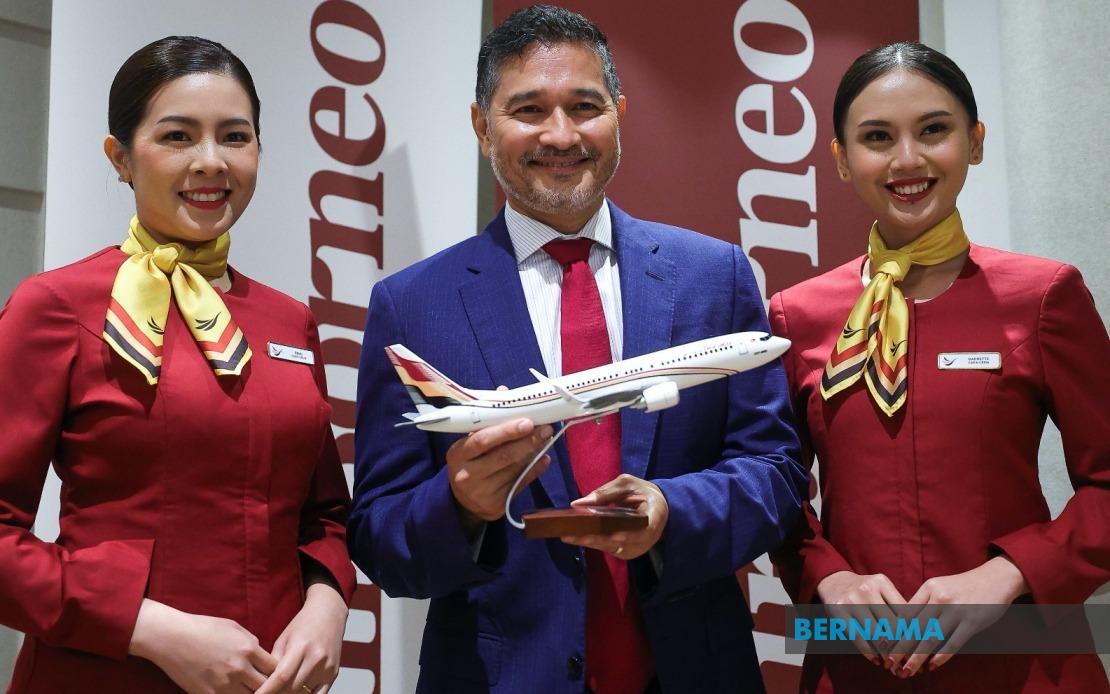
Sarawak's state-owned airline AirBorneo has made a significant commitment to fare stability by locking in all-inclusive one-way Economy fares at RM375 for its Kuala Lumpur-Kuching route regardless of season. The decision represents a strategic effort to address longstanding concerns about elevated airfares between Peninsular Malaysia and Sarawak, an issue that has repeatedly surfaced in regional aviation discussions and affects business travel, tourism, and family connections across the corridor.
The airline's chief executive officer, Megat Ardian Wira Mohd Aminuddin, disclosed that the pricing structure emerged from comprehensive analysis spanning six months of fare data collection. This methodological foundation incorporated multiple variables affecting commercial aviation: volatility in international fuel prices that typically drive operational costs, comparisons with average fares from competing carriers on the same route, and historical pricing patterns from the previous year. The approach reflects a deliberate effort to identify a sustainable price point rather than engaging in unsustainable promotional pricing.
When benchmarking against rival airlines operating the Kuala Lumpur-Kuching service, AirBorneo positioned the RM375 fare within the established market range. Megat Ardian Wira noted a critical distinction often overlooked by consumers: while some carriers advertise lower base fares, these headline figures frequently exclude airport taxes, fuel surcharges, and ancillary fees that significantly inflate the final ticket price. The RM375 rate represents a fully inclusive, transparent proposition, permitting meaningful comparison with competitor offerings and eliminating hidden costs that frustrate price-conscious travellers.
AirBorneo simultaneously introduced Business Class fares at RM736 all-in for the same route, marking the airline's entry into the premium segment on this corridor. The launch of twice-daily service between Kuching International Airport and Kuala Lumpur International Airport Terminal 1 represents a substantial expansion of air connectivity between Sarawak and the Malaysian heartland. This frequency matches demand patterns on one of Southeast Asia's busier regional routes, where capacity constraints have historically maintained elevated pricing.
The significance of this initiative extends beyond simple fare economics. Malaysia's aviation sector has long grappled with connectivity disparities, where peripheral regions experience systematically higher airfares than comparable trunk routes. Sarawak, despite being Malaysia's largest state by area and a significant economic contributor, has historically faced transportation cost disadvantages. The fixed annual pricing approach directly challenges this structural inequality, offering Sarawakian business travellers, holidaymakers, and families visiting the peninsula predictability in travel budgeting.
The RM375 benchmark also reflects competitive pressures within Malaysia's increasingly dynamic airline market. Following AirAsia's dominance and subsequent market fragmentation, new entrants and state-backed carriers have introduced competitive offerings that force pricing discipline across the sector. AirBorneo's entry into trunk routes previously dominated by larger competitors creates legitimate choice architecture, potentially triggering broader fare rationalisations across the Kuala Lumpur-Kuching corridor.
Fuel price volatility—a persistent challenge in aviation economics—was explicitly factored into the analysis. International oil prices, while currently in moderate ranges, remain subject to geopolitical shocks and cyclical pressures. By absorbing anticipated fuel cost fluctuations into a stable annual fare, AirBorneo assumes currency and commodity exposure that other carriers might pass directly to consumers through dynamic pricing mechanisms. This represents a deliberate choice to prioritise revenue predictability and market share development over maximising yield per seat.
AirBorneo's executives revealed ambitious expansion plans coinciding with Malaysia's hosting of the 2027 SEA Games in Sarawak. The airline intends to secure status as the official Games airline, positioning itself to operate charter services moving athletes, officials, and spectators throughout the biennial event. This requires substantial network expansion, with the airline targeting scheduled service launches to two or three ASEAN destinations by early next year. Such growth creates opportunities to generate international route experience and operational expertise that increasingly justify the RM375 domestic positioning.
The SEA Games aspiration reflects broader strategic thinking about Sarawak's regional positioning. As co-host of Asia-Pacific's premier youth sporting spectacle, the state requires aviation infrastructure demonstrating international-standard connectivity and service. AirBorneo's trajectory—from nascent state airline to legitimate regional carrier—depends on establishing credibility through reliable, competitively-priced service. The RM375 fare becomes a foundational building block in this institutional narrative, demonstrating commitment to accessibility and market competition rather than leveraging monopolistic advantages.
For Malaysian travellers, the fixed-fare approach offers practical benefits extending beyond price psychology. Business planners can forecast travel costs across annual budgets without uncertainty regarding seasonal spikes. Sarawakian students and professionals working in Kuala Lumpur gain predictable commuting economics. Tourism operators targeting inbound visitors from Peninsular Malaysia can incorporate consistent transport costs into package pricing, potentially stimulating leisure travel to Sarawak's renowned natural attractions and cultural destinations.
The airline's willingness to maintain year-round pricing despite seasonal demand fluctuations—when comparable routes in Southeast Asia exhibit pronounced peak-season premiums—suggests confidence in volume growth and cross-subsidisation economics. Higher passenger volumes during peak periods offset thinner margins during shoulder seasons, a strategy dependent on building market share through competitive positioning rather than maximising short-term revenue per available seat kilometre.
Industry observers note that AirBorneo's entry and pricing discipline may pressure competitors to rationalise their own fare structures. Established carriers operating the route cannot easily retreat to premium pricing without confronting capacity losses to the new competitor. This competitive dynamic, while challenging existing operators, ultimately benefits consumers through sustained pricing discipline and service quality improvements required to maintain market position.
The RM375 initiative ultimately reflects emerging market maturity in Malaysian aviation, where state-backed carriers increasingly compete on efficiency and consumer value rather than regulatory protections or subsidy advantages. AirBorneo's commitment to transparent, stable pricing positions Sarawak as an increasingly accessible regional destination while contributing to the broader objective of equitable air connectivity across Malaysia's diverse geography.

