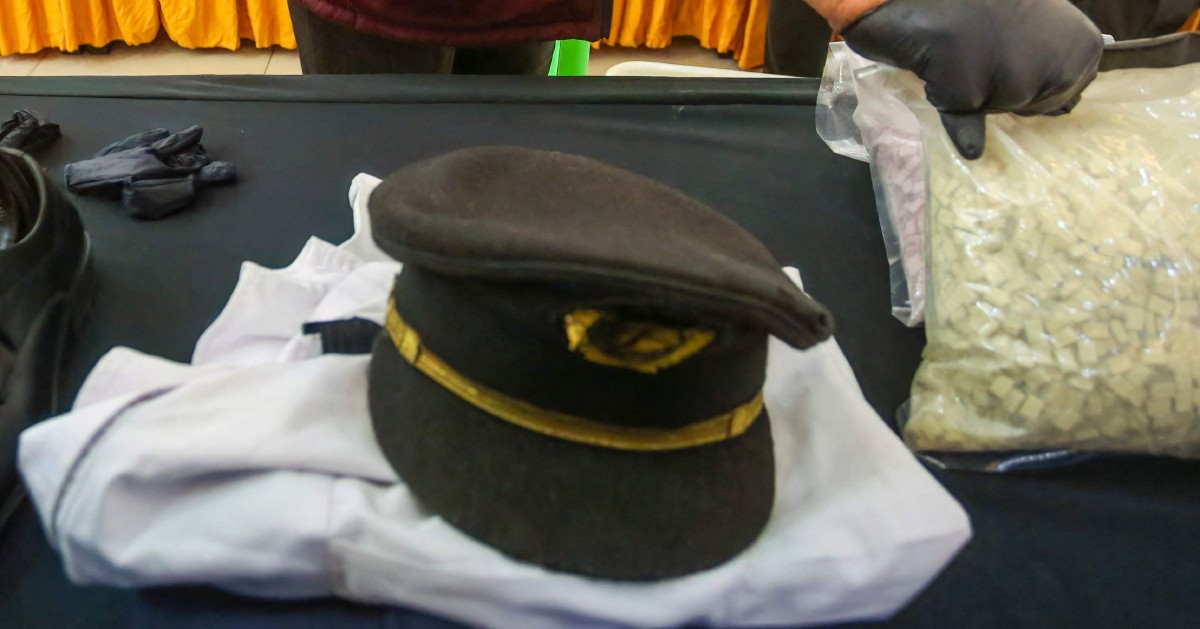
An airport employee in his 30s has become the focal point of a police investigation into how a Malaysia Airlines pilot allegedly managed to transport drugs through security screening at Kuala Lumpur International Airport. The identification of this airport worker as a person of interest represents a significant development in the case, suggesting that authorities are exploring the possibility of internal airport security vulnerabilities or potential insider involvement in the alleged breach.
The investigation centres on the critical question of how prohibited substances found their way past the stringent security measures that are supposed to prevent contraband from entering the airport's sterile areas. Kuala Lumpur International Airport operates under some of the region's most rigorous security protocols, with multiple screening checkpoints designed to detect illicit materials. The emergence of a potential security gap raises concerns about airport operational procedures and the integrity of systems that travellers rely upon for safety.
The pilot's case has drawn attention to the complex dynamics of airport security at Malaysia's busiest international aviation hub. As a member of the cabin crew, pilots undergo different security procedures compared to regular passengers, often bypassing certain screening measures through dedicated crew pathways. This distinction in security protocols, while designed for operational efficiency, has now become the subject of scrutiny as investigators determine whether these streamlined procedures created an opportunity for the alleged drug transport.
The involvement of an airport staff member in the investigation underscores how security breaches at major transportation hubs often require some form of internal facilitation. Airport workers have legitimate access to restricted areas and security systems that the general public does not, positioning them as critical gatekeepers in the security apparatus. The fact that police are treating this individual as a person of interest suggests investigators believe the breach may not have been accidental or the result of inadequate screening alone.
This case carries broader implications for airport security practices across Southeast Asia, where major aviation hubs handle millions of passengers annually. If internal cooperation or negligence played a role in this incident, it would prompt a reassessment of background checks, security training, and monitoring protocols for airport personnel. Malaysia's aviation industry has long prided itself on maintaining international security standards, and any findings of systemic vulnerabilities could require significant operational adjustments.
The Malaysia Airlines pilot case also highlights the ongoing challenge of drug trafficking through international airports. Despite sophisticated detection equipment and trained security personnel, determined smugglers continue to develop methods to circumvent screening systems. The involvement of a highly visible figure such as an airline pilot in such allegations carries reputational consequences for Malaysia Airlines and raises questions about the adequacy of crew member vetting procedures.
Investigators will likely focus on the nature of the airport employee's interactions with the pilot, whether any financial transactions occurred, and what access the worker provided or could have provided to restricted areas. Communication records, surveillance footage from airport terminals and security areas, and transaction histories will become crucial evidence. The timeline of events leading up to the pilot's departure will help establish whether the drugs were placed in luggage before airport arrival or somewhere within the terminal itself.
The case also reflects the pressures faced by airport security personnel, who work in demanding environments with competing priorities between facilitating passenger flow and maintaining rigorous screening standards. Any findings that an employee deliberately assisted in smuggling contraband would suggest a breakdown in both individual integrity and institutional oversight. Airport authorities will need to ensure that staff morale and working conditions do not inadvertently create vulnerabilities that compromised individuals might exploit.
As the investigation progresses, the outcomes could influence how Malaysia's aviation sector approaches crew security, airport staffing protocols, and inter-departmental communication between airline management and airport operators. The case demonstrates that security is only as strong as its weakest link, and in this instance, that potential weakness appears to have been internal rather than technological. For Malaysian readers and the broader Southeast Asian aviation community, this investigation serves as a reminder that the integrity of airport security depends as much on personnel reliability as on equipment and procedures.

