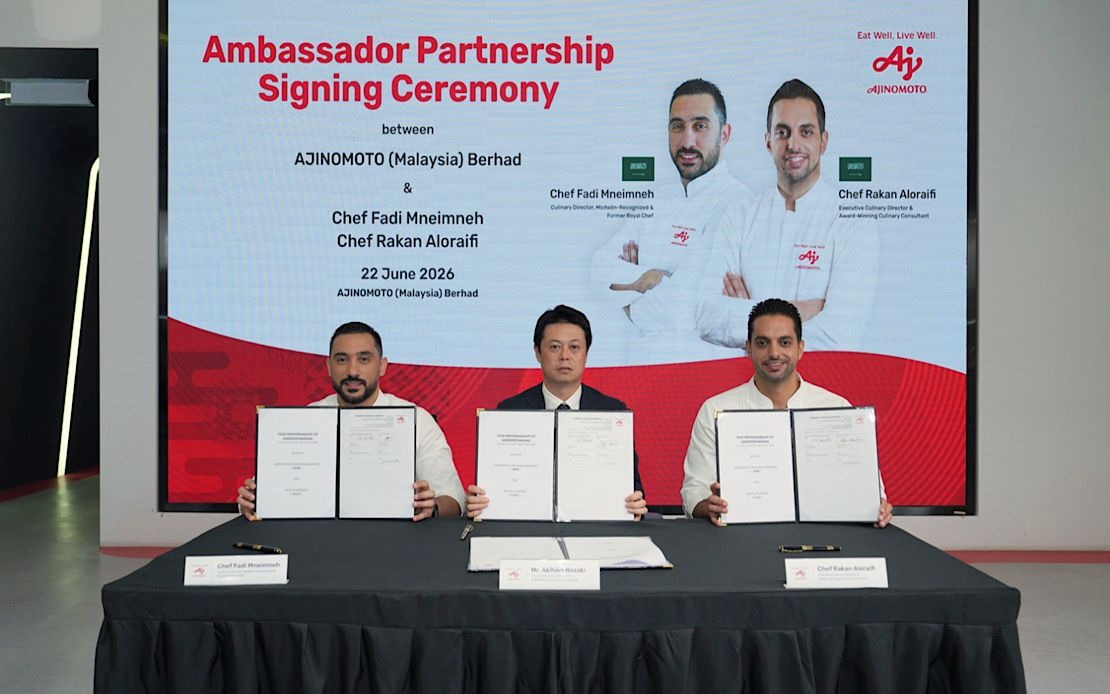
Ajinomoto (Malaysia) Berhad is making strategic moves to deepen its foothold in the Middle Eastern market by forming an alliance with two of Saudi Arabia's most respected culinary personalities. The collaboration marks a calculated shift toward leveraging celebrity chef endorsements and culinary expertise to penetrate the rapidly expanding halal food sector across the Arabian Peninsula, a market where consumer preferences increasingly favour premium, quality-assured products. This partnership reflects broader industry trends where food manufacturers are moving beyond traditional distribution channels to build credibility through trusted voices within the culinary community.
The two chefs involved in this initiative, Chef Fadi Mneimneh and Chef Rakan Aloraifi, bring considerable pedigree to the arrangement. Chef Mneimneh holds a Michelin star and previously served as a royal chef, positioning him as a figure of culinary authority within elite gastronomic circles. Chef Aloraifi carries equally impressive credentials as an award-winning executive director and culinary consultant, commanding substantial influence throughout the Middle Eastern food and hospitality ecosystem. Together, they represent precisely the calibre of opinion leaders capable of shaping perceptions about product quality and innovation among both industry professionals and discerning consumers.
The partnership gained tangible form through a recent factory visit to Ajinomoto's manufacturing facility in Bandar Enstek, Negeri Sembilan. This carefully orchestrated event served multiple strategic purposes simultaneously: demonstrating the company's halal certification credentials and modern production standards, educating the chefs about the technical and culinary applications of umami, and establishing personal relationships that could translate into ongoing advocacy. By inviting respected culinary figures to witness production firsthand, Ajinomoto addresses a fundamental challenge in international markets—building confidence that imported products meet the quality and authenticity standards demanded by Gulf consumers.
The demonstration session proved particularly valuable in showcasing how umami, the fundamental Japanese concept of savoury taste, can complement and enhance traditional Middle Eastern cuisine without diluting cultural authenticity. Live cooking demonstrations featured authentic regional dishes prepared using Ajinomoto products, providing a practical context for understanding the company's value proposition. This approach transforms a technical ingredient discussion into an experiential education, allowing the chefs to appreciate firsthand how umami enriches flavour complexity and depth while respecting the integrity of classical recipes. Such demonstrations are far more persuasive than conventional marketing materials in winning over culinary professionals accustomed to evaluating ingredients through taste rather than advertising claims.
The timing and scope of this initiative reflect calculated ambitions within Ajinomoto's growth strategy. The halal food market across the Middle East continues expanding rapidly, driven by population growth, rising disposable incomes, and increasing sophistication among consumers seeking premium products. Malaysia's established reputation for halal certification and food manufacturing excellence provides a competitive advantage that Ajinomoto intends to leverage fully. By positioning itself as a Malaysian halal champion rather than simply a Japanese food company, Ajinomoto taps into regional pride and established trust in Malaysian halal standards while maintaining its association with Japanese culinary innovation and quality.
The collaboration extends beyond the initial factory visit into a sustained engagement framework. Ajinomoto has committed to working with both chefs at a major HORECA event tentatively scheduled for October 2026 in Riyadh and Jeddah. HORECA conferences represent critical business platforms where hotels, restaurants, and cafés make procurement decisions for their operations. By securing the chefs as demonstration leaders at this event, Ajinomoto positions itself directly before decision-makers in the hospitality supply chain—precisely the audience most likely to translate chef endorsements into large-volume product orders. This multi-phase approach, extending engagement over an 18-month period, suggests confidence in the partnership's potential to drive meaningful business development.
The initiative also incorporates regional networking benefits that extend beyond direct Saudi Arabia expansion. A distributor representative from Brunei participated in the factory session, illustrating how Ajinomoto is using individual partnership events to facilitate broader ecosystem networking among its regional partners. This approach recognises that Southeast Asia and the Middle East increasingly share supply chains, personnel, and business relationships. Creating networking opportunities during such sessions strengthens the informal relationships that often underpin regional business success, particularly in markets where personal connections significantly influence procurement decisions.
For Malaysian stakeholders, this partnership carries meaningful implications for the country's broader halal industry positioning. Ajinomoto's success in leveraging Malaysian halal credentials for Middle East expansion demonstrates how local manufacturers can build competitive advantage from Malaysia's established halal ecosystem. The company's approach—combining stringent halal certification with modern manufacturing transparency and culinary innovation—provides a replicable model for other Malaysian food producers seeking international growth. As Middle Eastern consumers increasingly demand both halal assurance and premium quality, Malaysian companies that successfully communicate this combination gain significant market opening.
The emphasis on umami and Japanese-inspired culinary innovation within a halal framework points toward an emerging consumer preference across the Muslim world. Rather than viewing halal compliance as a constraint requiring compromise on taste or sophistication, this partnership positions halal products as platforms for culinary creativity and flavour enhancement. This narrative shift is commercially significant because it allows premium pricing and positions halal products alongside, rather than subordinate to, non-halal alternatives in consumers' minds. As the Middle Eastern culinary scene continues globalising and diversifying, manufacturers offering this combination of halal integrity and international culinary standards will capture disproportionate market share among affluent consumers.
Looking forward, Ajinomoto's strategy illustrates how food companies must adapt to evolving market dynamics in Asia-Pacific regions. Direct advertising and conventional distribution channels face increasing consumer scepticism, while recommendations from respected culinary professionals carry growing weight. By investing in relationships with influential chefs and creating opportunities for authentic culinary expression using its products, Ajinomoto builds brand credibility that advertising budgets cannot easily replicate. This approach also generates authentic digital content—photographs and videos of renowned chefs demonstrating products—that circulates through culinary and hospitality professional networks far more effectively than paid promotional materials.
The partnership demonstrates Ajinomoto's recognition that halal market growth in the Middle East requires more than simply meeting regulatory requirements. Success demands engaging seriously with local culinary cultures, understanding how products integrate into traditional cooking practices, and building authentic relationships with influential gatekeepers in the food industry. By treating respected chefs as genuine collaborators rather than mere brand ambassadors, Ajinomoto creates the conditions for sustainable market development. The chefs gain access to innovative products that genuinely enhance their culinary capabilities, while Ajinomoto gains credible advocates whose endorsements carry weight among their professional peers and consumer bases. This mutually beneficial dynamic, if properly maintained, could evolve into a long-term strategic advantage in the increasingly competitive Middle Eastern premium food market.

