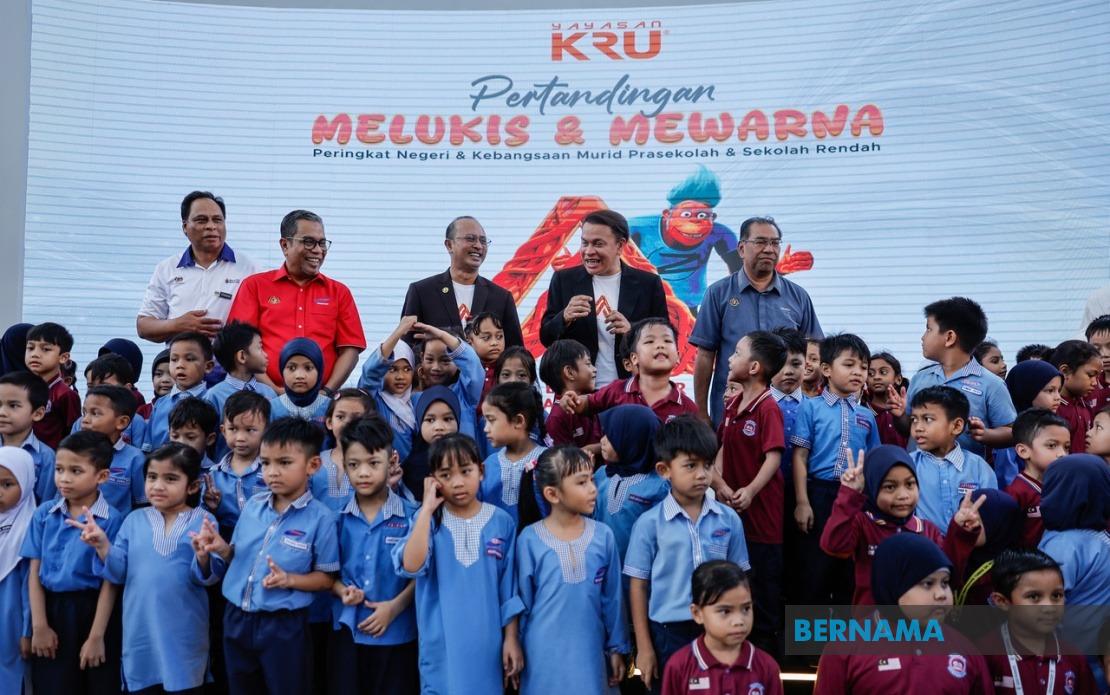
Yayasan KRU has achieved a historic milestone by securing recognition from the Malaysia Book of Records for orchestrating the largest preschool participation in a nationwide colouring competition. The AKAR 2026 Awards drew participation from more than 153,000 children enrolled in KEMAS and Unity kindergartens across the country, demonstrating the exceptional reach and appeal of a programme that combines creative expression with environmental messaging.
The simultaneous nationwide execution of the competition underscores the scale of coordination required to engage such a vast young audience across Malaysia. This logistical achievement reflects the growing capacity of domestic organisations to mobilise resources and execute large-scale educational initiatives that cut across different states and institutions. The participation numbers suggest strong institutional support from participating kindergartens and genuine interest from parents in programmes that emphasise creative development during critical early-childhood years.
Central to the competition's success was the integration of an environmental conservation dimension through the "I Love Orangutans" campaign. This thematic approach transforms a simple colouring activity into a vehicle for imparting values around nature preservation and wildlife protection to Malaysia's youngest citizens. By embedding environmental messaging within a creative activity, organisers leverage the natural appeal of artistic expression to cultivate ecological consciousness from an early age, an approach increasingly valued in early-childhood education frameworks globally.
The programme's governance structure reflects meaningful collaboration across multiple Malaysian institutions. The Education Ministry, Community Development Department (KEMAS), Department of National Unity and National Integration (JPNIN), and the National Higher Education Fund Corporation (PTPTN) all contributed to the initiative. This inter-agency coordination demonstrates how government bodies can align their respective mandates—education, community development, national cohesion, and educational financing—to produce cohesive programmes that serve broader developmental objectives beyond any single agency's traditional scope.
Datuk Norman Abdul Halim, president of the Yayasan KRU Board of Trustees, characterised the achievement as validation of the foundation's commitment to nurturing creative capacity in Malaysian children. His emphasis on combining creativity with environmental awareness reflects contemporary thinking about holistic child development, where technical and artistic skills are paired with values education. The recognition from Malaysia Book of Records carries symbolic weight, offering official validation that this initiative represents an exceptional undertaking worthy of national documentation.
The financial incentive structure embedded within the competition creates meaningful rewards for participants while directing resources toward long-term educational savings. Approximately RM100,000 in prize money was allocated across state and national competition levels, with winning amounts credited directly to participants' National Education Savings Scheme (SSPN) accounts. This mechanism serves dual purposes: it rewards achievement in the immediate competition while channelling funds into future educational financing. Top national winners competing in Putrajaya on August 29 compete for individual prizes reaching RM3,000, establishing clear aspirational targets and recognition hierarchies.
From an educational policy perspective, large-scale competitions like AKAR 2026 address recognised gaps in creative skill development within Malaysia's education system. Datuk Mohd Hanafiah Man, KEMAS director-general, emphasised creativity as foundational to developing competitive human capital, acknowledging that conventional curricula sometimes underemphasise artistic and creative competencies. By providing structured platforms where children can develop and showcase creative work, such competitions complement formal schooling and signal institutional recognition that creativity matters in contemporary skill formation.
The competition's focus on preschool-age participants carries particular significance. Early childhood represents a critical period for developing cognitive flexibility, imaginative capacity, and openness to novel problem-solving approaches. By targeting this demographic specifically, AKAR 2026 invests in creative formation at a stage when brain development remains particularly responsive to environmental enrichment. The scale of participation suggests that Malaysian kindergarten institutions increasingly embrace such creative programming as integral to their developmental mission.
The selection of both KEMAS and Unity kindergartens as primary participant pools ensures geographic and socioeconomic diversity in the competition. KEMAS institutions serve predominantly lower-income communities, while Unity kindergartens operate within military and defence sector contexts. Drawing participants from both networks expands the programme's social reach and creates opportunities for children from varied backgrounds to participate in a unified national initiative, potentially reinforcing broader social cohesion objectives reflected in JPNIN's involvement.
The official launch in Shah Alam and coordination across multiple government officials present—including representatives from PTPTN, JPNIN, and KEMAS—underscores institutional commitment to the programme's success. Such high-level participation in launch events signals that the initiative aligns with government priorities around early childhood development, environmental consciousness, and creative education. These signals can influence resource allocation, institutional capacity-building, and the likelihood of programme continuation or expansion in subsequent years.
Looking forward, the MBOR recognition positions AKAR as a potential model for large-scale creative engagement with preschool populations. Other organisations and government bodies may reference this benchmark when designing similar initiatives, potentially spurring replication or adaptation across different contexts. The integration of environmental conservation messaging with creative competition also offers a template for embedding values education within engaging formats—a challenge that education policymakers consistently face.
For Malaysian families and educators, the competition demonstrates institutional investment in recognising and rewarding creative achievement during foundational developmental years. The visible pathway from local participation through state-level competition to national finals in Putrajaya creates aspirational structure and recognises that excellence in creative expression can be systematically identified and celebrated. The MBOR recognition adds prestige to participation, potentially influencing parental perceptions of the programme's value and institutional quality.
The scale and scope of AKAR 2026 ultimately reflect shifting priorities within Malaysian education and child development policy. The prominence afforded to creativity, environmental consciousness, and structured recognition of artistic achievement suggests evolution toward more holistic conceptualisations of childhood development. By celebrating participation on this scale and integrating conservation messaging throughout, the programme signals that Malaysia's institutions are increasingly committed to cultivating citizens who possess not only technical and academic competencies but also creative capacities and environmental stewardship values essential for navigating contemporary global challenges.

