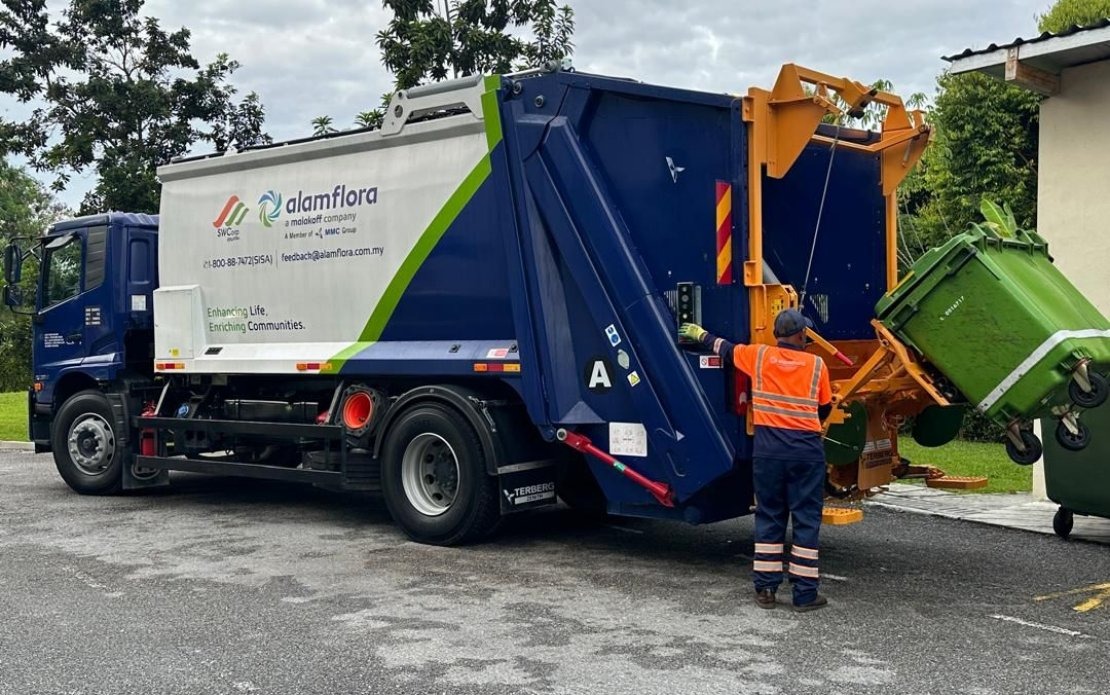
Alam Flora has committed to providing complete cooperation with the authorities investigating a collision involving one of its compactor garbage lorries that occurred along Jalan Pantai Murni 1 in Pantai Hillpark, Kuala Lumpur, on August 13. The waste management company stated through an official statement that it takes the matter with the utmost seriousness and will ensure all necessary follow-up actions are undertaken following the investigation's conclusions.
The garbage collection vehicle, operated by the state-owned waste management firm that handles municipal refuse across the Klang Valley, experienced what is believed to be a brake failure before it veered out of control and crashed into the boundary wall of a nearby residential condominium. The incident occurred during early morning hours when waste collection operations typically intensify across Kuala Lumpur. First responders attended the scene, and preliminary assessments suggested mechanical failure rather than driver error or negligence.
The driver of the compactor lorry immediately reported the accident to the Kuala Lumpur Traffic Police Station, demonstrating compliance with mandatory accident reporting procedures. Law enforcement officers subsequently conducted a breathalyser test on the driver, which returned a negative result, confirming that fatigue or substance impairment did not contribute to the collision. This finding represents an important preliminary conclusion that has shaped the investigative direction toward mechanical and operational factors.
According to Alam Flora's statement, the damaged vehicle will be transported to the Computerised Vehicle Inspection Centre, known locally as Puspakom, where specialist technicians will conduct a comprehensive examination to determine the precise mechanical cause of the crash. The examination process will likely scrutinise brake systems, hydraulic components, structural integrity, and maintenance records to establish whether the failure resulted from inadequate servicing, manufacturing defect, or operational stress.
The collision is being formally investigated under Section 43(1) of the Road Transport Act 1987, which provides the legislative framework for examining incidents involving commercial vehicles on Malaysian roads. This particular section addresses offences related to vehicle operation and mechanical fitness, meaning investigators will examine whether Alam Flora maintained its vehicle fleet according to statutory requirements and industry safety standards.
Alam Flora emphasised in its statement that worker safety, contractor welfare, and public protection constitute its paramount operational concern. This commitment extends across all collection and disposal activities undertaken by the company, which manages refuse management for millions of residents across the Klang Valley metropolitan area. The statement acknowledged the distress caused to residents of the affected condominium and expressed regret for the incident's impact on the local community.
The incident highlights the inherent operational risks associated with heavy waste management vehicles that operate during early morning hours when traffic is lighter but residential areas remain populated. Compactor lorries, which compress refuse mechanically, exert substantial stress on braking systems through repeated loading cycles and their considerable operational weight. Maintenance protocols for such vehicles therefore demand particular rigour and systematic inspection schedules.
For Malaysian readers concerned about waste collection safety, this incident underscores broader questions regarding vehicle maintenance standards across the commercial waste management sector. Regular brake system inspections, hydraulic fluid replacement intervals, and component fatigue monitoring represent critical preventive measures that can substantially reduce collision risks. The Puspakom examination will potentially reveal whether Alam Flora's maintenance procedures met or exceeded regulatory minimums.
The investigation's findings will carry significance beyond this single incident, potentially informing industry-wide safety discussions and regulatory scrutiny of fleet management practices. If the examination identifies systemic maintenance deficiencies rather than isolated mechanical failure, it could prompt regulatory authorities to implement enhanced oversight of commercial waste vehicle fleets operating across Malaysian municipalities and enhance safety protocols for waste collection operations across the nation.

