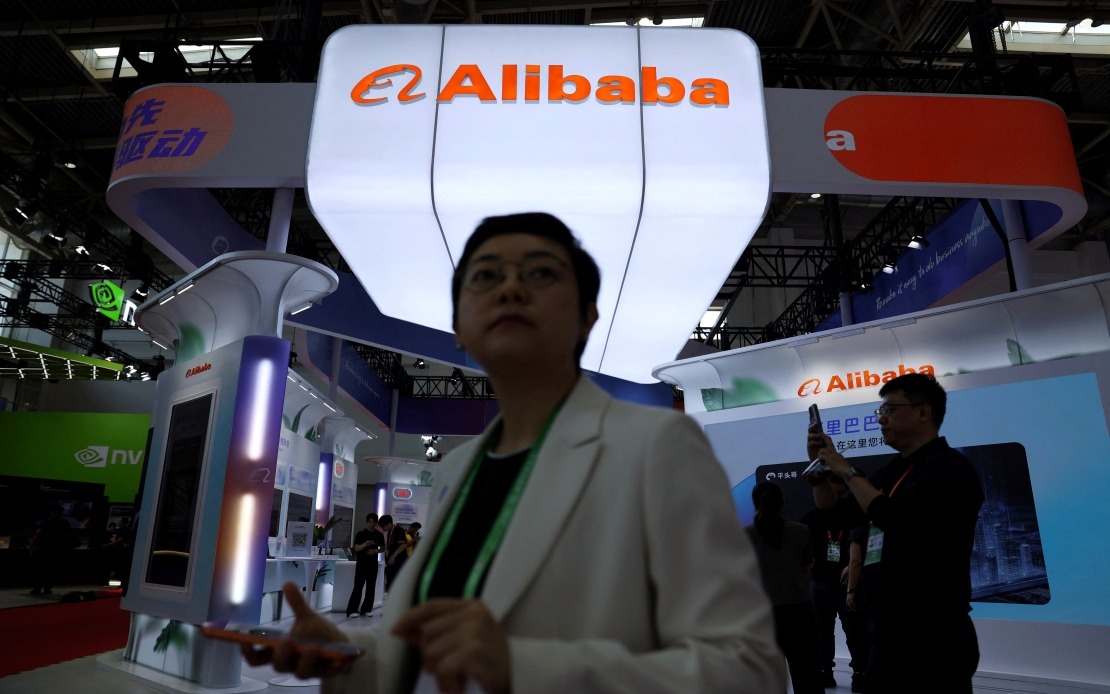
Alibaba, the sprawling Chinese technology conglomerate, has taken the unprecedented step of filing a federal lawsuit against the United States Department of Defense, challenging its classification as an entity linked to China's military-industrial apparatus. The court filing, disclosed Tuesday, represents an aggressive legal counterattack by one of Asia's most influential tech firms against what it characterises as an unfounded and economically damaging designation.
The company's legal strategy hinges on a straightforward rebuttal: Alibaba operates under independent corporate governance with no military connections whatsoever. In the lawsuit, the firm explicitly states that its board of directors contains no individuals with military affiliations, a structural argument designed to undermine the Pentagon's underlying rationale for the designation. This governance-focused defence reflects how Chinese companies have learned to navigate US regulatory scrutiny by emphasising transparent, professional corporate architecture.
Alibaba's core contention challenges the factual and legal foundation of the Pentagon's determination itself. According to the company's filing, the designation lacks both evidentiary grounding and statutory justification. This aggressive posture signals that Alibaba intends to fight the matter through American courts rather than simply absorbing the commercial consequences—a strategy that could establish important precedent for how Chinese tech enterprises defend themselves against US national security restrictions.
The company maintains strict operational boundaries that reinforce its civilian identity. Alibaba emphasises that its product suite and service offerings serve exclusively commercial purposes: retail commerce, logistics networks, and enterprise information technology solutions. These applications are fundamentally civilian in nature, the firm argues, distinguishing Alibaba's operations from any conceivable military technology development or deployment. The specificity of this claim—naming precise business sectors—provides concrete evidence against militarisation allegations.
Furthermore, Alibaba has incorporated internal safeguards explicitly barring military applications. The company points to contractual terms and compliance mechanisms that expressly prohibit customers from utilising Alibaba's platforms for defence purposes. Additionally, Alibaba notes that it holds no military certifications or licences from any government body, a detail that would logically accompany any genuine military-industrial relationship. These operational guardrails collectively paint a picture of a company deliberately maintaining civilian separation.
The Pentagon's listing decision came in mid-June when the Department of Defence announced a sweeping expansion of its military-linked entities register, adding 188 companies in a single determination. This batch designation included Alibaba alongside other tech giants Tencent and automotive manufacturer BYD, effectively tripling down on American strategic concern about Chinese technological advancement and state-military integration. The scope of this expansion—188 companies at once—suggests a comprehensive reassessment of US-China technological competition rather than isolated determinations about individual firms.
For Malaysian and Southeast Asian observers, this litigation carries significant implications. Alibaba's cloud computing division, international e-commerce operations, and logistics infrastructure touch economies across the region. A sustained military designation could complicate Alibaba's regional operations, restrict partnership opportunities, and create uncertainty for businesses relying on its platforms. Malaysian companies utilising Alibaba Cloud or the Lazada e-commerce platform, which Alibaba owns, face potential downstream complications if the designation persists.
The lawsuit itself reflects broader tensions between American national security concerns and global commercial realities. The US has increasingly weaponised regulatory designations as a form of economic competition, particularly targeting Chinese firms it views as strategically important. Alibaba's decision to litigate rather than acquiesce suggests the company believes the reputational and commercial damage justifies expensive legal action, signalling how seriously it takes the designation's business consequences.
Historically, Chinese companies have rarely challenged US government designations directly through American courts, preferring diplomatic or commercial workarounds. Alibaba's lawsuit represents a departure from this passive approach, betting that American judicial processes will prove more receptive to its arguments than executive agencies have. This strategy gambles that federal judges may prove more sceptical of sweeping national security determinations lacking specific evidence of actual military nexus.
The Pentagon's designation authority derives from executive orders concerning foreign investment and export controls, areas where the executive branch traditionally exercises broad discretion. Courts have historically deferred to national security determinations, making Alibaba's legal challenge an uphill battle. However, the firm appears willing to absorb litigation costs to contest what it views as an arbitrary classification that lacks proportionate evidentiary support.
For Southeast Asian governments and businesses, this case illuminates the fragmentation of global commerce under US-China competition. Companies operating across both spheres now navigate contradictory regulatory regimes, where American designations can contradict Chinese classifications or Southeast Asian commercial interests. Malaysia and its neighbours must develop independent frameworks for evaluating technology partnerships without uncritically accepting either American or Chinese characterisations.
Alibaba's willingness to litigate also signals confidence in its legal position and suggests the company expects sympathetic consideration from American courts. The firm has invested substantially in demonstrating compliance with US regulations across its various business units, creating a documented record that may support its judicial claims. As the case proceeds through federal courts, it will reveal how thoroughly the Pentagon substantiated its military-linked determination and whether American jurisprudence provides meaningful review of such designations.
Ultimately, this lawsuit represents a critical moment in how multinational technology firms respond to geopolitical classification. Win or lose, Alibaba's court challenge will influence how other Chinese companies approach American regulatory determinations and could reshape expectations about the procedural fairness available to foreign firms challenging US national security decisions.