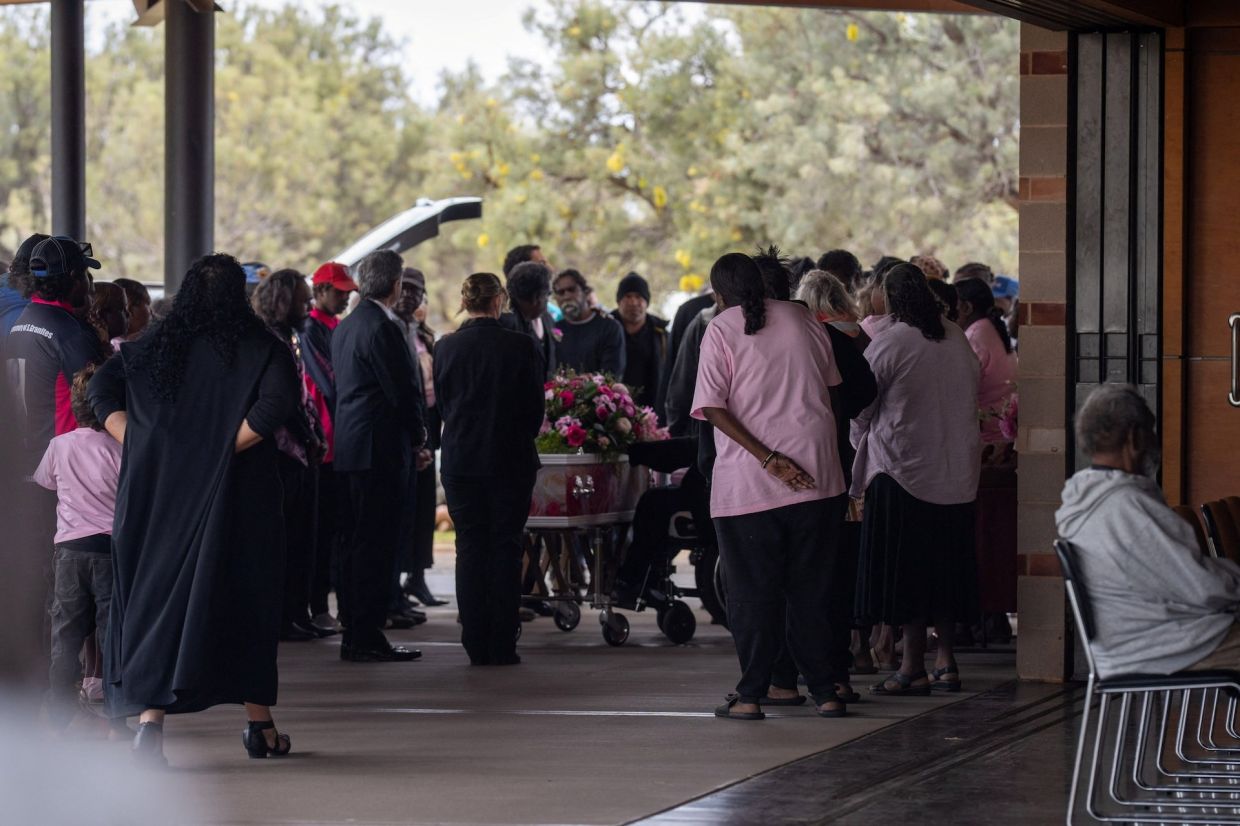
Hundreds of mourners assembled at Garden Cemetery in Alice Springs on Saturday to attend the funeral service of Kumanjayi Little Baby, a five-year-old Indigenous girl whose death in April sent shockwaves through Australia and catalysed violent disturbances across the Northern Territory capital. The tragedy, combined with the apprehension and subsequent beating of the accused by community members, exposed deep-seated tensions within the regional hub of 25,000 residents, located approximately 1,250 kilometres south of Darwin.
According to Indigenous cultural tradition, the child is referred to by the name Kumanjayi Little Baby, reflecting naming practices that hold particular significance within Aboriginal communities. Many attendees at the funeral service honoured the young girl's memory by wearing pink, her favoured colour, creating a poignant visual tribute to her life. Footage broadcast by the Australian Broadcasting Corporation documented the solemn occasion, capturing the arrival of her flower-draped coffin in a black hearse as the gathered community paid their respects.
The period following Kumanjayi Little Baby's death has been marked by "sorry business", the extended mourning protocol and ceremonial observances that are integral to Indigenous Australian cultural practice when a community member passes away. This traditional grieving period encompasses both spiritual and social dimensions, strengthening communal bonds whilst acknowledging loss within the framework of Indigenous law and custom. The continuation of these practices underscores the deep connection between the deceased child and her broader kinship networks across Alice Springs and surrounding settlements.
The immediate aftermath of the killing exposed fractures within the town's social fabric. Local residents, compounded by grief and frustration over broader systemic failures, took matters into their own hands when the suspect was located, leading to violent confrontations that spread through the community. This vigilante response, though rooted in the intensity of collective trauma, highlighted the absence of trust in formal justice mechanisms and pointed to longstanding grievances that extend far beyond this single tragedy.
A significant proportion of Alice Springs' population—roughly one in five residents—identifies as Indigenous, yet many face stark disparities in housing, healthcare, and basic services. Thousands of Aboriginal people reside in makeshift camp communities dotting the outskirts of the town, where infrastructure deficiencies and overcrowding create conditions of chronic disadvantage. These settlements frequently lack adequate sanitation, electricity, and secure shelter, perpetuating cycles of poverty and social fragmentation that characterise remote Indigenous Australia.
Prime Minister Anthony Albanese acknowledged the underlying crisis within days of Kumanjayi Little Baby's death, calling upon Northern Territory authorities to accelerate efforts to enhance living standards within these vulnerable communities. His intervention signalled recognition at the highest governmental level that the tragedy was not an isolated incident but rather a symptom of systemic neglect. The political pressure, however, underscores the persistent gap between acknowledgment of problems and the substantive policy interventions required to address them at scale.
Jefferson Lewis, a 47-year-old man, has been formally charged with the girl's murder alongside two additional offences. The specifics of the secondary charges remain subject to legal suppression orders, preventing their public disclosure pending court proceedings. This legal framework, designed to protect the integrity of the trial and the privacy of the victim's family, nonetheless leaves much of the circumstances shrouded from public understanding, contributing to continuing speculation and community anxiety about justice outcomes.
The events in Alice Springs have reverberated across the Australian political landscape, reigniting national debates about Indigenous disadvantage, the adequacy of remote community services, and the relationship between poverty and violence in marginalised populations. For Malaysian observers and regional analysts, the case illuminates how entrenched inequality and historical dispossession continue to shape outcomes in settler-colonial societies, even wealthy nations like Australia. The vulnerability of Indigenous children and the concentration of disadvantage in specific geographic areas reflect patterns visible across Southeast Asia and the broader Indo-Pacific region.
The funeral service itself represents both closure and continuation—a moment of collective acknowledgment of loss balanced against the perpetual grief that characterises communities grappling with preventable tragedy. For Kumanjayi Little Baby's family and the broader Indigenous population of Alice Springs, the proceedings mark a transition within their mourning observances while simultaneously constituting a public statement about the value and dignity of an Indigenous child's life. Moving forward, community members and advocates will scrutinise whether political commitments translate into material improvements in housing, healthcare, and economic opportunity that might prevent similar tragedies.

