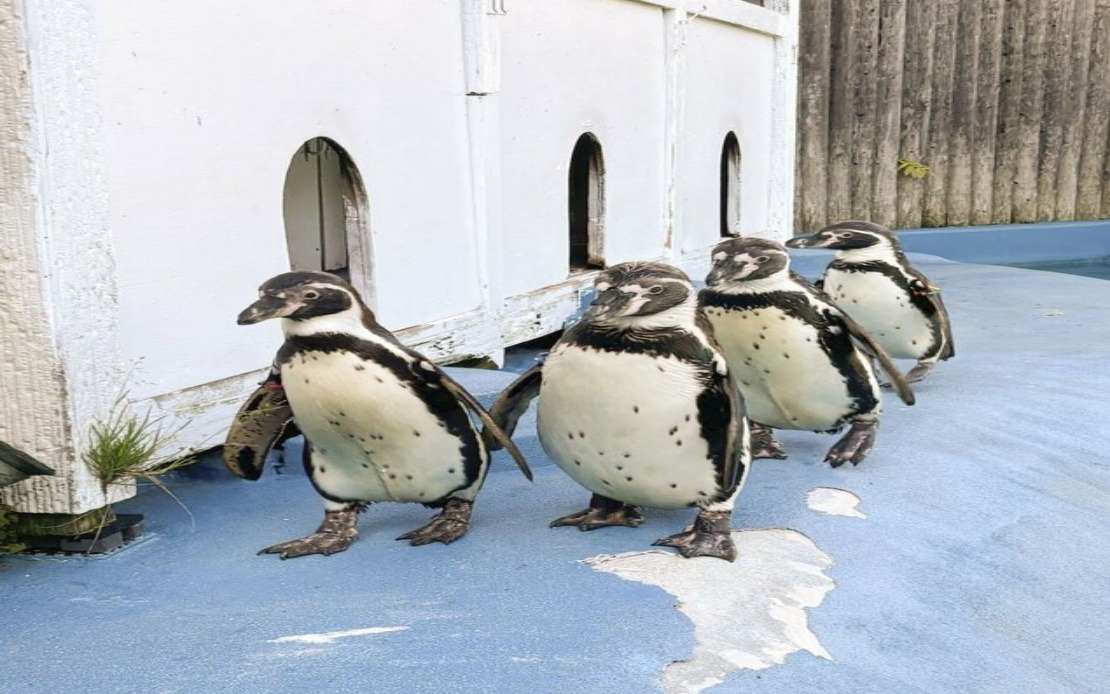
A zoological park in Sendai, northeastern Japan, has confirmed that the sudden deaths of its entire population of four Humboldt penguins in mid-July were caused by avian malaria, a mosquito-borne infectious disease that can escalate from asymptomatic to fatal with alarming speed. The diagnostic findings, released on Friday following investigation by Iwate University, underscore the vulnerability of captive penguin populations to vector-borne diseases, particularly in regions where wildlife and urban environments intersect.
The four penguins at Yagiyama Zoological Park died sequentially between July 9 and 19, beginning with a male penguin named Aramasa. What made the outbreak particularly alarming was the complete absence of any observable illness in the birds until the day immediately preceding each death, leaving zoo staff with virtually no opportunity to intervene medically or isolationally. This characteristic of avian malaria—its capacity to remain clinically silent until the disease has reached an advanced stage—represents a significant challenge for zoological management, where early detection typically underpins effective animal husbandry protocols.
Avian malaria, transmitted exclusively through mosquito vectors, poses no direct threat to human populations, though its transmission cycle within animal communities demonstrates how environmental management failures in zoo facilities can have cascading consequences. The disease belongs to a category of pathogens that can establish themselves in geographic regions where they did not previously circulate, particularly when introduced through infected animals or when climatic conditions favour mosquito proliferation. For zoos maintaining exotic species, this represents an ongoing management concern requiring proactive environmental engineering rather than reactive medical treatment alone.
Humboldt penguins, native to the Pacific coastal regions of Peru and Chile, inhabit temperate marine environments substantially warmer than the Antarctic territories associated with other penguin species. This biological adaptation to milder climates has made them popular attractions in Japanese zoological collections, where they can be maintained without the extreme refrigeration costs required for Antarctic penguin species. However, their suitability for warmer climates simultaneously increases their exposure risk to tropical and subtropical pathogens, including mosquito-borne illnesses such as avian malaria, which are more prevalent in temperate and warm regions.
The Sendai facility's investigation has identified environmental mismanagement as the likely precipitating factor behind the outbreak. Stagnant water accumulation—in the form of puddles and shallow pools—creates ideal breeding grounds for mosquitoes, transforming the penguin enclosure from a controlled habitat into a reservoir for vector populations. This finding points to a gap between theoretical animal welfare standards and operational implementation, a challenge that extends across zoological facilities globally, particularly in regions experiencing seasonal precipitation or inadequate drainage infrastructure.
In response to the outbreak, Yagiyama Zoological Park has suspended plans to acquire replacement penguins in the immediate term, instead committing to a comprehensive redesign of the penguin exhibit. The proposed modifications aim to eliminate standing water through improved drainage engineering and enclosure redesign, thereby removing the environmental catalyst for mosquito population establishment. This cautious approach reflects heightened awareness among zoo administrators that simple restocking without addressing underlying environmental vulnerabilities would likely result in recurrent mortality.
The pathway to exhibit reopening will require implementation of measurable mosquito control protocols, potentially including regular environmental monitoring, installation of mosquito netting or screens, and maintenance regimens that prevent water accumulation. The timeframe for these improvements remains unspecified, though the zoo has signalled its intention to eventually resume penguin exhibition once confidence in preventive measures can be established through operational demonstration rather than assumption.
For Southeast Asian zoos and wildlife facilities, the Sendai incident carries particular relevance, as tropical and subtropical regional climates create environments substantially more conducive to mosquito breeding than temperate zones. Malaysian and regional zoological parks maintaining exotic Antarctic or sub-Antarctic species face comparable vector-borne disease risks, particularly during monsoon seasons when drainage challenges intensify. The Sendai experience underscores that species acquisition decisions must be accompanied by sophisticated environmental management infrastructure, not merely by genetic or veterinary care capacity.
The incident also highlights systemic vulnerabilities in international exotic animal commerce and zoological practice, where animals are relocated from their native ecosystems into environments where they encounter novel pathogenic pressures. Humboldt penguins, evolutionarily adapted to Peruvian and Chilean coastal conditions, encounter radically different pathogenic landscapes when relocated to Japan, creating epidemiological exposure scenarios unprecedented in their evolutionary history. Zoo management must therefore integrate contemporary epidemiological knowledge into facility design and operational practice, treating environmental engineering as equivalent in importance to medical and nutritional provision.
Moving forward, the case demonstrates that zoo management extends beyond direct animal care into sophisticated environmental stewardship, requiring expertise in vector ecology, drainage engineering, and disease surveillance. As climate change alters mosquito distribution and breeding patterns globally, even temperate-zone facilities will face intensifying pressure from tropical vector-borne diseases. The commitment by Yagiyama Zoological Park to fundamentally redesign its penguin facility acknowledges this reality and sets a precedent for the industry's adaptation to evolving disease landscapes in the context of global wildlife captivity.

