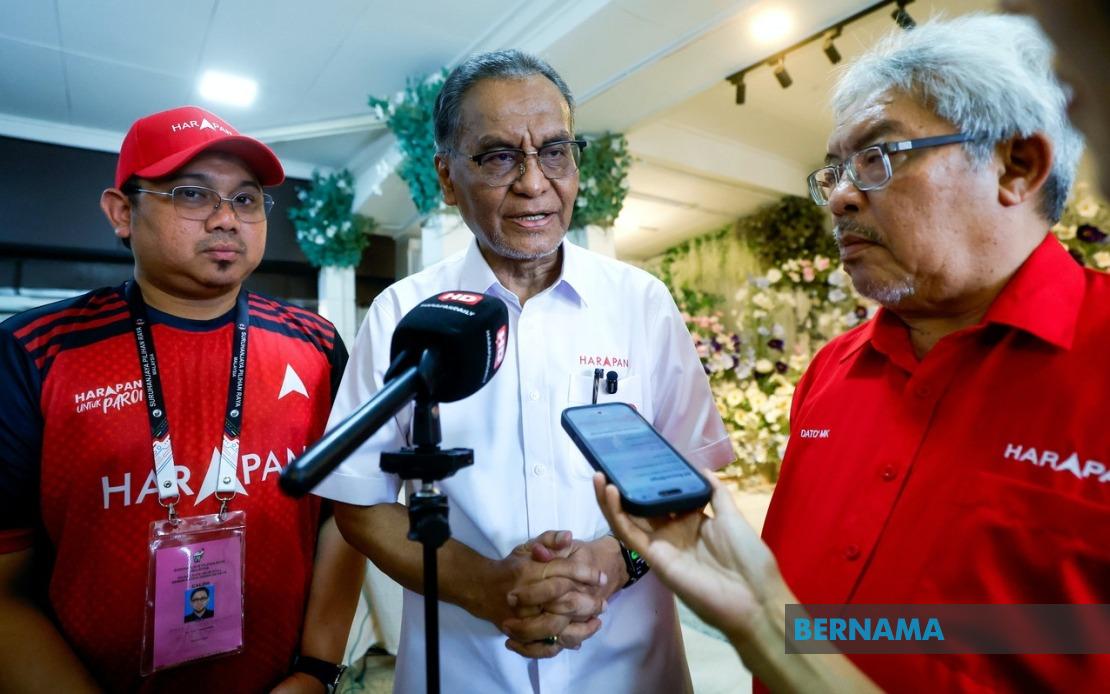
The 16th Negeri Sembilan state election is shaping up as a contest between competing narratives about governance and service delivery. Parti Amanah Negara, a component party within the Pakatan Harapan coalition, is staking its nine candidates on a deliberate strategy that emphasises the track record of the sitting state administration rather than populist messaging or personalised politics. This approach, articulated by Amanah vice-president Datuk Seri Dr Dzulkefly Ahmad, reflects a broader calculation that voters in the state are more responsive to demonstrated competence and problem-solving ability than to electoral rhetoric alone.
Within the larger PH coalition framework, Amanah's role is defined by a pre-arranged seat distribution that reflects the strategic bargaining among coalition partners. The party contests nine of PH's 36 total seats, with Parti Keadilan Rakyat fielding 16 candidates and the Democratic Action Party 11, creating a roughly proportional division of contested constituencies. This structure indicates that PH's confidence in the state rests not on any single party but on a unified front, though the allocation also reveals relative strength and voter appeal among the three parties. Understanding this internal coalition dynamics is crucial for assessing the coherence and sustainability of PH's campaign messaging across the state.
The emphasis on administrative track record is significant given the broader regional political context. In Malaysia's competitive multi-party environment, particularly following the realignment of electoral coalitions in recent years, governance performance has emerged as a measurable and defensible campaign platform. Rather than promising grand transformations, Amanah is positioning its candidates as problem-solvers with credentials and community connections. This reflects a maturation of campaign strategy that acknowledges voter sophistication and wariness of overblown pledges. For parties seeking to consolidate incumbent advantages, this approach has proven more resilient than populist appeals that struggle to deliver tangible results.
Amanah's campaign methodology goes beyond traditional rallies and speeches. The party is investing in small-group engagements, direct house-to-house canvassing, and social media outreach designed to facilitate two-way communication with constituents. This model enables candidates to identify specific local grievances—zoning disputes, infrastructure gaps, business licensing hurdles—and then marshal the machinery of local government and relevant agencies to address them. The approach essentially turns each candidate into an intermediary between residents and the bureaucratic apparatus, a role that generates tangible benefits for communities and builds loyalty beyond abstract political ideology.
The Paroi state constituency exemplifies the type of challenge Amanah candidates are tackling. With more than 65,000 registered voters and a population approaching 140,000, Paroi is a substantial and heterogeneous constituency requiring coordinated problem-solving across multiple local authorities and government agencies. PH's candidate Ahmad Shahir Mohd Shah has identified small trader empowerment as a priority, proposing streamlined licensing procedures and infrastructure improvements in collaboration with local councils. This specificity—naming particular constituencies and concrete policy interventions—differs markedly from generic campaign promises and signals a focus on measurable outcomes.
Small trader and petty merchant support represents an important constituency in Negeri Sembilan as elsewhere in Malaysia. These businesspeople often struggle with bureaucratic complexity, irregular income, and limited access to credit and facilities. By addressing licensing streamlining and basic amenity provision, PH candidates are attempting to mobilise this group through practical benefits rather than ideological appeals. For a coalition that has faced criticism for inadequate attention to grassroots economic concerns, this direct engagement with small business issues provides an avenue to rebuild credibility in working-class and lower-middle-income communities.
Amanah's slate of nine candidates represents a mix of incumbent defence and new candidacies across the state. Datuk Bakri Sawir will defend the Klawang seat, while other candidates such as Yaacob Mahmood in Serting, Zarrina Abu Zarin in Lenggeng, and Nasir Raman in Bagan Pinang are contesting constituencies requiring they build electoral support from a starting point of either disadvantage or necessity. The geographic spread of these candidacies across Negeri Sembilan's districts indicates that Amanah is attempting to establish a statewide presence rather than concentrating strength in particular enclaves. This distribution reflects both organisational ambition and the imperatives of operating within a coalition framework that mandates participation across diverse constituencies.
The electoral context has shifted materially since the 15th state election in 2023, when PH secured 17 seats to Barisan Nasional's 14 and Perikatan Nasional's five. The current election will reveal whether PH's majority is durable or vulnerable to the complex interplay of federal-state politics, internal coalition strains, and voter sentiment regarding governance performance. The interval between elections has allowed the state government time to implement programmes and demonstrate results, but it has also exposed the coalition to criticism for any perceived failures or shortcomings. Amanah's campaign strategy implicitly assumes that the PH government's record is sufficiently strong to justify re-election, a bet that will be tested empirically on August 1st.
The timing and logistics of the 16th Negeri Sembilan election—with early voting on July 28 and polling on August 1—afford a compressed campaign window compared to some previous state contests. This brevity places a premium on efficient organisation and clear messaging, advantages that an incumbent coalition fielding coordinated candidates across multiple parties potentially possesses. However, it also reduces time for persuasion and may favour voters already inclined toward the incumbents or those making decisions based on established party loyalty rather than new information. For Amanah specifically, the tight timeline means that the party's grassroots engagement strategy must already be embedded and operational rather than relying on late surges of activity.
The broader significance of Amanah's campaign approach extends beyond Negeri Sembilan to the trajectory of Malaysian coalition politics. If PH's strategy of emphasising demonstrated governance competence and problem-solving capability proves effective, it suggests a potential model for how non-Barisan coalitions can sustain electoral support in competitive contexts. Conversely, if voters prioritise other factors—personality-driven politics, ethnic and religious appeals, or disaffection with the pace of change—then PH's measured, technocratic messaging may prove insufficient. The Negeri Sembilan result will therefore serve as a data point in the broader evolution of Malaysia's electoral landscape and the relative appeal of competing political narratives.
For Malaysian and Southeast Asian observers, the Amanah campaign illustrates broader shifts in how regional political parties conceptualise competition and voter engagement. The move toward service-oriented politics and administrative accountability reflects changing expectations about what governments should deliver and how politicians should justify their existence. This represents a modest but meaningful departure from zero-sum ethnic and religious communalism that has historically dominated Malaysian electoral contests. Whether this shift represents a durable change in voter preferences or a tactical adaptation by incumbent parties seeking to defend advantages remains an open question that subsequent electoral cycles will help resolve.

