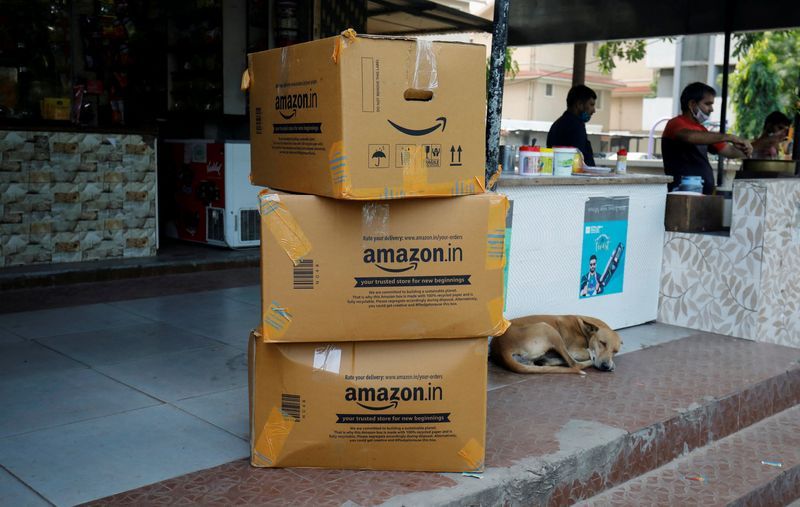
Amazon has committed to taking action against its Indian delivery partner M&M Logistics Solutions after a police investigation concludes into a deadly warehouse fire that claimed two lives in the northern state of Uttarakhand on June 5. The e-commerce giant stated it would pursue "appropriate action" in accordance with its corporate policies once local authorities complete their inquiry. The company has simultaneously launched its own internal investigation into the incident, according to a source familiar with the matter who requested anonymity due to confidentiality constraints.
The fire that engulfed the facility operated by M&M Logistics Solutions revealed significant lapses in workplace safety standards. According to a police document obtained by Reuters, the building where the tragedy unfolded was operating without a valid fire safety clearance from authorities. The facility also lacked essential fire prevention infrastructure including a functioning fire alarm system and smoke detectors. Most critically, the warehouse had no proper emergency exit routes, a fundamental requirement that could have allowed workers to evacuate safely during the blaze.
M&M Logistics Solutions operates a substantial portion of Amazon's last-mile delivery network across northern India. The company manages 45 Amazon delivery centres spread across 21 cities in the region, according to information disclosed by Amazon in a 2023 press statement. This widespread operational footprint underscores the scale of Amazon's dependence on third-party logistics partners to fulfil its e-commerce delivery commitments across the country.
Amazon's internal supplier code of conduct explicitly prohibits unsafe working environments, with particular emphasis on fire hazards and uncontrolled fire risks. The code provides Amazon with clear mechanisms to enforce compliance, permitting the suspension or complete termination of third-party contractors who fail to meet its safety standards. This contractual framework gives Amazon significant leverage to hold its partners accountable, particularly when workplace conditions endanger employee lives.
The incident has drawn attention from India's labour advocacy groups. The Amazon India Workers Union has called for a judicial inquiry into the deaths, characterising the fire as a severe breakdown in workplace safety standards and a failure to protect workers' fundamental human dignity. Union representatives emphasise that the tragedy represents a systemic failure rather than an isolated incident, highlighting broader concerns about how Amazon manages safety across its delivery network.
Amazon's track record on worker safety in India has faced scrutiny beyond this incident. In 2024, the National Human Rights Commission launched an examination into allegations that the company violated labour protections during a severe heatwave at a warehouse facility near New Delhi. Following the commission's inquiry, India's state government initiated legal proceedings against Amazon under the country's labour protection laws. The company has since stated that worker safety and wellbeing remain its paramount priorities, though critics argue that conditions continue to fall short of these commitments.
The Uttarakhand fire raises critical questions about enforcement mechanisms within Amazon's supply chain. While the company maintains robust policies on paper, accountability for third-party partners operating warehouses has proven inconsistent. The absence of basic fire safety equipment at an Amazon delivery facility suggests inadequate oversight or verification of safety compliance by the platform that depends on these partners for service delivery. For Malaysian and regional readers, this case illustrates a persistent vulnerability in how multinational e-commerce platforms manage third-party contractor networks across Asia, where regulatory enforcement and corporate accountability mechanisms remain uneven.
The incident also reflects broader tensions within India's gig economy and logistics sector. As e-commerce platforms expand operations to meet growing consumer demand, they increasingly rely on decentralised networks of small and medium-sized logistics providers. These partners often operate with thin margins, creating pressure to cut costs—including safety investments—to remain competitive. Amazon's commitment to take action only after police investigations conclude suggests that immediate corrective measures may not be forthcoming, leaving questions about worker protection during ongoing operations.
For Amazon's regional strategy in Southeast Asia, the incident carries implications beyond India. As the company expands its logistics footprint across Malaysia, Singapore, Indonesia, and other regional markets, it will face similar pressures regarding third-party partner management and safety oversight. Regulators in these countries will likely observe how Amazon addresses the Indian incident and whether it implements systematic improvements across all operations. The case underscores that platform-dependent business models must build robust, proactive safety verification systems rather than reactive enforcement triggered only after tragedy occurs.
The investigation's outcome will determine whether M&M Logistics Solutions faces suspension, restructuring, or termination of its contract with Amazon. Beyond the individual company, however, the incident points to a systemic issue requiring regulatory intervention. India's labour ministry and e-commerce regulators may need to establish mandatory safety audit requirements for all third-party logistics providers operating in the sector, ensuring that platform companies cannot defer safety responsibility to contractors while maintaining distance from accountability.

