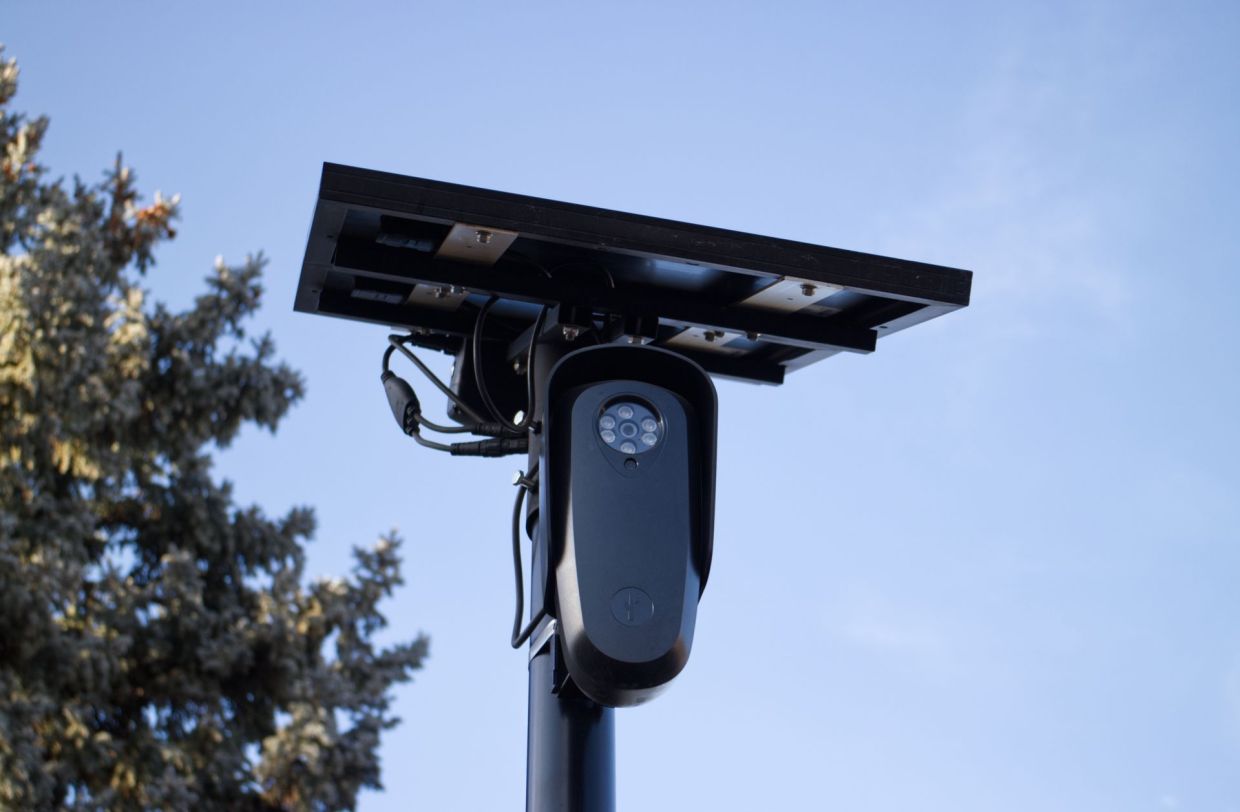
A wave of civil resistance is sweeping across America as ordinary citizens mobilize against the expanding network of automated license plate recognition cameras operated by Flock Safety. What began as scattered concerns about surveillance overreach has evolved into a coordinated, multi-faceted campaign spanning digital activism, equipment sabotage, and municipal-level political pressure—revealing deep anxieties about privacy that transcend traditional left-right political divides.
At the heart of this movement stands a paradox that troubles privacy advocates: Flock cameras operate differently from conventional surveillance systems. Rather than recording continuous video, they capture still images of vehicles, extracting data including license plate numbers, make, model, color, and distinguishing features. This information is uploaded to cloud servers where it persists for up to 30 days and can be shared across state and local jurisdictions. For law enforcement agencies and security-conscious property owners, this capability has proven invaluable in solving crimes. Police departments using the technology since its broader rollout, including Richmond, Virginia's force, credit Flock with enabling rapid suspect identification and apprehension in serious cases. Yet it is precisely this networked, persistent, and widely-accessible nature of the data that fuels opposition—what authorities describe as an essential investigative tool, critics characterize as an infrastructure for mass tracking without warrant or warrant-like oversight.
The activism opposing Flock has adopted unconventional tactics that have attracted considerable attention and concern. A figure known as Nomark, now in his early twenties, has documented on Instagram the systematic disabling of approximately 30 cameras near his Minneapolis-area home. His social media following of half a million has allowed him to reach a broad audience with instructions on rendering the devices inoperative. What distinguishes Nomark's approach is his willingness to normalize and celebrate this form of direct action. Where he initially felt apprehension during his first act of vandalism, he reports becoming increasingly comfortable with the practice. His openness about illegal conduct—which he frames as justified resistance rather than mere criminality—has helped catalyze copycat actions nationwide.
The scale of organized opposition has grown faster than many observers anticipated. The Facebook group DeFlock America has assembled more than 600,000 members, expanding daily as momentum builds. Online activists have created crowdsourced maps pinpointing camera locations, shared technical guidance on obscuring lenses, and elevated individuals arrested for equipment destruction to heroic status within their communities. This represents more than isolated acts of vandalism; it constitutes an emerging movement with infrastructure, narrative frameworks, and mobilization capacity that extends from digital platforms to physical spaces.
What renders this movement particularly significant is its coalition breadth. Support emanates from civil liberties organizations including the American Civil Liberties Union, which has characterized the movement's expansion as remarkable. Yet endorsement also comes from conservative quarters, including former Fox News personality Tucker Carlson, who has publicly praised the vandals as patriotic Americans asserting their rights. This fusion of left-libertarian and conservative skepticism toward surveillance infrastructure suggests genuine anxiety about governmental and corporate power that transcends partisan boundaries—a rare phenomenon in contemporary American politics.
The documented risks of systematic misuse have validated activist concerns. The Washington Post investigation revealed that at least 50 law enforcement officers have been accused of abusing Flock access to conduct surveillance on romantic partners and ex-spouses, utilizing state-funded surveillance infrastructure for personal purposes. Additional cases show officers using license plate data to track women who obtained abortions in states where the procedure remains criminalized, and instances of immigration enforcement authorities receiving data without proper authorization. These documented abuses suggest that once such surveillance infrastructure exists, preventing its misuse by bad actors proves difficult regardless of stated policies.
Flock's leadership has responded combatively to criticism. CEO Garrett Langley has labeled opponents as terrorists, a characterization that intensified rather than dampened opposition. This rhetorical choice appears to have backfired, providing activists with ammunition for their narrative that corporate surveillance interests prioritize expansion over democratic legitimacy or civil liberties protections. The company's aggressive stance contrasts sharply with the measured academic analysis offered by criminology researchers, who acknowledge both the genuine investigative value of the technology and the legitimate concerns surrounding its potential for abuse without robust legal frameworks governing access and use.
Despite technology's demonstrable crime-solving utility, municipal-level political resistance has proven effective. According to ACLU tallies, more than 70 municipalities—ranging from Los Angeles to smaller Virginia communities—have terminated contracts with Flock in recent months. This represents a significant erosion of the company's customer base and suggests that elected officials responding to constituent pressure are concluding that surveillance benefits do not outweigh community concerns about privacy and potential abuse. The pattern indicates that grassroots organizing focused on city councils and mayoral offices has converted abstract privacy arguments into concrete municipal policy decisions.
For Malaysia and other Southeast Asian nations observing this American debate, the developments carry important implications. The region has witnessed rapid adoption of surveillance technologies, often with limited public input or legal safeguards. China's social credit systems and automated enforcement mechanisms have influenced governance approaches throughout Asia. Malaysia itself has grappled with questions surrounding police access to digital data and CCTV networks, particularly following controversies over surveillance deployment in sensitive contexts. The American experience demonstrates that once surveillance infrastructure becomes operational and normalized, reversing course requires sustained grassroots mobilization and rare political consensus across ideological lines. The challenge of retrofitting legal protections after systems deployment proves far more difficult than establishing appropriate guardrails beforehand.
Social scientists and policy researchers have noted that the Flock movement represents an unusual moment of political convergence around technology skepticism. Professor Steven Keener of Christopher Newport University has observed that contemporary American political fragmentation makes such unified concern remarkable. The capacity of citizens to organize horizontally through digital platforms, create persuasive counter-narratives about surveillance, and translate online activism into municipal policy changes suggests that technology adoption is not inevitable once technical capabilities exist. Democratic societies retain capacity to say no, provided that opposition achieves sufficient coordination and amplitude. As surveillance technologies proliferate globally, the American experiment in pushback—imperfect as it remains—offers instructive lessons about the preconditions necessary for meaningful public input into technological governance decisions.

