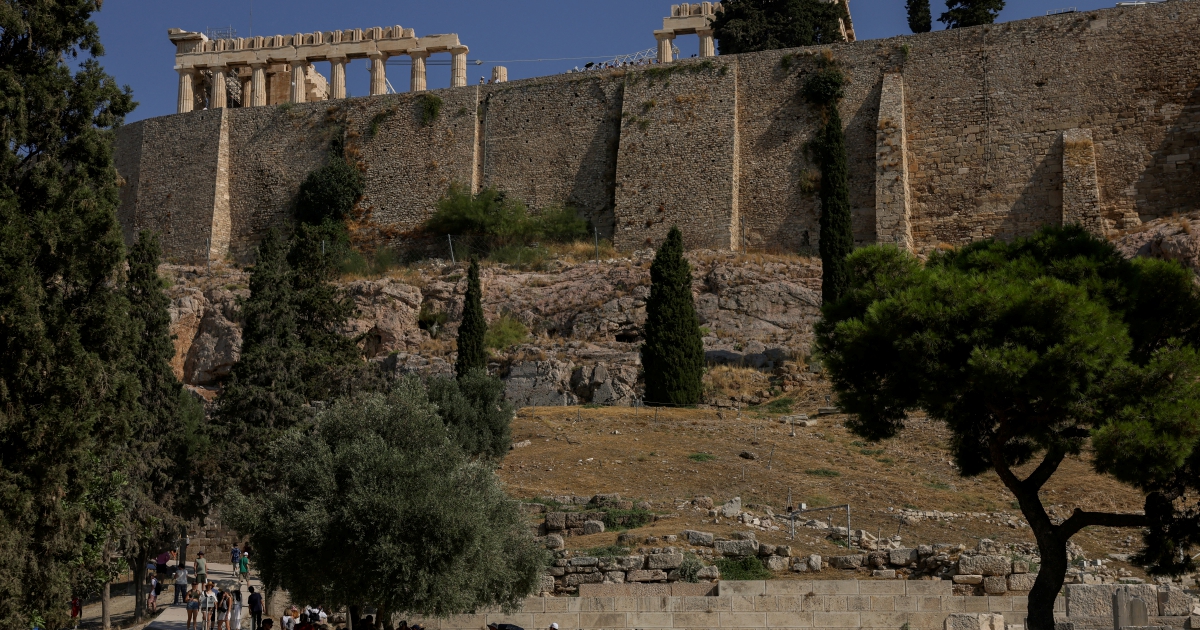
A violent incident unfolded in the heart of Athens on Tuesday when a 60-year-old man targeted two Greek-American visitors with a knife attack near the Acropolis, one of Greece's most iconic and heavily visited archaeological destinations. The assault occurred in the vicinity of the ancient site, which draws millions of international travellers annually to witness monuments spanning over two millennia of history. Police responding to the incident quickly apprehended the attacker, bringing the situation under control before further harm could occur.
The Acropolis region represents not merely a historical treasure but a cornerstone of Greece's tourism economy and cultural identity. Situated in central Athens, the archaeological precinct attracts approximately 2.5 million visitors each year, making it one of Europe's most frequented heritage sites. The concentration of globally recognised monuments—including the Parthenon, Temple of Athena Nike, and the Erechtheion—transforms the area into a bustling hub where tourists from across the world converge to explore ancient civilisation.
Incidents of this nature raise concerns about visitor safety in areas that blend historical significance with modern urban environments. Athens, like many major European capitals, faces recurring challenges balancing accessibility to cultural landmarks with adequate security measures. The Acropolis area's configuration—with winding streets, crowded pathways during peak seasons, and numerous entry points—presents inherent difficulties for comprehensive surveillance and rapid response protocols.
For Malaysian and Southeast Asian travellers, Greece remains an increasingly popular destination. Many visitors from this region undertake European tours that prominently feature classical archaeological sites, with Athens functioning as a primary gateway. The incident serves as a stark reminder that even celebrated destinations hosting millions require vigilance, and that travel safety extends beyond destination selection to encompass situational awareness and understanding local conditions.
The Greek authorities' swift response demonstrates existing security infrastructure, though questions may persist regarding preventative measures and deterrence mechanisms. The identity and motivations of the 60-year-old attacker remained under investigation, with authorities seeking to determine whether personal grievance, mental health factors, or other circumstances precipitated the assault. Understanding root causes helps destination management organisations refine safety protocols and allocate resources effectively.
Greece has maintained its status as a welcoming destination for international visitors despite occasional security incidents. The nation's tourism authority and law enforcement agencies maintain collaboration to address criminal activity and maintain public safety standards. However, isolated incidents inevitably influence traveller perceptions and booking decisions, particularly during periods of heightened global security consciousness.
Tourism represents a vital economic sector for Greece, contributing substantially to national GDP and employment. The attack, while contained quickly, underscores the vulnerability of open archaeological sites to isolated criminal acts. Heritage management authorities must balance preservation and accessibility—two competing priorities that cannot be fully reconciled through fortification alone. Modern solutions increasingly incorporate discreet security personnel, CCTV coverage, and emergency response training for site staff.
For potential visitors from Malaysia and the broader Southeast Asian region, the incident should not precipitate deterrence. Athens and Greece maintain significantly lower violent crime rates compared to global averages, and tourist areas benefit from concentrated police presence. The probability of experiencing such an incident remains statistically minimal. Rather, the situation reinforces standard travel advisories: remaining aware of surroundings, avoiding isolated locations during non-peak hours, and following guidance from official tourism bodies.
The case also highlights how international tourism networks operate. When incidents involve foreign nationals, diplomatic considerations frequently arise, with consular services providing support and ensuring appropriate investigation standards. Greek authorities maintain formal protocols for assisting international victims and their families, recognising both humanitarian obligations and the importance of preserving Greece's international reputation.
As global travel rebounds and Mediterranean destinations experience returning visitor volumes, security enhancement emerges as a strategic priority for tourism-dependent economies. Investment in trained personnel, technological infrastructure, and inter-agency coordination proves essential for managing risk while preserving the open, welcoming character that defines successful heritage tourism. The Acropolis exemplifies this balance—a space where millions safely experience antiquity annually, yet where isolated incidents demonstrate that perfect security remains unattainable.

