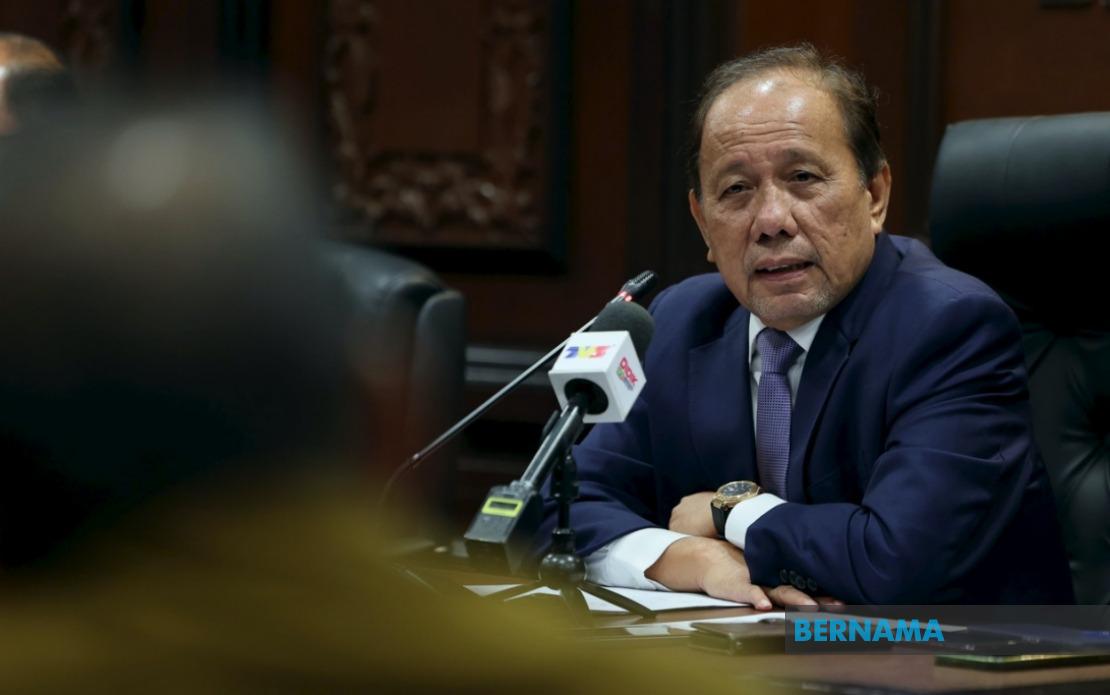
Negeri Sembilan's incumbent Menteri Besar Datuk Ismail Lasim has singled out Datuk Seri Aminuddin Harun, the state's previous PH leader, as the sole former opposition assemblyman to have completely settled outstanding allocations, painting a picture of incomplete accountability among his defeated political rivals. The disclosure emerged during remarks to the media in Seremban on August 27, underscoring an emerging governance challenge in the state following the dissolution of the assembly on June 5 and the subsequent change in administration.
While Aminuddin achieved full repayment, a broader group of former Pakatan Harapan representatives have initiated the return process without completing it. Ismail identified several former assemblymen, specifically naming coordinators responsible for the Paroi and Labu constituencies, as having started remitting funds from the end of June onwards. However, these partial returns have not matched the full quantum of disbursements originally made to their constituencies. The Menteri Besar's characterisation suggests a pattern of incomplete settlements rather than outright refusal, hinting at complications in tracking expenditure or genuine difficulties in full repayment within the stipulated timeframe.
The mechanics of allocation accountability appear more complicated than initial directives suggested. Ismail elaborated that his office has embarked upon a detailed audit of records pertaining to every former opposition assemblyman, seeking to reconcile the precise amounts distributed against what has been returned. This reconciliation process acknowledges that allocations varied considerably among representatives depending on their specific constituencies and circumstances. Rather than imposing uniform demands, the administration recognises that outstanding balances differ materially from one former lawmaker to another, necessitating individualised settlement letters tailored to each person's specific debt.
The issue of fund utilisation versus improper retention remains contested territory. Ismail suggested that some former assemblymen may have legitimately spent allocations on constituency welfare work and public services before the deadline, making full return impossible or impractical. He acknowledged this ambiguity explicitly, stating he could not definitively know whether unretured amounts reflected genuine expenditure for community benefit or financial mismanagement. This measured language contrasts with potential accusations of embezzlement or political impropriety, instead framing the allocation dispute as primarily an accounting challenge requiring documentary evidence and expense justification from individual representatives.
J. Arul Kumar, the Nilai assemblyman and Negeri Sembilan DAP chairman, preemptively defended the opposition's allocation management on the day Ismail issued his demands. Kumar asserted that all funds disbursed before the June 5 assembly dissolution had been deployed exclusively for public welfare projects rather than partisan political activities. He further claimed that all unspent balances had already been returned to the Menteri Besar's Office before July 10, accompanied by detailed financial reports itemising constituency-specific expenditures. This counter-narrative presents the opposition not as delinquent in their duties but as conscientious custodians who voluntarily settled accounts and provided transparency.
A critical temporal distinction underpins the legitimacy dispute. Ismail explicitly acknowledged that state executive councillors in post at the time of dissolution—including Aminuddin—retained ex-officio status until July 31 and consequently enjoyed full entitlement to utilise allocations throughout that entire month. This carve-out effectively legitimised one month of post-dissolution spending for the former administration's leadership, creating an asymmetry in how different former officials faced repayment obligations. Aminuddin's advantage as an ex-officio member through July may partially explain his success in clearing outstanding amounts compared to rank-and-file assemblymen.
The broader political implications for Negeri Sembilan deserve consideration within Malaysia's evolving federal-state governance landscape. Following the June assembly dissolution, Negeri Sembilan shifted from PH administration to new leadership under Ismail Lasim, representing a significant political recalibration. The insistence on allocation recoveries, while framed as standard accountability procedure, occurs within an environment of heightened political competition and transition. Demands for detailed financial justification and documentary proof of spending serve simultaneously as legitimate governance functions and potential tools for political point-scoring against a defeated opposition.
For Malaysian readers following state-level politics, this allocation dispute illuminates the practical complexities underlying democratic transitions and power transfers. Electoral defeats do not instantaneously resolve the financial and administrative entanglements accumulated during prior administrations. Former officials must navigate demands for accountability while defending their records against potentially hostile scrutiny from successor governments. The allocation controversy in Negeri Sembilan mirrors tensions seen elsewhere across Malaysia, where changes in state administration frequently generate disputes over fund management and outstanding obligations inherited from preceding regimes.
The enforcement mechanism and timeline remain under development. Ismail indicated that formal letters detailing exact repayment obligations would be dispatched only after the Menteri Besar's Office completed its comprehensive review process. This deliberate sequencing prevents premature demands based on incomplete information and theoretically ensures greater fairness in final settlements. However, the extended timeline also creates sustained political pressure on former opposition representatives, who face uncertainty regarding exact amounts owed and potential consequences for delayed payment. This uncertainty can itself influence political narratives and public perception of opposition governance standards.
Looking forward, the resolution of these allocation disputes will provide benchmarks for how Malaysian states manage transitions between administrations with opposing political alignments. If most former PH representatives ultimately satisfy their repayment obligations with credible documentation, the controversy will fade into bureaucratic routine. Conversely, protracted disputes or refusals could harden into symbols of accountability failures, providing ammunition for future political campaigns. The Negeri Sembilan situation thus transcends immediate financial reconciliation, potentially shaping voter perceptions of administrative competence and fiscal responsibility across the opposition and government alike.

