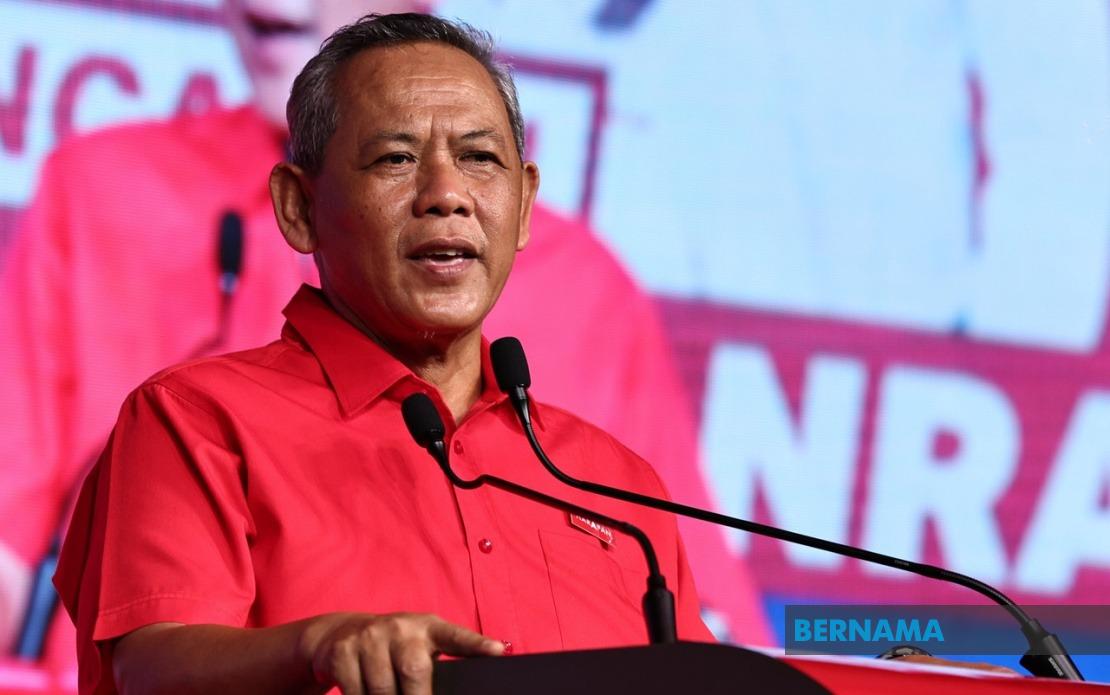
Negeri Sembilan Menteri Besar Datuk Seri Aminuddin Harun has made a direct appeal to residents of the Linggi constituency to base their electoral decisions on the government's substantive actions to address flooding rather than permitting the issue to become fodder for political exploitation as the 16th Negeri Sembilan state election approaches. Speaking after Friday prayers in Seremban on July 17, Aminuddin, who stands as the Pakatan Harapan candidate for the Linggi seat, sought to reframe the persistent flooding narrative away from partisan blame and towards evidence of concrete governmental response.
The flooding problem in Linggi has long plagued the area, with the matter gaining renewed attention on social media platforms following claims that the constituency experiences regular inundation during periods of intense rainfall in Seremban. Rather than dismissing these concerns, Aminuddin acknowledged the severity of the situation while emphasising that authorities take the matter seriously and are implementing solutions. The framing represents a strategic pivot, moving the discourse from acknowledging a problem to demonstrating that the government is actively engaged in resolving it.
Two flood mitigation projects affecting the Linggi area have already received approval and are now underway through a collaborative framework between state and federal governmental agencies. Aminuddin stressed that such infrastructure initiatives require extended implementation periods and cannot be rushed to completion within days or weeks. This explanation directly counters the expectation, common among constituents facing chronic infrastructure challenges, that electoral promises translate into immediate fixes. The dual project approach suggests recognition that the flooding issue may require multifaceted solutions rather than a single intervention.
The Menteri Besar's comments reflect a broader governance philosophy that prioritises systematic planning and incremental infrastructure development over rapid political gestures aimed at swaying public sentiment. This measured approach contrasts with the tendency, prevalent in Malaysian politics, for candidates to make sweeping promises during campaign periods without substantive backing. By positioning the government as committed to long-term structural solutions, Aminuddin is attempting to appeal to voters' rationality and patience while demonstrating administrative competence.
Aminuddin's role as Negeri Sembilan Pakatan Harapan chairman provided additional weight to his comments, signalling coalition-wide messaging rather than individual candidate posturing. The coalition's campaign strategy appears centred on its administrative track record in Negeri Sembilan and the demonstrable development projects it has undertaken. This emphasis on proven governance represents a deliberate choice to contest the election on the basis of achievements rather than rhetoric, a strategy that gains particular resonance in constituencies where citizens have witnessed government action firsthand.
The opposition's anticipated counter-messaging was implicitly acknowledged in Aminuddin's statement, as he positioned different political strategies available to competing candidates for voter evaluation. Rather than directly attacking opposition tactics, he essentially invited Negeri Sembilan voters to judge the comparative merits of established governance versus alternative approaches. This measured tone suggests confidence in the incumbent administration's standing, though it also reflects the politically sensitive nature of the flooding issue, which has the potential to mobilise discontent if not carefully managed.
The timing of Aminuddin's remarks proved significant, as the Election Commission had set the following day as nomination day for the state polls. Early voting was scheduled for July 28, with the main polling day set for August 1. This compressed electoral timeline meant that campaign messaging during mid-July would shape crucial early perceptions, making Aminuddin's effort to establish the narrative around flood mitigation efforts strategically important. The proximity to voting meant that final impressions of governmental competence would weigh heavily on electoral outcomes.
For Malaysian readers and particularly those in Negeri Sembilan, the Linggi flooding situation encapsulates broader questions about infrastructure investment, climate resilience, and the capacity of local governments to respond to environmental challenges. As Malaysia experiences increasingly intense rainfall patterns, the ability of authorities to implement effective flood mitigation becomes an electoral consideration with immediate relevance to constituents' daily safety and property security. The Linggi case thus serves as a microcosm for evaluating how different political formations approach environmental governance.
The emphasis on state-federal collaboration in the approved flood mitigation projects highlights the interdependent nature of governance in Malaysia's federal system. Effective infrastructure solutions frequently require coordination across multiple administrative levels, a reality that campaign messaging often obscures in favour of attributing credit to single political entities. Aminuddin's reference to collaborative implementation suggests implicit recognition that flood management transcends partisan boundaries, though such messaging can also be perceived as diffusing responsibility when outcomes fall short of expectations.
The deployment of appeals to voter maturity and wisdom represents a common rhetorical strategy in Malaysian politics, functioning simultaneously as flattery and as an implicit criticism of rival candidates who might be characterised as exploiting rather than respecting constituent intelligence. By framing the election as a choice between substantive governance and political opportunism, Aminuddin sought to position Pakatan Harapan as the rational choice for voters prioritising practical outcomes over campaign theatrics. The success of this messaging would ultimately depend on whether voters perceived the government's flood mitigation efforts as adequate and genuine.
As the Negeri Sembilan state election unfolded across its various phases, the Linggi constituency remained a focal point for evaluating how incumbent administrations communicate with voters on long-standing infrastructure challenges. The flooding issue, far from being peripheral to the campaign, represented a concrete test case for assessing governmental effectiveness and political credibility. Whether Aminuddin's appeal to focus on substantive solutions rather than political positioning would resonate with voters would reveal important dimensions about Negeri Sembilan's electoral priorities and the state's broader governance trajectory under Pakatan Harapan administration.

