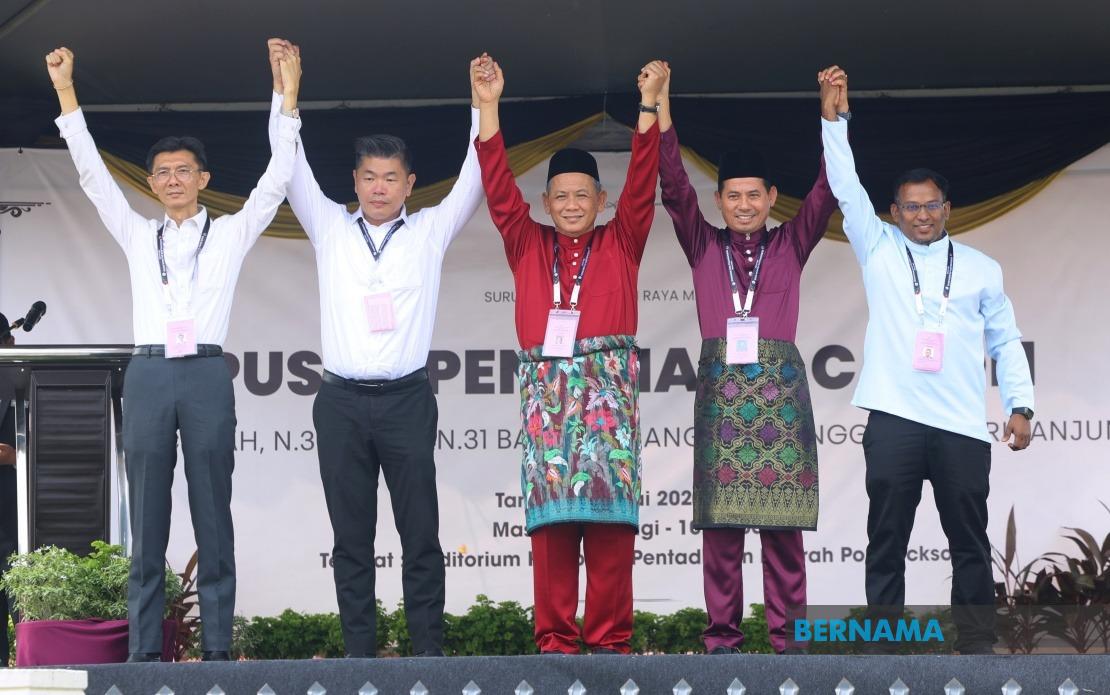
Negeri Sembilan's Menteri Besar Datuk Seri Aminuddin Harun has set out an ambitious economic development agenda for the Linggi state constituency, pledging to establish both a port facility and an industrial zone as part of his election campaign. The announcement, made during the nomination process at the District Administration Complex in Port Dickson on July 18, marks a significant policy commitment from the Pakatan Harapan candidate seeking to wrest control of the traditionally opposition-held seat from incumbent Datuk Mohd Faizal Ramli.
The proposed infrastructure projects represent a cornerstone of Aminuddin's broader vision to transform Linggi's economic landscape and enhance opportunities for the local population. As the chairman of the Negeri Sembilan Pakatan Harapan coalition, he framed the initiatives as essential components of a comprehensive strategy aimed at strengthening the constituency's connectivity and attracting manufacturing and logistics investments to the region. Such developments would align with broader economic diversification efforts across Negeri Sembilan, potentially positioning the state as a key regional hub for trade and commerce.
Aminuddin's entry into the Linggi contest reflects a calculated political move by Pakatan Harapan to challenge what many observers regard as a Barisan Nasional stronghold. His willingness to contest in such a formidable electoral environment, despite acknowledging the difficulty ahead, underscores the opposition coalition's determination to expand its footprint in the state. By personally championing this development proposal through party leadership channels and securing approval, Aminuddin has positioned himself as an advocate for transformative change in Linggi, appealing to voters seeking tangible economic benefits from their elected representatives.
The three-cornered contest features not only the incumbent Mohd Faizal of Barisan Nasional but also Datuk Zamri Md Said representing Bersatu, indicating a fragmented political landscape that could potentially work in Aminuddin's favour if opposition votes consolidate around the Pakatan Harapan candidate. This dynamic adds complexity to what might otherwise appear a straightforward contest between the ruling coalition and the opposition in a state election scheduled for August 1.
Mohd Faizal, addressing the media after the nomination process, acknowledged that while Linggi remains a Barisan Nasional stronghold, the coalition cannot afford complacency in the face of renewed electoral challenges. His cautionary tone suggests that BN strategists recognize the competitive nature of this particular contest and the need for mobilization across its machinery to maintain incumbent representation. The incumbent's call for a campaign conducted with decorum and free from excessive provocation or baseless allegations reflects broader concerns about the tone of electoral discourse in Malaysian politics.
Aminuddin's strategy of packaging concrete infrastructure promises with his candidacy taps into voter expectations for development-oriented governance. Port and industrial development proposals carry particular resonance in constituencies with maritime access or strategic logistical positioning. Linggi's geography and proximity to Selangor make such proposals plausible and potentially attractive to business interests and working-class voters alike. The announcement provides voters with a measurable metric against which to evaluate Aminuddin's electoral promises should he assume office.
The timing of these announcements within the state election cycle reflects the critical importance of the Linggi seat to Pakatan Harapan's overall performance in Negeri Sembilan. Control of individual constituencies shapes overall state assembly composition and coalition negotiations, making high-profile candidacies like Aminuddin's strategic investments in the opposition's broader electoral calculations. His positioning as both a senior state leader and a frontline candidate signals the national and state party leadership's commitment to contesting aggressively in traditionally hostile terrain.
For Negeri Sembilan voters, particularly those in Linggi, the competing visions offered by these candidates frame the election as a choice between continuity and change. Aminuddin's development-centric platform contrasts with the incumbent's proven track record of BN representation. Such infrastructure promises, while forward-looking, invite scrutiny regarding implementation feasibility, funding mechanisms, and timeline projections that voters may demand before casting their votes.
The broader implications of contests like this extend beyond Linggi's immediate boundaries. State-level elections in peninsular Malaysia serve as barometers of regional political sentiment and test beds for campaign strategies employed in subsequent general elections. The performance of Pakatan Harapan in challenging traditionally secure opposition seats provides data about voter receptivity to specific policy narratives and the effectiveness of ground-level campaign organization across different demographic segments.
As the two-week campaign period unfolds, both camps will intensify efforts to mobilize their respective voter bases and persuade swing voters through a combination of promises, performance records, and party affiliations. For Malaysian observers tracking the evolution of state-level politics and infrastructure development priorities across the country, the Linggi contest encapsulates the ongoing competition between rival coalitions to define the trajectory of regional economic development and governance quality in the post-2018 electoral landscape.

