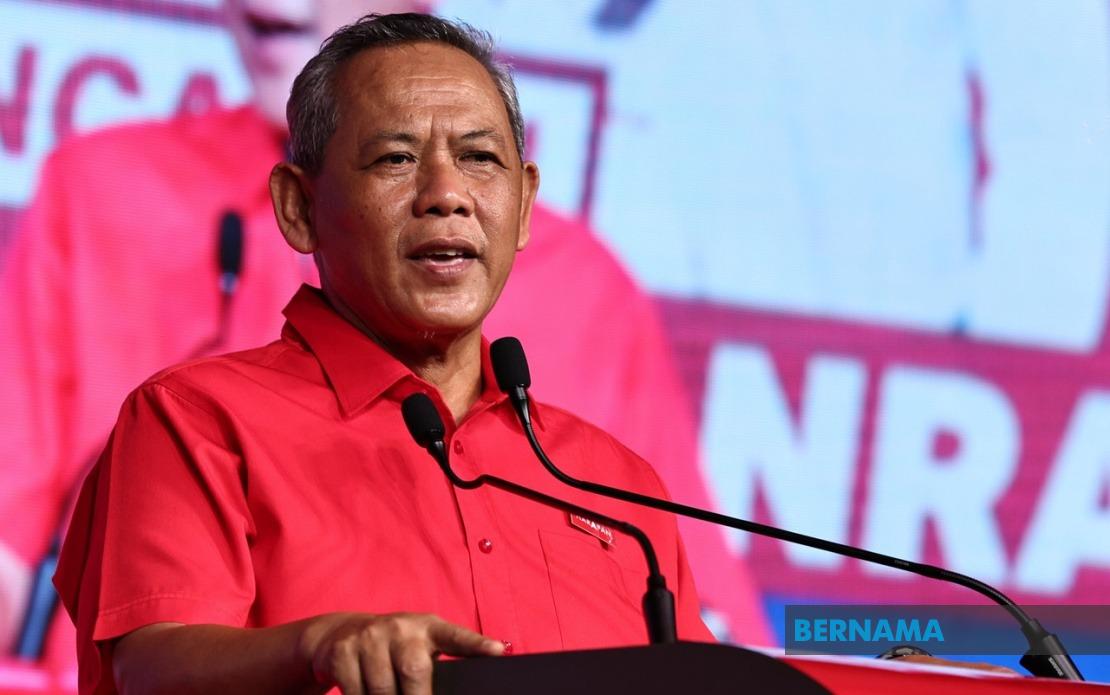
Datuk Seri Aminuddin Harun, Negeri Sembilan's Menteri Besar, has categorically rejected insinuations that his decision to contest the Linggi state seat in the forthcoming state election represents a calculated manoeuvre to escape the burden of defending his incumbent Sikamat position. Speaking in Seremban on July 16, Aminuddin emphasised that the choice to relocate his electoral base emerged from his own deliberation rather than external pressure or political necessity.
The move has triggered speculation within political circles about whether the Pakatan Harapan leadership faced confidence concerns regarding Sikamat's viability or potential demographic shifts that might have jeopardised his incumbent status. Such transitions, while not uncommon in Malaysian politics, frequently invite scrutiny about underlying political calculations. Aminuddin's forthright denial attempts to position the candidacy shift as a positive strategic decision centred on expanding his contribution to Negeri Sembilan rather than a defensive repositioning.
In his capacity as Negeri Sembilan Pakatan Harapan chairman and State PKR leader, Aminuddin articulated his commitment to serving Linggi residents with the same vigour he has demonstrated across four consecutive terms in Sikamat. This framing emphasises continuity and dedication, suggesting that his political energy and work ethic transcend geographical boundaries within the state. By invoking religious sentiment through his use of "Insya-Allah," he simultaneously appeals to voters' spiritual sensibilities whilst expressing confidence in electoral success.
Aminuddin's reflections on his Sikamat tenure provide context for understanding his political trajectory. He vividly depicted the early days of his representation as characterised by modest operating conditions—a small office situated above a shophouse with constrained financial resources. This narrative of humble beginnings and gradual development resonates powerfully with Malaysian voters who value authenticity and grassroots commitment. The account of fundraising struggles and community-driven initiatives during opposition years underscores the contrast with contemporary governance capacity, implicitly highlighting his value as an administrator.
The departure from Sikamat nonetheless represents a significant transition for a constituency that has served as Aminuddin's political foundation. His four-term tenure there established deep community connections and institutional relationships that have defined his political identity within Negeri Sembilan. By openly acknowledging that these memories will remain with him, he attempts to preserve political goodwill within Sikamat whilst simultaneously preparing supporters and party members for his relocation to new electoral terrain.
The succession arrangement designating Nor Azman Mohamad as Sikamat's Pakatan Harapan candidate carries implications for party consolidation and voter confidence in the transition. Aminuddin's public endorsement and expression of hope regarding Nor Azman's dedication seeks to reassure Sikamat voters that their constituency will receive equivalent attention and commitment from its new representative. This carefully managed handover reflects sophisticated party machinery mindful of potential voter alienation following high-profile candidate changes.
Electorally, Aminuddin faces Barisan Nasional's Datuk Mohd Faizal Ramli, the incumbent Linggi assemblyman, in what promises to be a closely contested battle. Faizal's incumbency advantage and established presence in Linggi contrast with Aminuddin's outsider status as an inbound candidate. The race will likely hinge on whether voters value Aminuddin's ministerial standing, track record, and organisational capacity sufficiently to overcome the disadvantage of competing against an established local incumbent.
The electoral timeline compressed within a fortnight creates intensity around candidacy transitions. Nominations scheduled for Saturday precede early voting on July 28, with polling day fixed for August 1. This rapid succession means candidates possess minimal time to establish momentum or adjust voter perceptions—a particular challenge for an incoming candidate attempting to displace an entrenched incumbent whilst simultaneously managing perceptions about departure from his original constituency.
For Malaysia's broader political landscape, Aminuddin's situation illuminates continuing tensions between centralism and localism within competitive federalised politics. His elevation to ministerial rank and statewide party responsibility complicates exclusive identification with single constituencies, creating pressures to contest seats aligned with strategic state-level objectives rather than personal electoral security. The decision to relocate constituencies reflects organisational calculus about optimal resource deployment and competitive positioning in what remains a fiercely contested electoral environment in Negeri Sembilan.
Among Southeast Asian democracies, candidate mobility across constituencies remains comparatively fluid, yet maintains significant local political consequences. Malaysian voters traditionally value representatives who demonstrate sustained commitment to their constituencies over extended periods, making the narrative management surrounding such transitions politically consequential. Aminuddin's emphasis on continued dedication and service regardless of geographical location represents a necessary rhetorical strategy for maintaining political legitimacy despite the tangible disruption represented by his candidacy shift.

