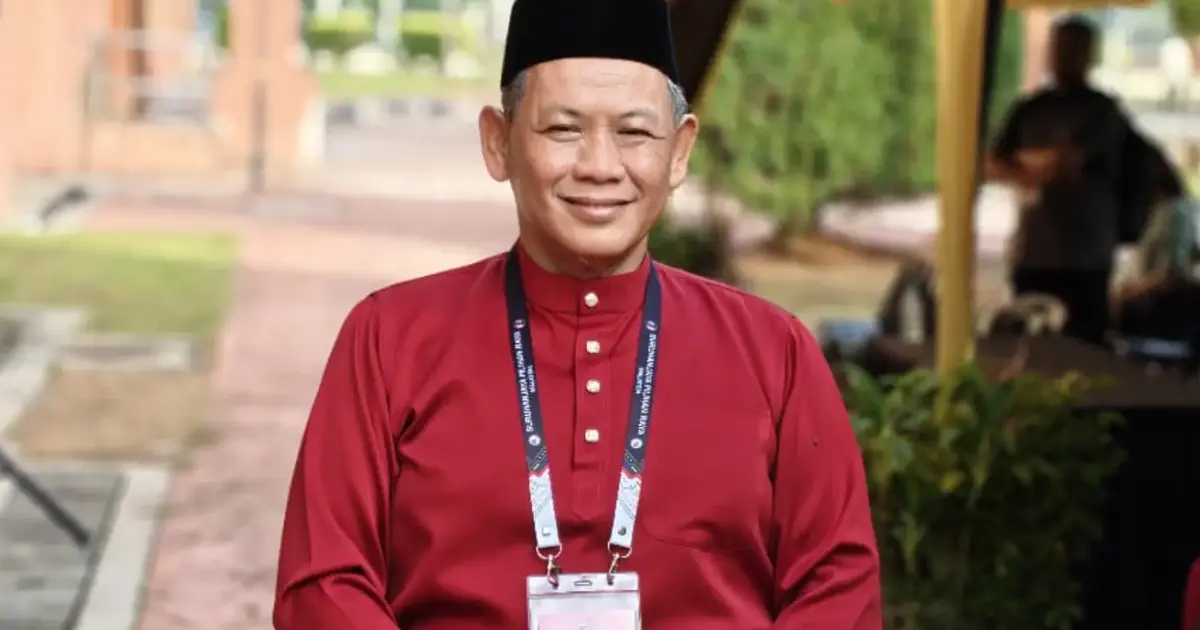
Negeri Sembilan Menteri Besar Aminuddin Harun is stepping into electoral battle in the Linggi constituency, where he confronts a complex political landscape shaped by competing coalitions and competing ambitions. The seat has become a focal point in Malaysian politics, representing the kind of ground-level contest that often determines the broader balance of power in state and federal legislatures. Aminuddin's candidacy signals PKR's determination to challenge BN's traditional dominance in this Malay-majority seat, which has long served as a reliable vote bank for the ruling coalition's machinery.
The incumbent member of parliament is Faizal Ramli, who successfully captured the Linggi seat during the 2023 general election as a BN candidate. Faizal's victory two years ago was presented as evidence of BN's continued electoral appeal in Negeri Sembilan, a state where the coalition has exercised considerable political influence. His tenure has seen him serve as a relatively standard BN representative, working within the conventional framework of government support and constituency services. Now defending his position, Faizal must navigate the challenge posed by Aminuddin's entry while managing the complications introduced by a third contestant.
The three-way contest is complicated by the presence of a Bersatu candidate, reflecting the fragmentation within Malay-Muslim political constituencies that has defined Malaysian politics since the 2018 general election. Bersatu, the party founded by former prime minister Mahathir Mohamad, has positioned itself as an alternative within the broader anti-establishment space, drawing support from voters dissatisfied with traditional BN-UMNO structures. The party's presence in Linggi suggests a deliberate strategic calculation to contest seats where they believe they can harvest protest votes or win over disaffected UMNO supporters.
Aminuddin's profile as Negeri Sembilan's chief minister adds weight to his candidacy and reflects PKR's confidence in the broader PKR-DAP-PAS coalition framework that governs the state. His position allows him to argue that his track record in state governance demonstrates his capacity to deliver for constituents, a narrative that opposition coalitions frequently employ when fielding sitting chief ministers as parliamentary candidates. The Linggi contest thus becomes a referendum on whether state-level performance translates into federal electoral appeal.
The seat's demography as a Malay-majority constituency carries significant implications for all three candidates. Historically, such constituencies have favored UMNO and its coalition partners, reflecting deep-rooted voting patterns shaped by decades of party machinery, cultural alignment, and resource distribution networks. However, Malaysia's political landscape has become increasingly volatile, with Malay voters demonstrating willingness to switch loyalties between competing blocs. The 2023 election itself showed substantial shifts within this voter category, with some moving toward PAS-aligned parties and others toward PKR-led alternatives.
BN's position in such contests depends heavily on maintaining organizational coherence and mobilizing traditional support structures, including civil service networks, religious establishment connections, and community leadership aligned with UMNO. Faizal's challenge lies in consolidating this support while persuading voters that BN's governance record justifies continued confidence. The party faces particular pressure given broader discourse about government accountability and the need for demonstrable delivery of infrastructure, employment, and development to Malay-majority constituencies.
PKR's gambit with Aminuddin suggests a calculation that state-level legitimacy, combined with the coalition's federal-level presence and policy initiatives, can overcome traditional BN advantages in rural and semi-rural Malay constituencies. This reflects a broader opposition strategy of leveraging chief ministers and sitting state executives as parliamentary candidates, reasoning that local credibility translates into parliamentary contests. However, this approach carries risks if voters compartmentalize state and federal elections or if BN successfully portrays PKR's state government as inadequate.
Bersatu's participation introduces unpredictability into the contest. The party draws supporters who view themselves as Islamist-oriented or aligned with Mahathir's political legacy, and their presence in three-way contests often proves decisive by fragmenting anti-BN or anti-PKR votes. In Linggi, Bersatu's appeal would likely target traditional Malay-Muslim voters who feel neither fully represented by BN's corporatism nor by PKR's more pluralistic orientation. Whether Bersatu can achieve sufficient vote share to materially affect the outcome remains uncertain, but the party's track record suggests they can accumulate meaningful support in such constituencies.
The broader context involves questions about the direction of Malaysian federalism and state-level governance. Negeri Sembilan's chief minister election in the coming period depends partly on parliamentary composition, making the Linggi seat genuinely consequential for both the state's political trajectory and broader federal arrangements. A PKR victory would strengthen the opposition coalition's foothold in a state where they currently govern, while a BN hold would affirm the coalition's residual strength in Malay-majority constituencies and potentially indicate declining opposition momentum.
For Malaysian voters, particularly in Negeri Sembilan, the Linggi contest represents an opportunity to evaluate competing visions of governance. BN's continuity argument contrasts with PKR-led coalition's reform narrative and Bersatu's alternative Islamist positioning. The three-way dynamic means that voters cannot simply select between two established alternatives but must consider whether introducing a third force serves their interests or merely splinters the opposition.
The outcome will offer insights into the durability of political coalitions after the 2023 general election and the extent to which incumbency, personality, and development record matter relative to party identity and coalition affiliation. In a seat that has long favored BN, the fact that it is now genuinely contested reflects the structural shifts in Malaysian politics that have emerged over recent electoral cycles, suggesting that even traditional strongholds can no longer be taken for granted by any coalition.

