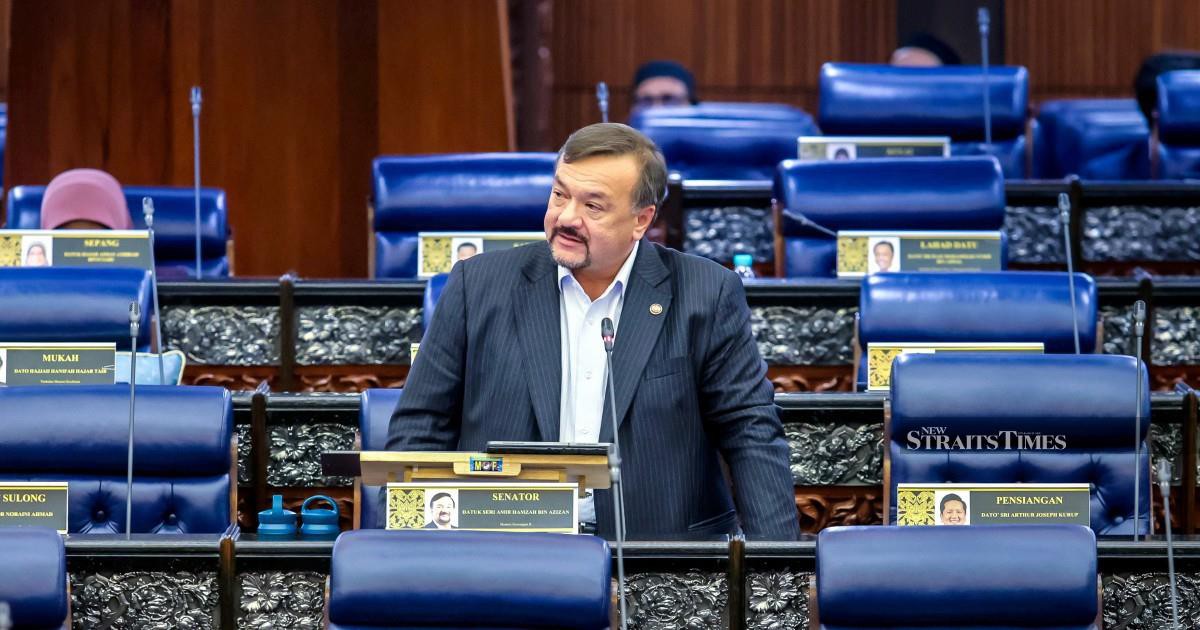
The federal government has reaffirmed its commitment to an impartial investigation into Tabung Haji, declaring that no individual, regardless of position or background, will receive political protection if found culpable in the ongoing probe into the institution's past operations. The statement underscores renewed efforts to examine the Islamic pilgrimage fund's investment decisions and financial management practices, signalling that accountability remains a priority in addressing historical governance lapses.
Tabung Haji, which manages savings and investments for Malaysian Muslims planning the Hajj pilgrimage, has faced mounting scrutiny over its handling of billions in depositor funds. The institution has long been a focal point of public concern, particularly regarding investment losses and decisions that significantly eroded accumulated reserves. Recent years have seen sustained calls for greater transparency and accountability, especially as reports highlighted questionable financial strategies that disadvantaged individual account holders.
The timing of this renewed commitment reflects broader domestic pressure for institutional reform across Malaysia's financial sector. Tabung Haji's difficulties have resonated beyond its immediate stakeholder base, as millions of Malaysian Muslims rely on the organisation to safeguard their Hajj savings. Investment underperformance and governance questions have prompted families to reassess their trust in the institution, making credible investigations essential to public confidence.
The investigation encompasses multiple dimensions of institutional management, extending beyond recent decisions to historical investment choices made over preceding decades. Authorities are examining whether fiduciary responsibilities were consistently upheld and whether decision-making processes prioritised depositor interests adequately. This comprehensive approach acknowledges that institutional problems rarely emerge suddenly but typically accumulate through sustained lapses in governance and oversight.
Tabung Haji's financial journey mirrors broader challenges faced by investment-dependent institutions in volatile markets. However, investigations are focusing on whether management responses to market downturns reflected sound judgment or whether poor diversification and risk management amplified losses. The distinction matters considerably, as it determines whether institutions failed through external economic forces or through preventable internal failures.
The pledge of impartial investigation carries particular weight given Malaysia's political dynamics. Institutional probes can sometimes become entangled with factional interests or become selective in their application, undermining public trust. By explicitly stating that no one will receive preferential treatment, authorities aim to demonstrate that the investigation will follow evidence and legal principle rather than political convenience.
For Malaysian Muslim savers, this commitment represents a critical juncture in institutional accountability. Many account holders have witnessed decades of investment decisions that failed to protect their accumulated savings from erosion. An investigation that identifies responsibility without consequence would ultimately ring hollow, deepening scepticism about governance reform efforts across public institutions.
The broader implications extend to Malaysia's financial regulatory framework more generally. How authorities handle the Tabung Haji investigation will influence perceptions about enforcement consistency across other institutions and sectors. Regulatory credibility depends substantially on demonstrating that violations and negligence carry genuine consequences regardless of the accused's seniority or connections.
Regional observers view Malaysia's institutional accountability efforts as indicative of the country's commitment to financial system integrity. Southeast Asia's development depends partly on maintaining investor confidence in regulated institutions, whether domestic or international stakeholders. Inconsistent accountability undermines regional financial stability and raises questions about systemic safeguards.
The investigation's scope includes examining personnel decision-making at various hierarchical levels. This approach recognises that institutional failure typically involves cumulative choices by multiple actors rather than isolated individual decisions. Understanding how organisational culture and incentive structures evolved sheds light on whether problems reflected deliberate misconduct or systemic failings requiring structural reform.
Tabung Haji's path forward hinges substantially on investigation conclusions and consequent remedial actions. Depositors require assurance that past vulnerabilities will not recur, necessitating both personnel accountability and institutional restructuring where indicated. The government's stated commitment to unshielded accountability provides an essential foundation for such restoration of confidence.
Moving forward, the investigation's transparency will matter significantly to public perception. Regular communication about investigative progress, findings and their implications allows stakeholders to assess whether institutions are genuinely reforming or merely performing the appearance of accountability. In an environment where institutional trust remains fragile, visible commitment to investigation rigour represents a necessary first step toward restoring credibility.
Ultimately, the investigation's integrity depends on authorities demonstrating that identifying wrongdoing and applying consequences occurs consistently, regardless of political considerations or the accused's standing. Malaysia's institutional reform trajectory will be substantially influenced by how thoroughly and impartially this high-profile investigation unfolds.

