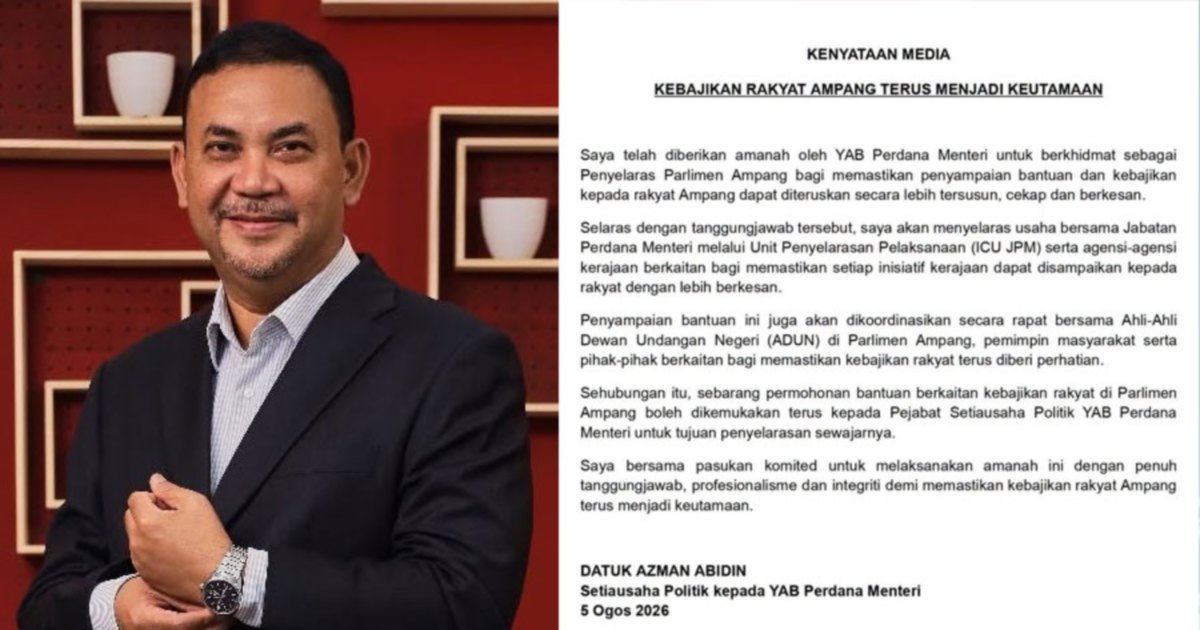
The Prime Minister's political apparatus has taken direct control of parliamentary affairs in Ampang, with one of Datuk Seri Anwar Ibrahim's key political secretaries now serving as the constituency's coordinator. This development follows the recent suspension of PKR lawmaker Rodziah Ismail's ability to access the MyKhas system, which distributes funds for constituency development initiatives. The move signals a significant intervention by the Prime Minister's office into local party management and represents a notable escalation in what appears to be internal friction within the PKR machinery.
The suspension of Rodziah Ismail's fund access through the MyKhas platform fundamentally disrupts her capacity to manage constituency resources and undertake development projects that residents typically expect from their elected representative. The MyKhas system serves as the primary mechanism through which parliamentarians channel allocations for local infrastructure, community programmes, and grassroots assistance. By restricting her access, the ruling coalition has effectively sidelined her from key functions of parliamentary representation, even as she technically retains her seat in Dewan Rakyat.
The appointment of a Prime Minister's aide to coordinate parliamentary activities in Ampang effectively creates a parallel structure of authority within the constituency. This arrangement bypasses traditional chain-of-command protocols within PKR and places responsibility directly under federal executive supervision. Such interventions typically indicate that central party leadership has lost confidence in local management or seeks to prevent particular officials from exercising discretionary powers over resources. The decision raises pertinent questions about the nature of Rodziah Ismail's conduct or positions that prompted such measures.
Within Malaysia's political context, parliamentary coordinators wield considerable influence over how federal funds translate into local benefits. They liaise between constituent communities and national government bodies, determining priorities for resource allocation and managing relationships between local stakeholders. By inserting a loyalist directly under the Prime Minister's oversight, the administration has secured tighter control over development spending in a strategically important urban constituency. Ampang, as part of the Klang Valley metropolitan region, carries substantial electoral significance and economic importance.
This development carries implications for PKR's internal cohesion as the party works to consolidate its position within the ruling Pakatan Harapan coalition. The decision to subordinate local parliamentary management to federal office authority suggests concerns about either Rodziah Ismail's political reliability or her management capabilities. Such moves, while asserting central authority, can sometimes breed resentment among party members who perceive them as undermining democratic principles or marginalising elected representatives unnecessarily. The party must balance maintaining discipline with preserving morale among backbenchers.
The suspension of MyKhas access effectively reduces Rodziah Ismail's ability to demonstrate tangible delivery to her constituents, a critical component of parliamentary performance in Malaysia's competitive electoral environment. Constituents typically gauge their representatives' effectiveness by the visible infrastructure and assistance available in their areas. By restricting her fund management authority, the ruling administration has significantly constrained her capacity to show legislative success to voters, potentially affecting her political viability and electoral prospects in future contests.
For residents of Ampang, this restructuring introduces uncertainty regarding the flow of development resources. While the new coordinator maintains the formal pathways of fund distribution, constituency members may find the process less responsive to localised needs or personal appeals than direct communication with their elected representative would typically provide. The new arrangement requires an intermediary layer between resident concerns and decision-making authority, potentially slowing response times and creating bureaucratic friction in what should be straightforward constituent services.
The appointment also reflects broader patterns within Malaysia's political system where executive power increasingly encroaches on parliamentary independence and local representation. When Prime Ministers' offices directly appoint coordinators overseeing constituency functions, they effectively subordinate elected parliamentarians to federal bureaucratic structures. While proponents argue such arrangements enhance coordination and accountability, critics contend they erode the meaningful authority that voters expect their elected representatives to possess.
Looking forward, the Ampang situation will likely attract scrutiny from both within PKR and from political observers monitoring coalition dynamics. If additional suspensions or coordinators follow, it could signal systematic efforts to recentralise power within the executive at the expense of parliamentary autonomy. Alternatively, if this remains an isolated incident tied to specific circumstances involving Rodziah Ismail, observers may view it as a proportionate administrative response to particular governance concerns. The trajectory of similar interventions across other constituencies will ultimately indicate whether this represents ad hoc problem-solving or emerging governance philosophy.
The development underscores ongoing tensions within Malaysia's ruling coalition regarding the balance between executive authority and parliamentary independence. As PKR navigates its evolving role within Pakatan Harapan and government, decisions about resource control and representative authority will shape party dynamics and voter perceptions of its governance quality. Ampang serves as a test case revealing how the coalition manages internal disagreements and exercises centralised control over what should be distributed parliamentary functions.

