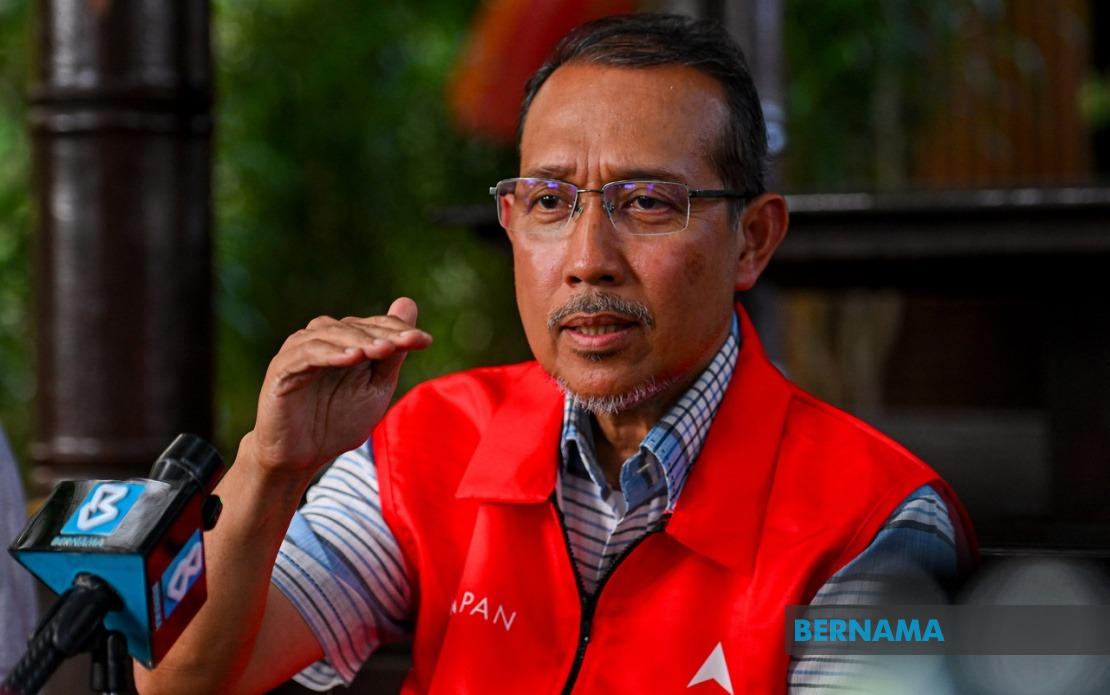
Datuk Muhammad Nazri Kassim, Pakatan Harapan's representative for the Ampangan state seat, has outlined an ambitious plan to reshape the Negeri Sembilan constituency into a prosperous township that balances public safety with economic opportunity. Speaking during campaigning in Seremban ahead of the 16th state election, he pitched his vision as rooted in practical improvements to daily living conditions rather than sweeping promises. The candidate's strategy hinges on recognising that voter concerns in urban constituencies like Ampangan often centre on tangible issues affecting household welfare and neighbourhood character.
Infrastructure maintenance emerges as Nazri's flagship priority, with particular emphasis on preventing the flooding that has periodically disrupted residents' lives. He highlighted the catastrophic floods of 2021 as a turning point that demonstrated how reactive approaches to water management fail communities. Rather than treating floods as inevitable seasonal occurrences, Nazri frames proper maintenance of roads, drains, ditches and riverbanks as foundational public governance. This framing carries political weight in Negeri Sembilan, where water management failures have been attributed to both state and federal governments in previous cycles. His reference to the state government's collaborative river maintenance programme over the past three to four years suggests continuity with established PH policies while subtly claiming credit for reducing flood severity.
The economic dimension of Nazri's platform reflects an understanding that Ampangan's central location within Seremban creates unique opportunities often overlooked by administrations focused on larger development projects. He proposes leveraging areas such as Benteng through targeted revitalisation that would attract visitors while creating income opportunities for small traders and local residents. This approach recognises that economic development need not be synonymous with large-scale commercialisation that displaces existing communities. Instead, it envisions incremental improvement that enhances the appeal of existing commercial spaces, potentially increasing foot traffic and raising property values that benefit small business operators already established in the constituency.
Nazri's vision explicitly connects environmental quality to economic vitality, arguing that cleanliness, attractive landscaping, and well-maintained infrastructure directly influence both residents' quality of life and their capacity to conduct business. This linkage represents a subtle critique of administrations that treat aesthetics and maintenance as secondary to headline-grabbing mega-projects. For constituencies like Ampangan with substantial working-class and small entrepreneur populations, the ability to operate in clean, safe surroundings becomes a practical economic concern rather than merely a quality-of-life preference. Traders working in areas with poor drainage, cluttered surroundings, or safety concerns face reduced customer flow and reputational challenges for their businesses.
The candidate's campaign methodology emphasises direct engagement with voters through house-to-house visits rather than relying solely on public events or media outreach. This approach serves both practical and political purposes. Practically, it allows identification of specific neighbourhood concerns that might not surface in larger forums—particular trouble spots with water seepage, informal traders facing harassment, or deteriorating public spaces. Politically, it signals accessibility and suggests that elected representatives should be responsive to granular community feedback rather than imposing top-down solutions. In an increasingly crowded political landscape where generic promises proliferate, demonstrating willingness to listen to individual grievances differentiates a candidate's approach.
The Ampangan constituency presents distinct electoral dynamics that shape the relevance of Nazri's messaging. With 21,336 registered voters distributed across a compact urban area within the larger Seremban parliamentary constituency, voter density concentrates political contests around neighbourhood-level issues. The three-way contest between Nazri of Pakatan Harapan, Datuk Dr Mohamad Rafie Malek of Perikatan Nasional, and Noor'azah Harun of Bersatu fragments the opposition vote while potentially benefiting the PH candidate if his ground campaign successfully mobilises supporters. However, the presence of a Bersatu candidate complicates the picture for any candidate seeking to claim Malay-Muslim votes in what appears to be a multi-ethnic constituency.
Negeri Sembilan's election timing on August 1, following early voting on July 28, compresses the campaign period and favours candidates with strong ground presence and prior name recognition. Nazri's emphasis on face-to-face engagement reflects recognition that in compressed campaigns, traditional media may matter less than the ability to activate existing supporters and persuade persuadable voters through personal contact. The constituency's urban character likely means higher baseline political awareness and engagement compared to more rural areas, requiring candidates to offer substantive policy positions rather than relying on personality or ethnic mobilisation alone.
The infrastructure and economic development platform also positions Nazri within a broader PH narrative about competent governance focused on serving residents' practical needs. By emphasising flood prevention rooted in evidence from the 2021 experience, he anchors his candidacy in documented performance rather than aspirational promises. Similarly, his economic hub proposal builds on the existing commercial character of Ampangan and Benteng rather than proposing transformative but uncertain mega-projects. For voters experiencing economic uncertainty and facing regular weather-related disruptions, these anchored proposals may resonate more effectively than utopian visions.
The broader context of Negeri Sembilan's political landscape shapes the stakes of this local contest. As one of Malaysia's smaller states, Negeri Sembilan's elections often reflect national political currents while retaining local characteristics. The 16th state election occurs within a complex political environment where Pakatan Harapan's federal governance record remains contested by opposition parties and faces pressure from internal coalition tensions. Candidates like Nazri must therefore navigate between defending PH's federal record and emphasising state-level accomplishments and local priorities. His focus on specific Ampangan challenges—floods, small trader livelihoods, environmental quality—allows this navigation by demonstrating that PH governance delivers tangible local benefits regardless of broader political debates.
The polling date of August 1 falls within Malaysia's monsoon season when flood risk peaks, potentially amplifying voter attention to Nazri's infrastructure and river management messaging. Residents experiencing or anticipating flooding during the campaign period may weigh candidates' flood mitigation records more heavily than usual. This timing advantage only accrues if voters perceive Nazri's proposed approach as genuinely different from previous administrations' responses to flooding. His detailed reference to collaborative river maintenance over three to four years provides specificity that generic flood prevention promises lack, though opposition candidates may counter that the PH government failed to prevent specific flooding incidents within Ampangan itself.
Looking beyond the election, Ampangan's status as an urban constituency within Seremban suggests that economic revitalisation efforts, if implemented, would face challenges including limited land availability for expansion, existing traffic congestion, and potential conflicts between small trader interests and larger commercial developments. Nazri's vision of attracting visitors to areas like Benteng presupposes successful management of these competing interests without displacing existing commercial activity. Success would require coordination across state government, local councils, and potentially federal agencies responsible for specific infrastructure such as rivers, creating implementation complexities that campaign messaging often understates.
The candidate's emphasis on creating income opportunities for small traders and local residents reflects recognition that Ampangan's voters likely include self-employed individuals and micro-entrepreneurs for whom government policy directly affects livelihood stability. Many urban Malaysians in this position have experienced economic pressure from competing online platforms, rising commercial rents, and shifting consumer behaviour. A government-supported environment featuring cleaner public spaces, improved traffic flow, and enhanced foot traffic could provide marginal but meaningful economic relief without requiring direct fiscal transfers. This framing of economic policy as environmental and infrastructural improvement rather than wage adjustment or subsidy also carries political advantages for a government budget-constrained by competing demands.
As polling day approaches, Nazri's campaign strategy offers a revealing case study in how Malaysian candidates calibrate messaging for urban constituencies. Rather than claiming transformative change or targeting specific ethnic communities with separate messaging, his platform emphasises incremental improvement in fundamentals affecting daily life and livelihood opportunities. Whether voters in Ampangan respond to this practical, infrastructure-focused approach or prefer opponents' alternative visions will shape not only the seat's outcome but potentially broader conclusions about what urban Malaysian voters prioritise in local elections. The August 1 polling will provide empirical evidence about whether governance focused on floods, drains, and small trader prosperity resonates with the 21,336 registered voters in this Seremban-based constituency.

