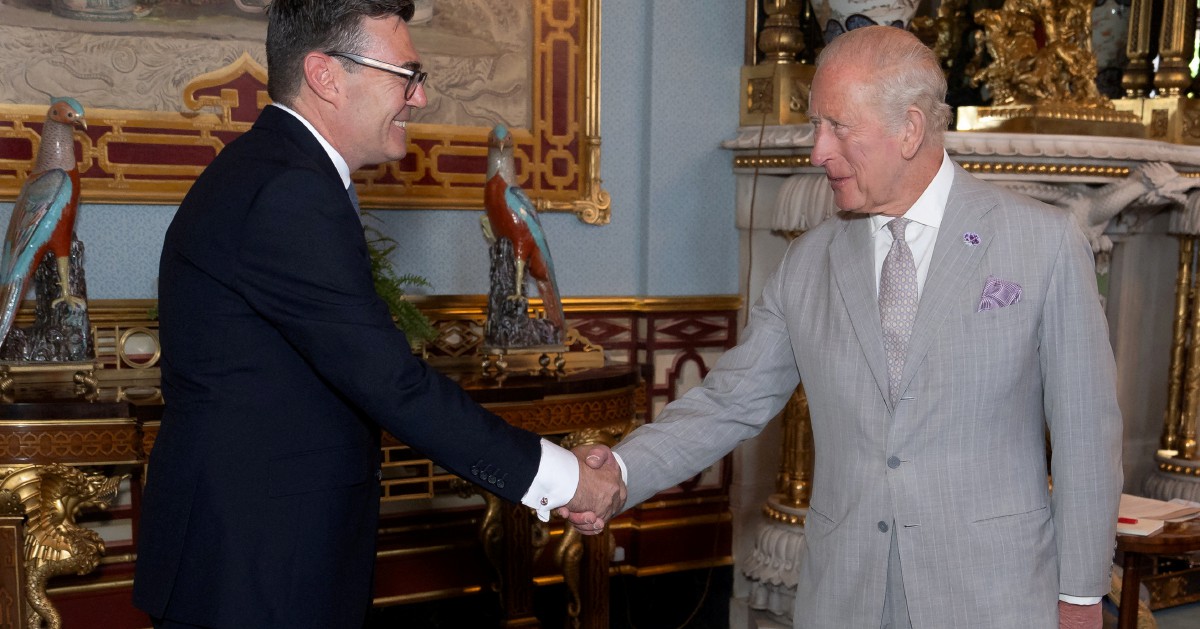
Andy Burnham was formally appointed as the United Kingdom's new prime minister on Monday following a traditional meeting with King Charles III at Buckingham Palace. The ceremony marks the conclusion of a political transition process and represents a notable shift in British governance after Keir Starmer's tenure in office.
The appointment of Burnham, a seasoned political figure with decades of experience in public service, signals a change in direction for the British government. His predecessors' administrations have grappled with numerous domestic challenges, ranging from economic pressures to social policy debates. Burnham's accession to the highest office comes at a critical juncture for Britain, where multiple policy areas demand urgent attention and strategic vision.
Burnham's political trajectory has been marked by substantial roles in government and local administration. Before reaching the premiership, he accumulated considerable experience that shaped his approach to governance and public service. His rise through the political ranks demonstrates the competitive nature of British politics, where ambitious politicians must navigate complex party dynamics and public opinion to reach the summit of power.
The formal investiture at Buckingham Palace represents a constitutional tradition that underscores the role of the monarchy in British democratic processes. King Charles III's involvement in the appointment process, whilst largely ceremonial, reinforces the continuity of constitutional governance. This moment reflects the interplay between the established institutions of British democracy and the evolving political landscape.
As Burnham prepares to outline his policy agenda and vision for the nation, observers across the political spectrum will scrutinise his approach to pressing concerns including the economy, healthcare, education, and social services. The transition between prime ministers typically involves not only a change in leadership style and priorities but also broader shifts in governmental philosophy and operational focus. Burnham's plans are expected to address the accumulated challenges left by preceding administrations.
For Malaysian and broader Southeast Asian readers, changes in British political leadership carry significance given the historical ties and ongoing diplomatic relationships between Commonwealth nations. The United Kingdom remains an influential player in international affairs, and shifts in British policy direction can affect global trade dynamics, foreign policy positions, and strategic alliances that extend to the Asia-Pacific region.
Burnham's appointment also occurs within the context of broader political trends affecting Western democracies. Voters across multiple nations have expressed desire for change and new approaches to longstanding problems. The transition from Starmer to Burnham reflects similar patterns of political renewal that observers have noted in other major democracies seeking fresh leadership and alternative policy directions.
The new prime minister will inherit a government apparatus shaped by previous administrations' decisions and must establish his authority whilst managing established portfolios and departmental structures. The transition period typically involves reshuffling key cabinet positions, and Burnham's choices regarding senior advisors and ministerial appointments will provide early signals about his governing priorities and leadership philosophy.
International observers will monitor how Burnham's premiership affects Britain's engagement with existing alliances and bilateral relationships. His initial policy announcements and diplomatic overtures will shape perceptions of British priorities on the global stage. Whether his government emphasises strengthening traditional partnerships or pursuing new strategic alignments remains an open question that will unfold in the coming weeks and months.
The timing of this transition occurs amid broader discussions about governance models, accountability, and the effectiveness of political institutions in addressing contemporary challenges. Burnham's inaugural period as prime minister will be closely watched by analysts seeking to understand whether his administration can deliver on its stated objectives and restore public confidence in government institutions.
As parliamentary procedures move forward under Burnham's leadership, the government will be expected to present legislative priorities and operational frameworks that detail implementation of campaign promises and policy initiatives. The relationship between this new administration and Parliament will establish the tone for governance during his tenure and influence the government's capacity to advance its agenda.
Burnham's assumption of the premiership represents a culmination of personal ambition tempered by institutional expectations and public scrutiny. The months ahead will determine whether his leadership proves transformative or merely transitional, and whether his administration can address the complex challenges facing modern Britain whilst maintaining stable governance and public support.

