Andy Burnham, the high-profile mayor of Manchester, has swiftly positioned himself as a leading contender to become the next leader of Britain's Labour Party following Prime Minister Keir Starmer's shock resignation announcement. His emergence as a frontrunner in what promises to be a closely watched leadership contest reflects both his substantial political profile within the party and his appeal to Labour's base seeking a fresh direction.
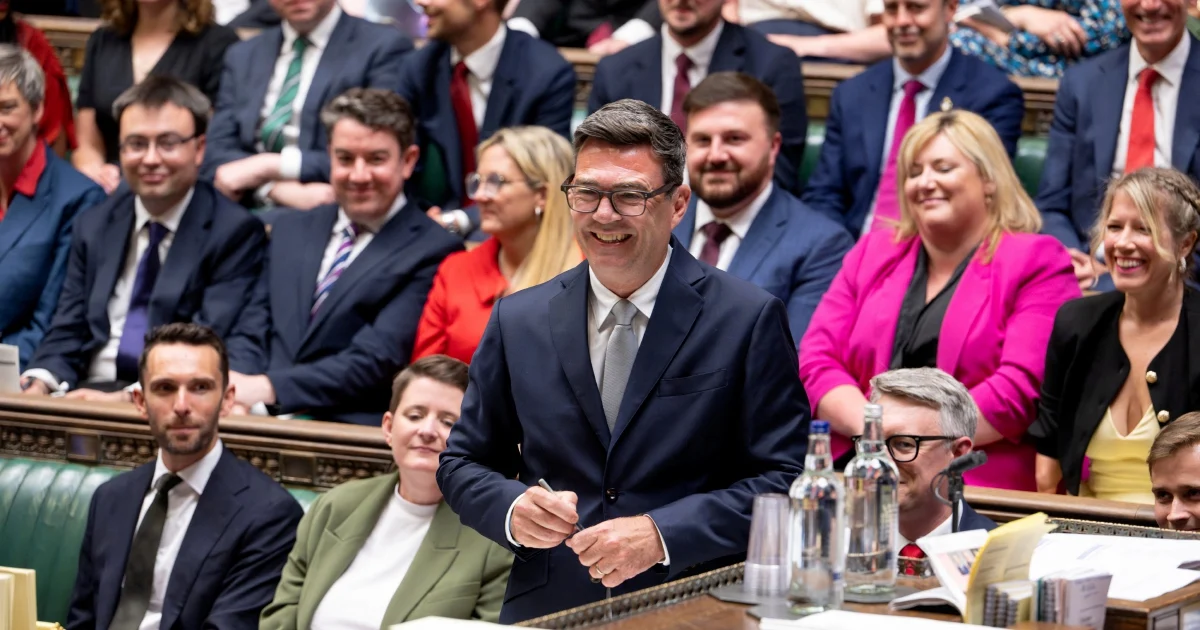
Burnham's prominence in British politics has grown considerably through his tenure as mayor of Manchester, where he has championed regional interests and developed a public persona that resonates beyond Westminster circles. His parliamentary colleagues gave him an enthusiastic reception when he appeared in the Commons following Starmer's announcement, signalling support among fellow MPs for his potential candidacy. This immediate backing underscores the respect he has cultivated within Labour ranks over his lengthy parliamentary career.
The Manchester mayor's political journey spans decades, having served in various ministerial roles and shadow positions before taking the helm of one of England's most economically significant cities outside London. His experience navigating the complexities of regional governance while advocating for northern England's interests has earned him the informal title of "King of the North" among supporters who see him as a champion of areas that have historically felt neglected by Westminster-based politics. This regional focus carries particular weight within Labour, which has struggled to maintain dominance in traditional strongholds across northern Britain.
Burnham's positioning as a potential successor carries implications for Labour's broader political strategy. His profile as a northern politician who has successfully managed local administration while maintaining parliamentary influence suggests a candidate capable of bridging the divide between regional and national concerns. For Malaysian and Southeast Asian observers, his rise illustrates how political movements globally are grappling with regional versus centralised power dynamics, a tension equally relevant in federal systems across Asia.
The timing of Starmer's resignation has created uncertainty about Labour's immediate direction, with the party now facing questions about whether it should pursue continuity or embrace significant change. Burnham's candidacy represents something of a middle ground—a figure with Labour credentials and mainstream acceptance rather than a radical departure from established party direction. His potential appeal extends across different Labour factions, from traditional working-class voters concerned about economic conditions to metropolitan progressives who value his environmental and public health advocacy.
Within the broader British political landscape, a Burnham-led Labour Party would likely emphasize investments in regional development, particularly in post-industrial areas of northern England that have experienced decades of economic underperformance. His track record in Manchester, where he has pursued regeneration projects and advocated for devolved power over local economic policy, suggests this would be a central theme of his leadership. Such regional focus could help Labour recover support among voters who have drifted toward other parties in recent years.
Burnham's international engagement, though less prominent than his domestic profile, includes working relationships with global city networks and participation in climate initiatives. His participation in such forums demonstrates awareness of interconnected global challenges, relevant as Britain seeks to reposition itself diplomatically following Brexit. For regional observers, his approach to balancing local priorities with international responsibilities offers insights into how political leaders navigate competing pressures in an increasingly interconnected world.
The political calculations surrounding his candidacy remain complex. Potential rivals for the Labour leadership will likely emerge from various quarters of the party, and the contest will reflect broader divisions over economic policy, social issues, and the party's identity moving forward. Burnham's advantages include name recognition among the general public, substantial experience in both parliament and regional administration, and demonstrated ability to command media attention beyond traditional political circles. However, some within Labour's progressive wing may question whether his relatively centrist positioning adequately represents the party's activist base.
Starmer's resignation creates both opportunity and risk for Labour's institutional stability. The party must conduct a leadership election while remaining coherent enough to maintain parliamentary operations and mount effective opposition to the governing Conservative Party. For Malaysian readers familiar with multi-party systems and coalition politics, the challenges facing Labour illustrate how even single-party-dominant systems must manage internal leadership transitions while maintaining governmental functionality and electoral competitiveness.
Burnham's emergence as frontrunner reflects Labour's current preoccupations: restoring electoral credibility after electoral disappointment, reconnecting with alienated regional voters, and demonstrating competence in addressing pressing economic and social challenges. His campaign, should he formally declare candidacy, will likely emphasize practical governance experience and commitment to improving living standards for ordinary Britons rather than pursuing transformative ideological agendas. This pragmatic positioning appeals to voters and party members exhausted by recent political turbulence.
The broader implications of Labour's leadership succession extend beyond party politics into fundamental questions about Britain's political future. The party's choice of leader will signal its preferred strategy for rebuilding electoral support and reconstructing the coalition of voters necessary for governing. Burnham's potential ascendancy suggests Labour may favour a leader with deep roots in traditional party constituencies rather than someone representing dramatic departure from established norms. As the leadership race unfolds, his background as a northern politician who has maintained credibility in Westminster suggests a candidate attempting to span the divide between regional and national political concerns that has increasingly fragmented British politics.