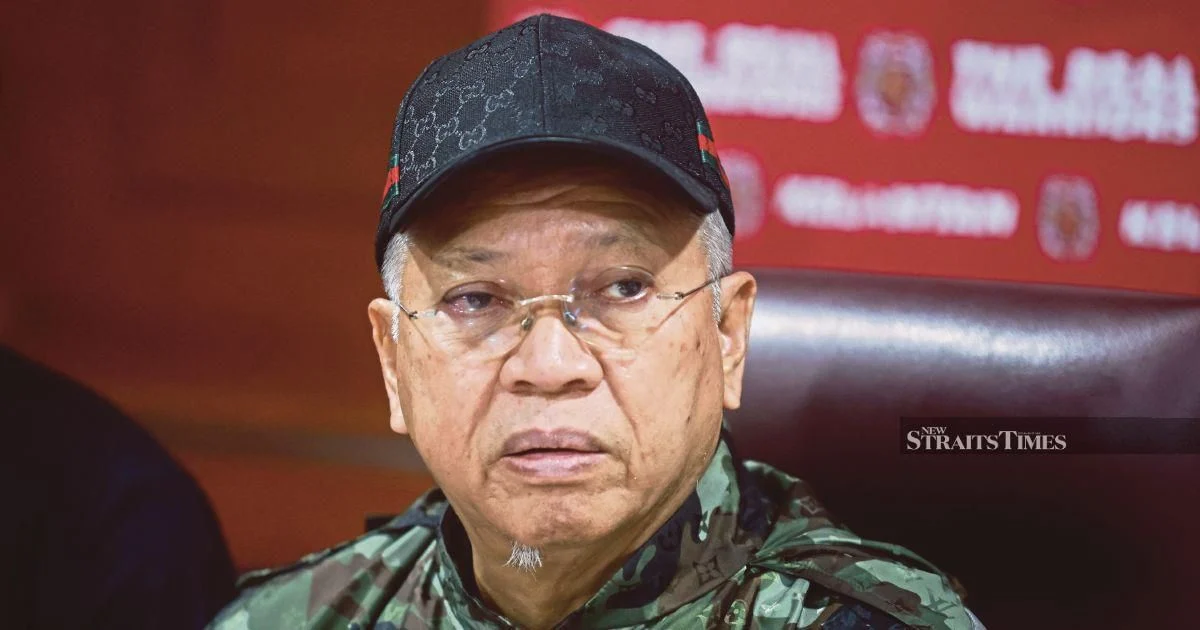
Tan Sri Annuar Musa has acknowledged his unsuccessful bid to resolve mounting tensions between Pas and competing factions within Bersatu, raising fresh concerns about the stability of the Perikatan Nasional coalition that underpins the current federal administration. Speaking in his constituency of Kota Baru, the veteran politician disclosed that he had undertaken several personal initiatives to broker peace and restore cohesion across the political grouping, efforts that ultimately failed to yield meaningful results.
The revelation underscores the deepening fractures within Malaysia's ruling coalition at a time when the government faces mounting policy pressures and electoral considerations. Perikatan Nasional, which anchors both the federal government and administrations in multiple states, depends fundamentally on maintaining workable relations between its major component parties. The inability to manage these internal differences suggests structural challenges that extend beyond personalised political animosity.
The divisions Annuar attempted to address reflect a broader pattern of institutional instability within both Pas and Bersatu. Bersatu in particular has struggled with competing power networks and conflicting visions for the party's strategic direction, with different factions advocating divergent approaches to coalition management and policy priorities. These internal contests inevitably create complications for collective decision-making within Perikatan Nasional, as individual parties struggle to present unified positions to coalition partners.
Annuar's candid acknowledgement of failure carries significance beyond mere political theatre. As a figure with considerable influence and experience navigating multi-party coalitions, his inability to forge consensus suggests the underlying differences may be structural rather than merely tactical. Such divisions often reflect deeper disagreements about political direction, resource allocation, and long-term positioning rather than disputes susceptible to conventional negotiation.
For Malaysian observers and political analysts, this disclosure indicates that Perikatan Nasional functions increasingly as a transactional alliance rather than an ideologically coherent coalition. Component parties maintain their partnership primarily due to mutual interest in electoral viability and ministerial portfolio distribution rather than shared programmatic vision. When those transactional foundations encounter stress—whether through internal party competition or divergent electoral strategies—holding the coalition together becomes exponentially more challenging.
The implications for Malaysia's political stability merit careful consideration. A ruling coalition fractured by internal tensions often struggles to implement coherent policy frameworks or respond effectively to emerging crises. Government effectiveness suffers when energy focuses on managing inter-party tensions rather than addressing substantive governance challenges. For Southeast Asia's largest Muslim-majority democracy, such institutional fragility carries ramifications that extend beyond domestic political calculations.
Annuar's revelation also highlights the limited capacity of individual political figures to manage structural coalition problems through personal diplomacy. While the statesman's reputation and relational networks may facilitate initial dialogue, they cannot resolve conflicts rooted in competing organisational interests or fundamentally incompatible political strategies. This limitation suggests that sustainable solutions would require deeper institutional reforms or fundamental shifts in coalition composition.
The Malaysian public appears increasingly aware of these coalition tensions through media coverage and direct observation of government performance. Public confidence in political institutions depends substantially on perceptions of governmental effectiveness and political stability. When leading coalition members publicly disclose failed reconciliation attempts, such transparency—while honest—may inadvertently reinforce public scepticism about government capacity and political unity.
For Perikatan Nasional's future, Annuar's comments suggest that managing coalition cohesion will demand more systematic institutional mechanisms rather than episodic reconciliation efforts. Component parties might benefit from establishing formal dispute resolution procedures, clearer protocols for resource-sharing, and more transparent communication frameworks that prevent tensions from escalating to crisis levels. Without such structures, the coalition remains vulnerable to recurring ruptures that threaten both governmental stability and electoral viability.
Regionally, Malaysia's coalition dynamics carry wider significance for Southeast Asian democracy. As the region's largest federation with substantial religious diversity, Malaysia's approach to managing multi-party coalitions offers lessons for other Southeast Asian democracies navigating similar challenges. When major coalitions struggle with internal cohesion, the entire region's democratic trajectory may be affected through spillover effects on political culture and institutional development.
Annuar's acknowledgement also reflects the particular challenges facing multi-ethnic, multi-religious coalitions in managing competing communal interests within a unified governmental framework. Pas and Bersatu represent distinct constituencies and political philosophies, and bridging these differences demands not merely personal negotiation but genuine alignment on substantive policy questions. The failure to achieve such alignment suggests these fundamental differences remain unresolved.
Moving forward, Perikatan Nasional faces a critical juncture where coalition partners must decide whether their shared political interests sufficiently outweigh their internal disagreements. The coming months will test whether the coalition can stabilise through institutional adaptation or whether the tensions disclosed by Annuar will continue festering until they fundamentally reshape Malaysia's political configuration. The answer to this question will significantly influence the nation's political trajectory for years ahead.