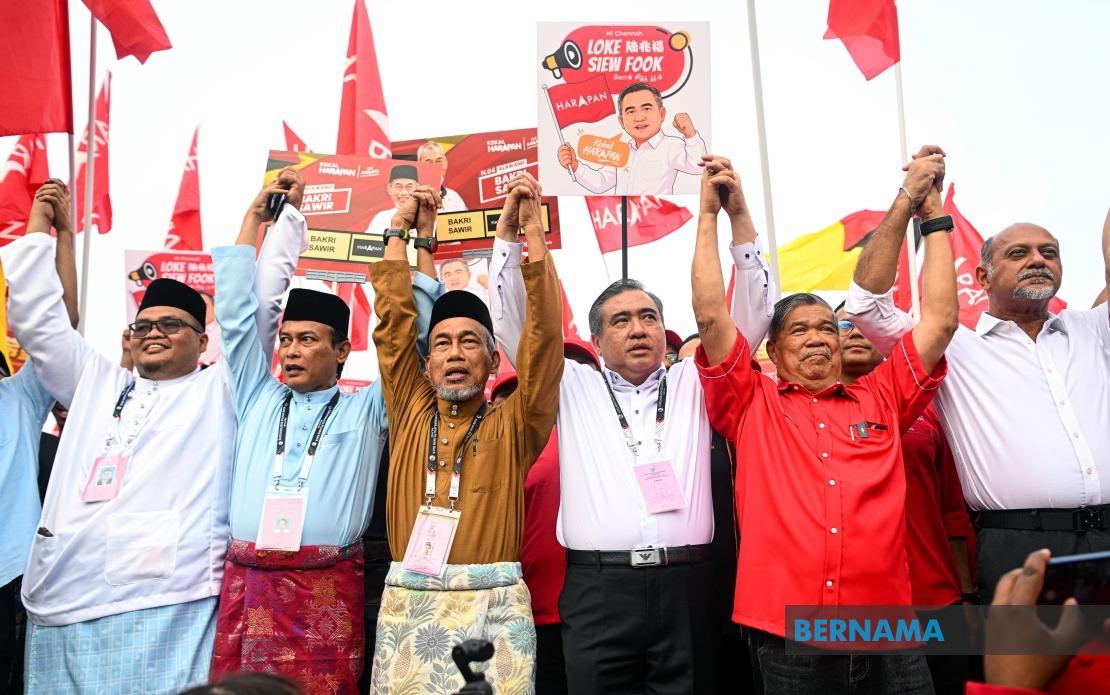
DAP secretary-general Anthony Loke faces a one-on-one contest to retain the Chennah state seat, which he has represented since 2013, as voters in Negeri Sembilan prepare for the 16th state election beginning today. His challenger is Siow Kong Choon, the Barisan Nasional-endorsed MCA Youth leader, setting up a direct battle between the ruling coalition's transport minister and the opposition's established incumbent in this politically significant district.
The nomination process concluded this morning in Jelebu with both candidates formally registered. Loke, who also serves as the Seremban Member of Parliament, submitted his nomination papers at 9:05 am, with Siow following nine minutes later at 9:09 am. The Jelebu Parliamentary returning officer, Abdul Rahim A Aziz, confirmed the straightforward contest shortly after the nomination centre at Dewan Besar Kuala Klawang closed registration at 10 am.
This rematch carries particular significance for DAP's standing in Negeri Sembilan. Loke's continued presence in the state legislature underscores the party's capacity to hold its ground even in a state where BN traditionally maintains considerable influence. His dual role as Transport Minister and state assemblyman represents a concentration of political and administrative responsibility that enables him to deliver tangible benefits to his Chennah constituency, a factor that typically weighs heavily in Malaysian state elections.
The previous election results suggest Loke holds a considerable advantage heading into today's contest. In the 2023 Negeri Sembilan state election, he secured 5,888 votes against Perikatan Nasional candidate Rosmadi Arif, winning by a substantial margin of 2,200 votes. That commanding victory demonstrates strong local endorsement and suggests an established political machinery within the constituency. However, the shift in his challenger from a PN candidate to a BN opponent potentially recalibrates the political dynamics, as the Barisan coalition commands superior organizational capacity and financial resources compared to its predecessor opposition force.
Siow Kong Choon brings the institutional backing of both the MCA and the broader Barisan machinery to this contest. The MCA's historical footprint in Malaysian politics, coupled with its positioning within the BN coalition, provides Siow with access to established networks and resources that independent or smaller party candidates cannot easily match. As youth chief of the party, Siow represents an attempt by MCA to project a younger, more energetic political image, though his ability to translate that positioning into electoral support in Chennah remains to be tested.
The broader political context adds layers of intrigue to this state election cycle. Negeri Sembilan's political composition reflects the tension between established ruling coalitions and emerging challengers that characterizes Malaysian politics more broadly. The presence of DAP's Transport Minister defending a state seat illustrates how the PKR-DAP-Amanah partnership has diversified beyond its urban strongholds into more traditional constituencies, a strategic shift aimed at building coalition depth ahead of future federal elections.
Election mechanics have been carefully scheduled to accommodate voter preferences and administrative requirements. The Election Commission designated July 28 for early voting, allowing working professionals, military personnel, and others unable to vote on the main day to cast their ballots in advance. This measure has become standard in Malaysian elections and generally benefits parties with superior campaign machinery that can mobilize early voters effectively. Polling day itself falls on August 1, giving campaigns two weeks to mobilize their respective bases and refine their messaging.
The geographical and demographic composition of Chennah state seat influences campaign strategy significantly. The constituency encompasses both urban and rural areas, requiring candidates to balance urban-focused governance promises with rural development commitments. Loke's tenure since 2013 means he has accumulated nearly a decade of implementation record in the constituency, offering voters a tangible basis for evaluating his performance. Conversely, this lengthy incumbency also creates vulnerability if constituent grievances over service delivery, infrastructure, or responsiveness have accumulated.
For DAP more broadly, retaining Chennah carries symbolic importance beyond the single seat. The party has worked consistently to expand its presence beyond predominantly Chinese urban constituencies into more diverse demographic areas. Success here would reinforce that trajectory and demonstrate to urban Malay-Muslim voters that DAP possesses credible ground presence and delivery capability beyond Chinese enclaves. Conversely, loss would represent a setback in that strategic expansion and potentially signal that DAP remains constrained to its traditional support bases.
The contest also reflects the ongoing recalibration within Malaysian politics following the 2023 federal election. Negeri Sembilan, as a state controlled by BN, offers the coalition an opportunity to demonstrate its continued political vitality. Gains here would boost the coalition's narrative of renewed strength after federal setbacks, whereas losses would reinforce perceptions of declining dominance. For PKR-DAP-Amanah, meanwhile, Chennah represents crucial territory where the alliance must consolidate position and prevent further erosion that could undermine its federal ambitions in subsequent general elections.
Voter sentiment will ultimately determine whether Loke's incumbency advantage and Transport Ministry portfolio offset the organizational superiority that BN traditionally brings to state elections. The 2,200-vote margin from 2023 provides Loke a cushion, yet margins can shift dramatically if major issues have emerged or if voter sentiment toward the federal government has shifted notably. With early voting commencing in less than two weeks and polling day scheduled for August 1, both campaigns will pursue intensive ground operations designed to maximize supporter turnout and persuade swing voters in this strategically significant constituency.

