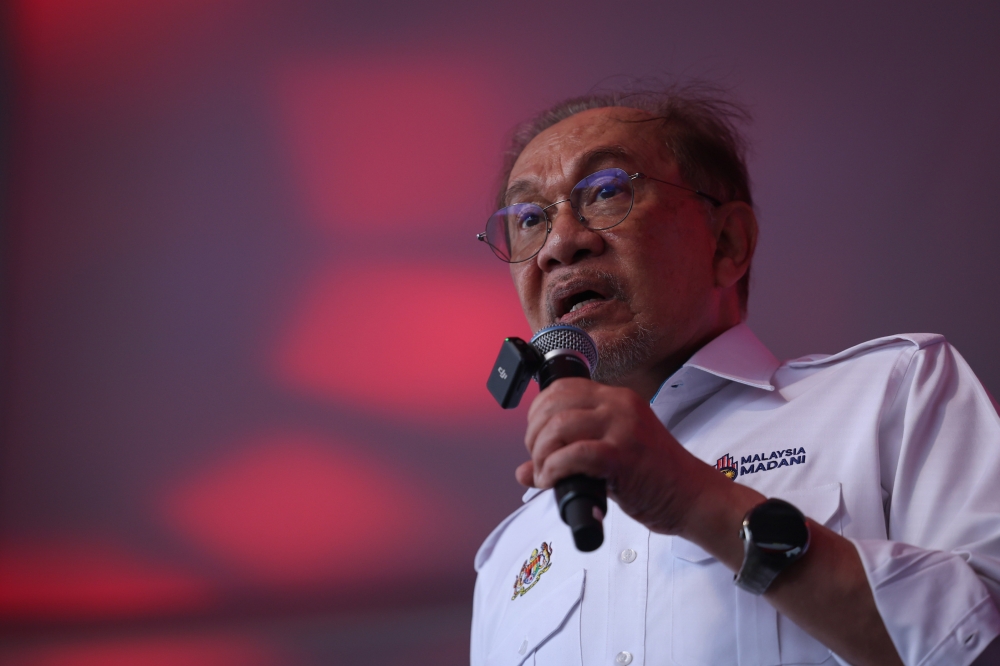
Prime Minister Datuk Seri Anwar Ibrahim launched a scathing critique of the opposition Perikatan Nasional coalition on Monday, arguing that the bloc's decision to walk out of a Royal Commission of Inquiry debate demonstrates its indifference to millions of Tabung Haji depositors affected by the fund's ongoing financial crisis. The dramatic departure of opposition MPs from parliamentary proceedings examining the pilgrim fund has reignited tensions over how Malaysia's political leaders are handling one of the most significant institutional failures in the country's financial sector.
Tabung Haji, formally known as Lembaga Tabung Haji, has become a flashpoint for political acrimony following revelations about substantial financial losses, failed investments, and governance lapses that left many ordinary Malaysians—particularly retirees and lower-income savers—exposed to significant losses on savings meant for religious pilgrimage. The fund, which administers deposits from millions of Malaysians saving specifically for the hajj journey to Mecca, had positioned itself as a secure, faith-aligned alternative to conventional banking. Its difficulties have thus carried both economic and social implications that extend beyond typical financial scandals.
Anwar's statement underscores the governing coalition's strategy to position itself as the defender of ordinary depositors whose life savings have been jeopardised. By framing the opposition's parliamentary boycott as an evasion of accountability, the Prime Minister implied that Perikatan Nasional lacks the political will to confront the institutional failures that created the crisis in the first place. This rhetorical approach seeks to reinforce public perceptions that the current administration takes the matter seriously, even as questions persist about the adequacy of compensation mechanisms and long-term remedies.
The opposition's walkout occurred during what was intended as a comprehensive examination of Tabung Haji's collapse through the RCI process, which represents Malaysia's formal mechanism for investigating matters of significant public concern. By absenting themselves from these proceedings, opposition parliamentarians risk appearing dismissive of depositors' suffering, though opposition representatives may argue they have legitimate concerns about the RCI's scope, independence, or composition. The tactical calculation surrounding parliamentary boycotts reflects deeper fractures in how Malaysia's competing political blocs approach accountability and institutional reform.
For Malaysian depositors, the political dimension of this crisis adds considerable frustration to already-mounting financial losses. Many savers view both government and opposition politicians as complicit in allowing a supposedly secure institution to deteriorate without adequate oversight or intervention. The competing narratives about who bears responsibility for Tabung Haji's downfall have obscured rather than clarified the pathway toward meaningful restitution. Depositors caught between political theatre and institutional failure find themselves waiting for concrete solutions rather than parliamentary recriminations.
The RCI itself represents a critical moment for examining how Tabung Haji's leadership, boards, and regulatory supervisors failed in their duties. Such commissions can either produce genuine insights that drive systemic reform or serve as political theatre that ultimately changes little. Anwar's criticism of the opposition's absence suggests that the government views the RCI process as legitimate and important, yet observers note that previous Malaysian royal commissions have sometimes produced reports that gather dust on shelves without triggering meaningful legislative or administrative action.
From a regional perspective, Malaysia's Tabung Haji crisis carries implications for how Southeast Asian nations structure pilgrimage funds and religious financial institutions. Several countries operate similar schemes for citizens undertaking the hajj, and the Malaysian experience demonstrates the risks of insufficient governance, inadequate risk management, and regulatory gaps. How authorities respond to Tabung Haji's collapse will likely influence the design and oversight frameworks in neighbouring countries grappling with comparable institutions.
The opposition's tactical response also reflects broader calculations about electoral strategy and political positioning. While the governing coalition gains rhetorical advantage by appearing engaged with the RCI process, the opposition may be calculating that participation in a government-initiated inquiry could compromise its political independence or expose its own members to scrutiny. Yet such calculations, however politically rational, come at the expense of affected depositors seeking comprehensive answers about institutional failure.
Anwar's emphasis on Tabung Haji represents an attempt by the government to demonstrate responsiveness to middle-class and working-class Malaysians whose retirement security has been undermined. Hajj savings carry symbolic weight beyond their financial value, representing a spiritual commitment and life aspiration. By positioning his administration as defender of these savings, Anwar appeals to voters who prioritise economic security and religious values. This political messaging, however, must ultimately translate into concrete remedial measures, rehabilitation of the institution, and punishment of those responsible for malfeasance.
The unfolding drama around Tabung Haji illustrates how institutional failure in Malaysia becomes inseparable from partisan politics. Rather than fostering cross-party consensus on restoring depositor confidence and implementing reforms, the crisis has instead deepened political polarisation. Both government and opposition face pressure from affected constituents to move beyond blame allocation and deliver tangible solutions. The RCI process offers an opportunity for this pivot, but only if all political stakeholders recommit to prioritising depositor welfare over short-term political advantage.

