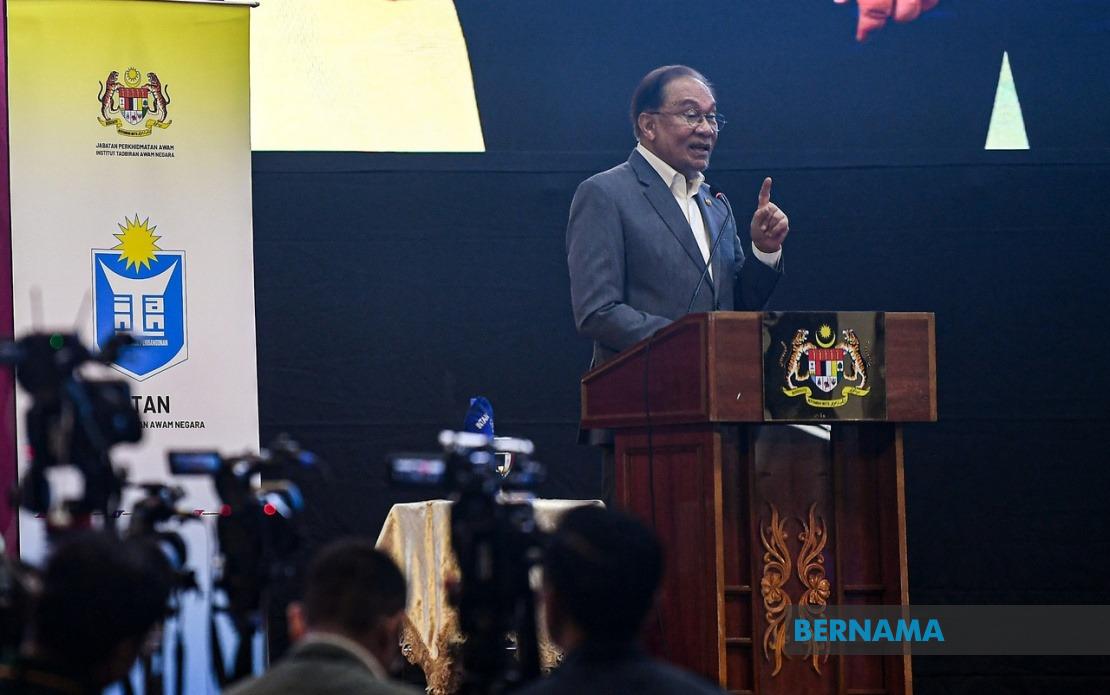
Prime Minister Datuk Seri Anwar Ibrahim has extended an apology to those who may have interpreted his stern demeanour during recent engagements with the civil service as excessively abrasive, acknowledging feedback that a leader occupying his office ought to modulate his communication style. Speaking at a gathering with Central Zone civil servants at Universiti Islam Selangor on July 20, Anwar recognised that advisors and the public have counselled him to adopt a gentler, more measured approach befitting his position, emphasising calm and thoughtful dialogue over raised voices.
The Prime Minister's candid acknowledgement reflects an ongoing tension between authenticity and executive propriety—a balance many leaders struggle to navigate. Anwar presented his apology through a Facebook video, suggesting that his administration places considerable weight on managing public perception and maintaining institutional respect. His willingness to address the matter directly, rather than dismissing concerns outright, signals awareness that civil service morale and public confidence in government messaging depend on how leaders present themselves when communicating priorities.
Yet Anwar simultaneously defended the substance and passion behind his forceful interventions, asserting that his intensity stems from genuine conviction rather than temperamental excess. He explained that when matters align with his core concerns and values, emotional expression becomes inevitable—a perspective that positions his approach as principled rather than performative. This defence reframes criticism not as a personal flaw but as the inevitable consequence of caring deeply about outcomes.
The Prime Minister's reasoning emphasises the centrality of the civil service to his government's success. He contended that if his firm tone constitutes an error, it represents a minor one given the stakes involved: ensuring that bureaucratic machinery functions efficiently in implementing cabinet decisions and advancing the nation's development trajectory. By this logic, directing passionate appeals toward the administrative apparatus makes strategic sense—civil servants are the executor class responsible for translating policy intent into tangible results.
Anwar's defence also highlights a broader question about leadership communication in the Malaysian context. The civil service, as the institutional backbone of government, requires clear direction and accountability measures. Anwar's approach reflects an implicit argument that courtesy should not come at the expense of clarity regarding expectations and consequences. When addressing the very people tasked with delivering on government commitments, some degree of directness and firmness may be necessary to convey urgency and importance.
The incident underscores evolving standards around prime ministerial conduct in modern Malaysia. Previous administrations operated under different communication norms, and each successor necessarily negotiates expectations anew with the public, media, and institutional partners. Anwar's acknowledgement that raising one's voice no longer aligns with contemporary expectations of the office suggests that Malaysia's political culture—like many developed democracies—has shifted toward preferring measured, professionalised leadership communication.
At the same time, the apology carries implications for how effectively Anwar can drive transformational agendas. A Prime Minister who feels constrained by stylistic expectations may find it harder to convey urgency about corruption, inefficiency, or stalled reforms. The tension between personal authenticity and institutional propriety reflects a real governance challenge: how to maintain sufficient pressure for change without alienating the very bureaucrats whose cooperation is essential.
The civil service context matters significantly here. Malaysia's public administration comprises hundreds of thousands of professionals at various levels, managing everything from healthcare and education to infrastructure and social services. Morale and motivation within this workforce directly affect service delivery to citizens. If civil servants perceive their Prime Minister as disrespectful or hostile, institutional performance could suffer. Conversely, if messaging becomes so softened that urgency evaporates, reform initiatives may lose momentum.
Anwar's comments reflect a pragmatic recognition that he must operate within acceptable norms while maintaining the forceful advocacy his reform agenda requires. His apology, carefully framed as conditional—apologising only if his tone was perceived as harsh—allows him to acknowledge concerns without fully retreating from his position. This rhetorical manoeuvre permits continued passionate communication while signalling responsiveness to feedback.
For Malaysian observers, this exchange illustrates how contemporary governance involves perpetual negotiation between competing demands: authenticity versus decorum, urgency versus civility, and personal conviction versus institutional protocol. Anwar's approach suggests he intends to continue his direct advocacy while making symbolic gestures toward more conventional executive communication. Whether this middle path proves sustainable remains uncertain, particularly if future crises or policy failures test whether subordinates feel genuinely respected despite his firm tone.

