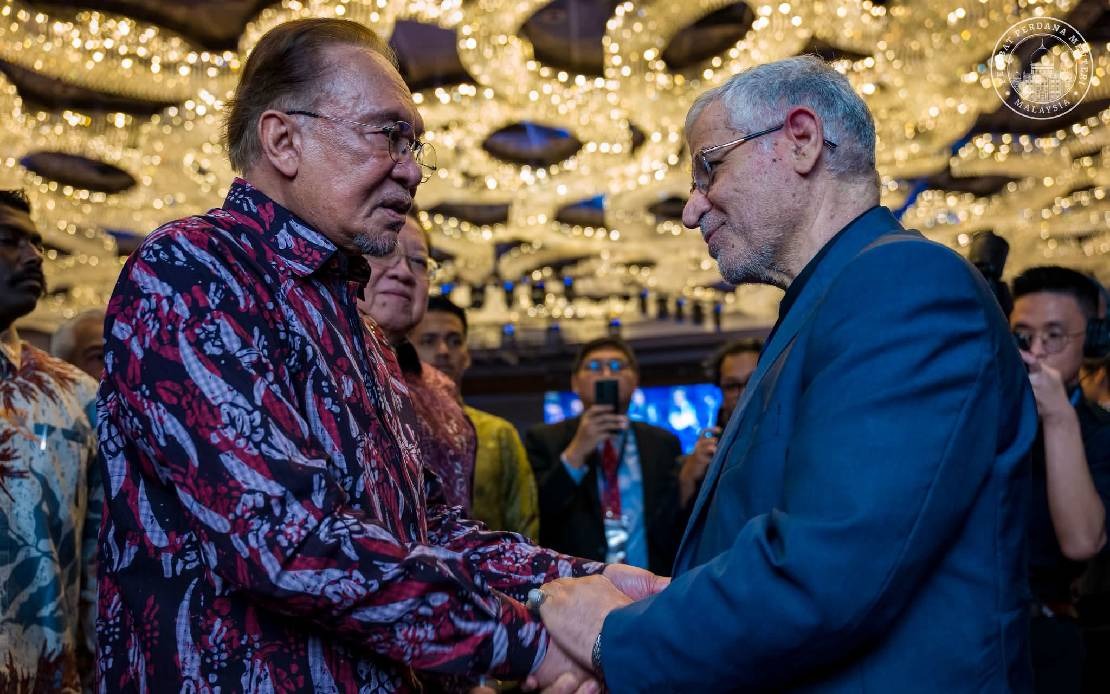
Prime Minister Datuk Seri Anwar Ibrahim has formally expressed his regret to the Iranian Government over his absence from the state funeral and farewell ceremonies honouring Iran's Supreme Leader, the late Ayatollah Ali Khamenei. The apology was communicated during a bilateral meeting with Iranian Ambassador to Malaysia Valiollah Mohammadi at the ongoing 39th Asia-Pacific Roundtable conference in Kuala Lumpur on Tuesday, according to a statement posted on the Prime Minister's social media platform.
Anwar's message underscores the diplomatic sensitivity surrounding the high-profile state funeral, which represents a moment of significant national and religious importance within the Islamic Republic. The timing of the apology—delivered through a formal channel and publicly acknowledged—reflects Malaysia's commitment to maintaining cordial relations with Tehran, particularly as the broader Middle East navigates a period of heightened tensions following the military escalations that preceded Khamenei's death.
The late Supreme Leader, who was 86 years old, passed away at his residence in central Tehran on February 28 following a combined military operation involving the United States and Israel. His death marked a pivotal moment in Iranian politics and regional geopolitics, prompting international delegations and condolences from across the globe. For Malaysia, a nation that maintains diplomatic relations with diverse actors across the Middle East, the funeral represented an important occasion for reaffirming bilateral ties and expressing solidarity with Iran's leadership transition.
Despite his inability to attend personally, Anwar ensured Malaysia's representation at the multi-day observance by designating Minister of Agriculture and Food Security Mohamad Sabu to attend the ceremonies. This delegation demonstrates Malaysia's respect for the occasion while acknowledging the constraints on the Prime Minister's schedule. The selection of Sabu, a senior cabinet member, signals the significance Malaysia places on this diplomatic engagement with Tehran.
The state funeral and farewell ceremonies are scheduled to span six consecutive days commencing July 4, involving elaborate processions and religious observances reflecting Iran's tradition and Khamenei's stature as Supreme Leader. The first phase includes funeral processions through Tehran and Qom, major cities with deep religious and political significance in Iran's Islamic system. The ceremonial culmination will occur on July 9 with the burial at the Imam Reza Shrine in Mashhad, one of Shia Islam's holiest sites, situating Khamenei's final resting place at a location of immense spiritual importance.
For Malaysia and other Southeast Asian nations, Iran's leadership succession carries ramifications extending beyond bilateral courtesies. The region maintains economic ties with Iran, including trade arrangements and potential energy partnerships, despite international sanctions regimes. How Iran's new leadership develops foreign policy will influence regional dynamics, particularly regarding maritime security in the Strait of Hormuz—a critical shipping lane through which Malaysian trade transits. Demonstrating respectful engagement during this transition period serves Malaysia's longer-term interests in maintaining stable relations with Tehran.
Anwar's public acknowledgement of his regret, communicated through multiple diplomatic channels simultaneously, reflects an effort to balance domestic commitments with international protocol. The Prime Minister's concurrent engagement at the Asia-Pacific Roundtable conference suggests that pressing regional issues competed for his attention during this period. The roundtable itself, as a significant gathering of regional and international policymakers, likely included discussions on geopolitical developments in which Iran plays a role, further complicating the PM's scheduling options.
The broader context of Malaysia's Iran relations reveals a careful diplomatic equilibrium. Malaysia has historically maintained non-aligned positioning while engaging constructively with multiple regional powers. The decision to send a ministerial-level representative rather than a more junior official indicates that Malaysia takes its relationship with Iran seriously, despite the constraints preventing the Prime Minister's personal attendance. Such measured responses help Malaysia avoid potential complications while preserving diplomatic capital.
The condolences extended to both the Iranian Government and its people represent acknowledgement of Khamenei's significance beyond his official role. Khamenei's leadership spanned decades of Iranian politics, and his passing resonates across Iranian society. Malaysia's recognition of this broader impact demonstrates cultural sensitivity and awareness of Iran's internal dynamics beyond the narrow confines of state-to-state relations.
Looking forward, the manner in which Malaysia has handled this diplomatic situation—through prompt communication, appropriate representation, and public acknowledgement of regret—establishes a foundation for continued engagement with Iran's successor leadership. As the new Supreme Leader navigates the complexities of Iran's governance and international relations, Malaysia's respectful approach during this transitional period may facilitate smoother diplomatic channels in coming months and years.

