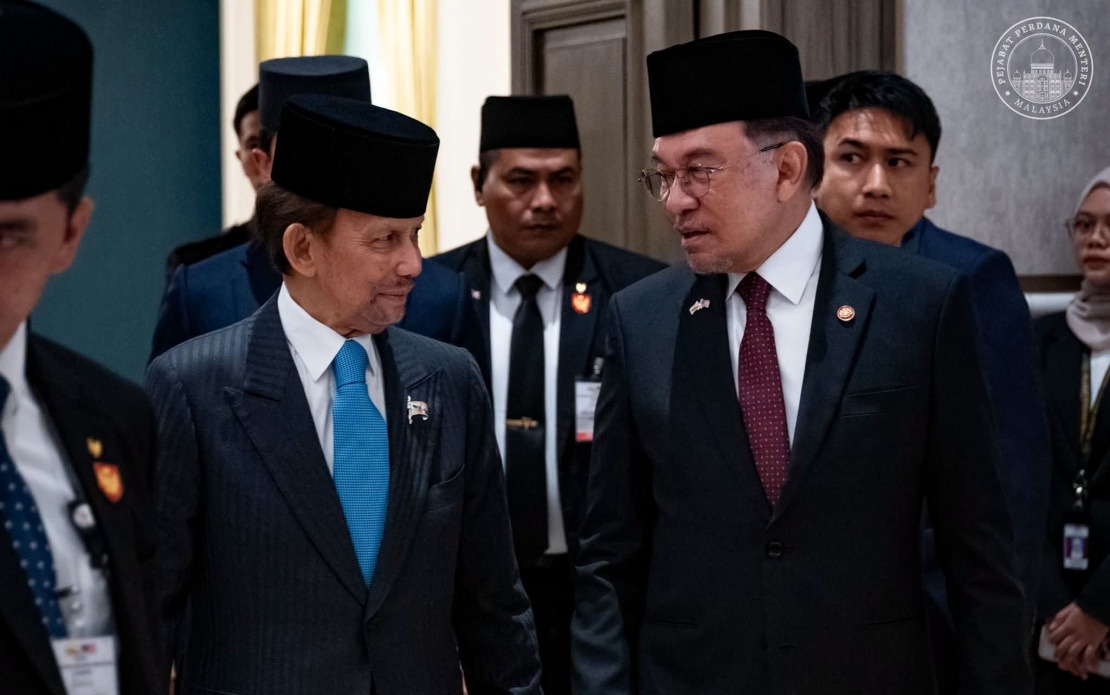
Prime Minister Datuk Seri Anwar Ibrahim received a call from Sultan Hassanal Bolkiah of Brunei Darussalam on Monday, in which the Brunei monarch enquired about the Malaysian leader's health and offered prayers for his wellbeing. The gesture, which Anwar acknowledged through a Facebook statement, reflects the strong bilateral ties between the two neighbouring Southeast Asian nations and the personal regard in which he is held by Brunei's long-reigning ruler.
In his public response, Anwar reciprocated the Sultan's sentiments, expressing appreciation for the prayers and concern extended to him during his recovery period. The Prime Minister also offered his own prayers for Sultan Hassanal Bolkiah, wishing him continued good health and divine protection and mercy. Such exchanges of courtesy between regional leaders serve an important diplomatic function, reinforcing the personal relationships that underpin formal state-to-state relations.
The telephone conversation came shortly after Anwar underwent an elective surgical procedure the previous week. On August 5, the Prime Minister had a laparoscopic operation to address a para-umbilical hernia, a relatively common abdominal condition. Following the minimally invasive procedure, Anwar has remained under careful observation by a dedicated team of medical specialists to ensure a smooth and uncomplicated recovery.
Laparoscopic surgery, which involves making small incisions and using a camera-guided approach, typically allows for faster recovery times compared to traditional open surgery. The elective nature of the procedure, combined with its routine classification in modern medical practice, meant that the operation was planned in advance rather than undertaken as an emergency measure. Nevertheless, any surgical intervention requires appropriate post-operative monitoring, particularly for a serving head of government with extensive official responsibilities.
The Brunei Sultan's proactive outreach during this period underscores the significance Malaysia places in its relationship with Brunei Darussalam, its smallest and most developed neighbour. Sultan Hassanal Bolkiah has reigned since 1967 and is among the world's longest-serving monarchs. His personal attention to Anwar's welfare demonstrates the warmth of bilateral ties, which extend across defence, trade, cultural exchange, and people-to-people connections.
Anwar's recovery comes at a particularly busy time for Malaysian diplomacy. The Prime Minister is scheduled to travel to Bandar Seri Begawan the following week for an official audience with Sultan Hassanal Bolkiah. This meeting will take place in conjunction with the 27th Annual Leaders' Consultation between Malaysia and Brunei, a regular bilateral forum that brings together high-level officials from both governments to discuss matters of mutual interest and strategic importance.
The timing of this bilateral meeting is significant for several reasons. Both nations share important maritime boundaries in the South China Sea, a region of considerable geopolitical importance and trade significance. Defence cooperation, including naval coordination and security matters, features prominently in Malaysia-Brunei discussions. Additionally, economic integration through ASEAN frameworks and direct bilateral trade relationships remain areas of active engagement between the two capitals.
From a regional perspective, Malaysia-Brunei relations exemplify the cooperative spirit that underpins ASEAN. Despite their differences in size and economic capacity, both countries have consistently supported regional stability and the principles of peaceful resolution of disputes. The Annual Leaders' Consultation provides a mechanism for addressing bilateral issues, exploring new areas of cooperation, and coordinating positions on regional and international matters of concern to both nations.
Anwar's forthcoming visit, proceeding as planned despite his recent medical procedure, suggests confidence in his recovery trajectory. The decision to maintain the scheduled bilateral engagement indicates that his health situation is not expected to interfere with his official duties. This is consistent with the routine nature of the elective procedure and the effectiveness of modern post-operative care protocols.
Beyond the diplomatic formalities, Sultan Hassanal Bolkiah's personal gesture reflects broader patterns of regional leadership and the importance of maintaining cordial personal relationships at the highest levels of government. In Southeast Asia's political culture, such courtesies carry weight and reinforce the bonds between nations. The Sultan's action, and Anwar's gracious acknowledgment, demonstrate mutual respect and a commitment to the continued strength of the Malaysia-Brunei relationship.
Looking ahead, the 27th Annual Leaders' Consultation will provide an opportunity for both governments to take stock of their bilateral relationship and chart the course for future cooperation. Whether addressing long-standing issues or identifying emerging opportunities in areas such as digital economy, renewable energy, or deepening ASEAN integration, the forum remains an essential venue for high-level strategic dialogue.
The exchange between Anwar and Sultan Hassanal Bolkiah also serves as a reminder of the personal dimension of international relations. While official protocols and institutional frameworks provide the structure for state-to-state engagement, the relationships and mutual respect between individual leaders often prove crucial in navigating complex regional dynamics and fostering genuine partnership. In this instance, a simple telephone call expressing concern and offering prayers has reinforced the bonds between two important ASEAN members and their leaders.

