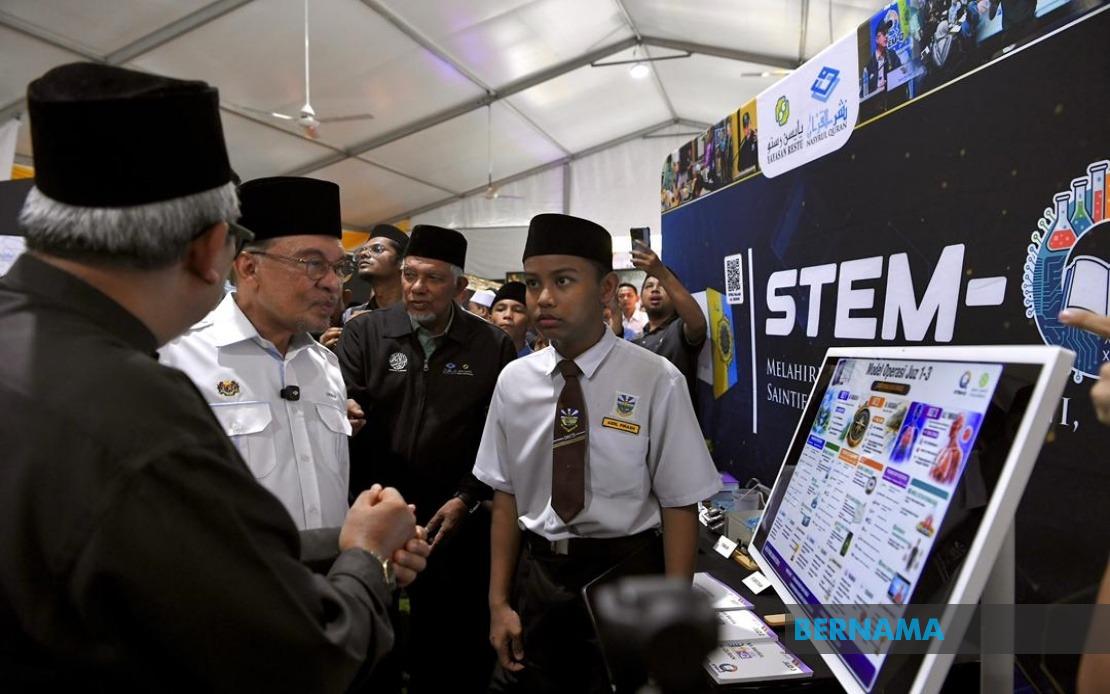
Prime Minister Datuk Seri Anwar Ibrahim has announced a substantial injection of RM4.6 million to strengthen infrastructure at 27 Islamic educational institutions across Penang this year, signalling the government's commitment to bolstering religious education in the northern state. The funding, approved by Anwar in his dual capacity as Prime Minister and Finance Minister, marks a significant escalation from the previous year when RM2.11 million was allocated to upgrade facilities at 11 institutions, demonstrating accelerating investment in the sector.
The financing will support a comprehensive range of infrastructure improvements across the institutions, spanning foundational repairs and expansions to the construction of dedicated learning facilities. Projects encompass wall and fence repairs, madrasah enhancements, school upgrades, new kindergarten structures, and the establishment of tahfiz academies dedicated to Quranic memorisation. This diversified approach reflects acknowledgement that Islamic educational institutions serve varying age groups and require tailored infrastructure solutions to function effectively.
Anwar's announcement, delivered during the National Tadabbur Perdana and Maidah Wanita MADANI Permatang Pauh programmes at Masjid Muhajirin in Butterworth, underscores the administration's broader policy direction of prioritising religious education as a cornerstone of national development. The government's strategy involves continuous assessment of religious schools' operational requirements and systematically addressing infrastructure deficiencies that might impede teaching quality or student welfare. The doubling of allocations from one year to the next suggests either mounting demand for improvements or an intensified focus on modernising facilities across the state.
Beyond traditional construction and renovation, the Prime Minister articulated a forward-thinking vision for Islamic education that embraces technological advancement. He emphasised that Islamic institutions must integrate artificial intelligence and other digital tools into Quranic and Islamic studies curricula, positioning religious education at the intersection of tradition and innovation. This approach aims to equip students with contemporary skills while maintaining doctrinal depth, addressing concerns that religious education might otherwise lag behind secular schooling in technological literacy.
Yet Anwar cautioned against uncritical technology adoption, stressing that artificial intelligence and digital systems must operate within a robust ethical framework rooted in moral principles. He articulated concern that technology deployment divorced from values represents a fundamental misdirection, warning that systems cannot merely develop intellectual capacity while neglecting moral foundation. This perspective reflects broader Muslim intellectual discourse about reconciling modernity with Islamic teachings, a debate particularly salient in Malaysia where technology adoption intersects with religious identity.
The Prime Minister's emphasis on technology governance carries implications for Malaysian policymakers and educators grappling with curriculum modernisation. As artificial intelligence becomes increasingly embedded in educational platforms—from personalised learning systems to administrative management—the principle that such tools require moral anchoring becomes operationally critical. For Islamic institutions specifically, integrating AI into Quranic studies or Islamic jurisprudence without establishing clear ethical parameters risks instrumentalising religious learning in ways antithetical to Islamic pedagogy.
Anwar additionally called upon Malaysian citizens to leverage the religious freedom constitutionally guaranteed in the country by organising expanded programmes strengthening Islamic understanding. His appeal for increased Quran classes, tadabbur reflection sessions, and religious lectures reflects a government strategy of encouraging grassroots religious engagement alongside state-level institutional support. This dual approach—investing in physical infrastructure while mobilising community-led spiritual activities—suggests recognition that meaningful religious education extends beyond school buildings into broader social participation.
The emphasis on continuous religious programming reflects concerns that secular influences and competing social pressures may attenuate religious commitment among younger generations. By encouraging structured, regular engagement with Islamic teachings through multiple formats and settings, the government attempts to create comprehensive ecosystems supporting religious development. The specific mention of tadabbur sessions—reflective study of Quranic passages—suggests particular interest in deepening theological understanding rather than mere ritualistic observance, indicating sophistication in the approach to religious education policy.
For Penang specifically, this injection of funding acknowledges the state's significant Muslim population and the concentration of Islamic educational institutions requiring maintenance and modernisation. The allocation pattern—substantial year-on-year increases—suggests either previously unmet demand or a deliberate acceleration of development timelines. Religious schools across Malaysia often operate with constrained budgets, limiting their capacity to maintain facilities or introduce technological enhancements, making targeted state allocations particularly consequential for operational effectiveness.
The announcement also positions religious education within the broader MADANI governance framework that Anwar's administration has promoted, which emphasises faith-informed development balancing spiritual with material advancement. By securing dedicated funding for Islamic institutions during a period of overall budgetary constraints, the government signals that religious education receives prioritised consideration in fiscal allocation decisions. This carries symbolic significance beyond the funding quantum, reinforcing that Islamic institutions constitute legitimate infrastructure recipients deserving state investment comparable to secular schools.
The timing of the announcement during community engagement programmes rather than formal parliamentary sessions reflects a strategy of building grassroots political support for religious education initiatives. Anwar's visits to mosques and religious forums to announce funding decisions cultivate constituencies invested in Islamic institutional development and reinforce his administration's credentials with religiously engaged populations. This approach proves particularly important in Penang, where opposition political forces have historically competed for religious constituencies.
Looking forward, the trajectory of Islamic education funding carries implications for regional educational dynamics. If Malaysia substantially upgrades Islamic institutional infrastructure and technological capacity, it may influence educational choices among Southeast Asian Muslim communities, potentially increasing cross-border student movements toward institutions perceived as offering both traditional rigour and contemporary sophistication. The emphasis on integrating AI into Islamic studies may establish pedagogical standards influencing how other Muslim-majority nations approach technology in religious education.
The broader challenge moving ahead involves translating budgetary allocations into tangible improvements affecting student learning outcomes and teacher effectiveness. Infrastructure funding alone cannot guarantee enhanced religious education quality; effective deployment requires trained administrators, qualified educators, and pedagogical frameworks responsive to students' contemporary contexts. The government's success ultimately depends on whether the RM4.6 million allocation catalyses systematic improvements in institutional capacity or simply addresses surface-level infrastructure deficiencies while underlying educational quality concerns persist.

