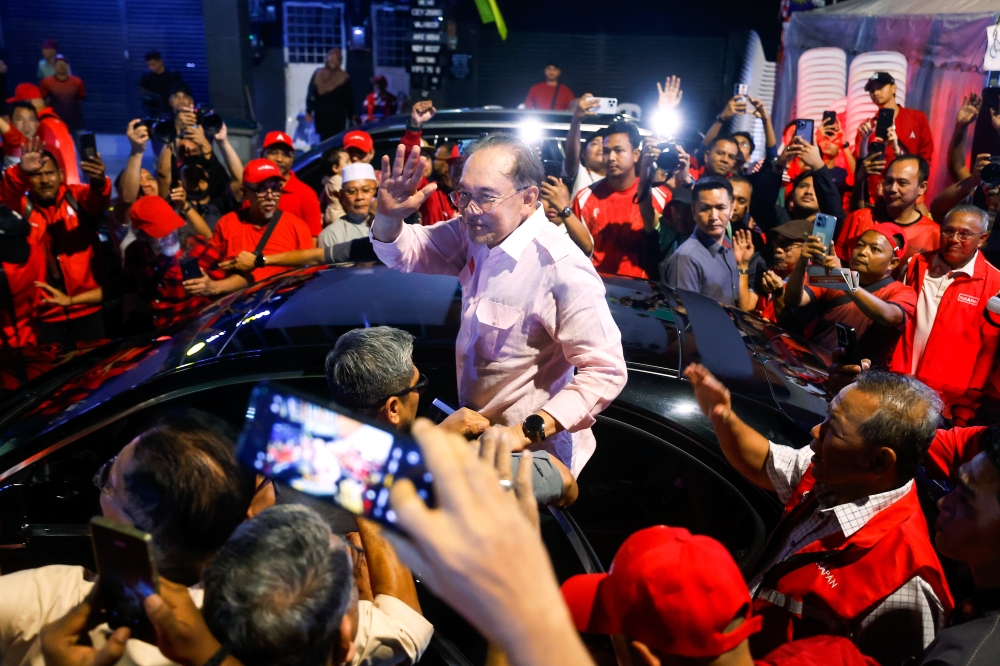
Prime Minister Datuk Seri Anwar Ibrahim has moved to reassure the nation about the durability of the ruling coalition and Malaysia's economic trajectory, underscoring the stability of his administration during an address in Seremban. The assertions come at a time when coalition dynamics frequently attract scrutiny, with multiple political factions navigating shared governance arrangements that demand careful balancing. Anwar's emphasis on cohesion reflects the broader challenge facing contemporary Malaysian politics: maintaining multiparty consensus while delivering substantive policy outcomes across a diverse, competitive political landscape.
The stability of Malaysia's unity government has become a defining feature of national politics since Anwar's appointment as prime minister. The coalition architecture brings together numerous political parties with distinct ideological positions and regional interests, creating inherent tensions that require continuous negotiation and compromise. By publicly affirming the government's strength during his Seremban visit, Anwar signals confidence that these competing interests remain aligned around a shared governance agenda, despite occasional public disagreements that inevitably surface when managing such diverse constituencies.
Economic assurances from the prime ministerial office carry particular weight given Malaysia's position as a middle-income economy navigating global uncertainties. The assertion that the economy rests on solid footing suggests the government views current macroeconomic indicators—encompassing growth trajectories, employment patterns, foreign investment flows, and currency stability—as sufficiently robust to warrant public confidence. This messaging proves especially important for investor sentiment and consumer behaviour, both of which depend significantly on perceptions of political reliability and economic competence.
Malaysia's economic performance operates within multiple overlapping contexts. Domestically, the country faces pressures common to emerging markets: managing inflation, maintaining competitive manufacturing and services sectors, and ensuring equitable growth distribution across regions and income groups. Internationally, Malaysia remains exposed to global trade dynamics, supply chain uncertainties, and the strategic competition between major powers that increasingly shapes regional commerce. When the prime minister characterises economic conditions as solid, he implicitly claims that current policies and governance frameworks have effectively managed these competing pressures.
The unity government model itself represents an evolving experiment in Malaysian governance. Rather than single-party dominance, power now distributes across multiple parties holding portfolios and exercising influence through coalition structures. This arrangement theoretically enhances representation and accountability but introduces complexity in policy formulation and implementation. Anwar's repeated confirmations of coalition stability suggest the government views this model not as a transitional phase but as a durable governance arrangement worth defending and reinforcing.
Regional observers and international analysts closely monitor Malaysia's political stability given its position as a significant Southeast Asian economy and multilateral participant. The strength of the ruling coalition directly affects Malaysia's capacity to execute long-term development initiatives, attract sustained foreign investment, and maintain consistent diplomatic engagement. Coalition instability, by contrast, triggers concerns about policy continuity and institutional resilience that can manifest in delayed investment decisions and heightened risk premiums on Malaysian financial instruments.
The economic narrative advanced by Anwar intersects with practical governance challenges across multiple sectors. Infrastructure development, civil service efficiency, regulatory clarity, and sectoral competitiveness all depend partly on political stability providing the necessary environment for strategic implementation. When coalition partners maintain alignment, governments can pursue longer-term initiatives that would prove impossible under conditions of political fragmentation. This explains why prime ministerial assertions about coalition strength contain implicit claims about governance capacity.
Within the Malaysian context, Seremban and Negeri Sembilan represent a significant political constituency. The state's economic profile encompasses manufacturing, agriculture, and services, making it representative of the mixed regional economy Malaysia seeks to develop more broadly. Public statements in such settings carry local resonance while addressing national audiences, permitting leaders to emphasise both local achievements and broader government performance simultaneously.
The evolution of Malaysian coalition politics reflects both continuity and adaptation. While previous governments operated under different institutional arrangements, the fundamental requirement for political consensus around economic and developmental goals persists across administrations. Anwar's positioning of the unity government as strong and the economy as secure acknowledges this continuity while asserting that current arrangements successfully manage these ongoing demands.
Looking forward, the viability of Malaysia's unity government model will likely depend on how effectively it translates political stability into tangible economic and developmental outcomes. Public confidence in coalition strength ultimately rests not merely on rhetorical affirmations but on visible improvements in living standards, employment opportunities, and institutional performance. The prime minister's statements therefore function simultaneously as reassurance about present conditions and implicit commitments regarding future delivery. How comprehensively the government fulfils those commitments will substantially influence both the coalition's durability and Malaysia's broader economic trajectory in coming years.

