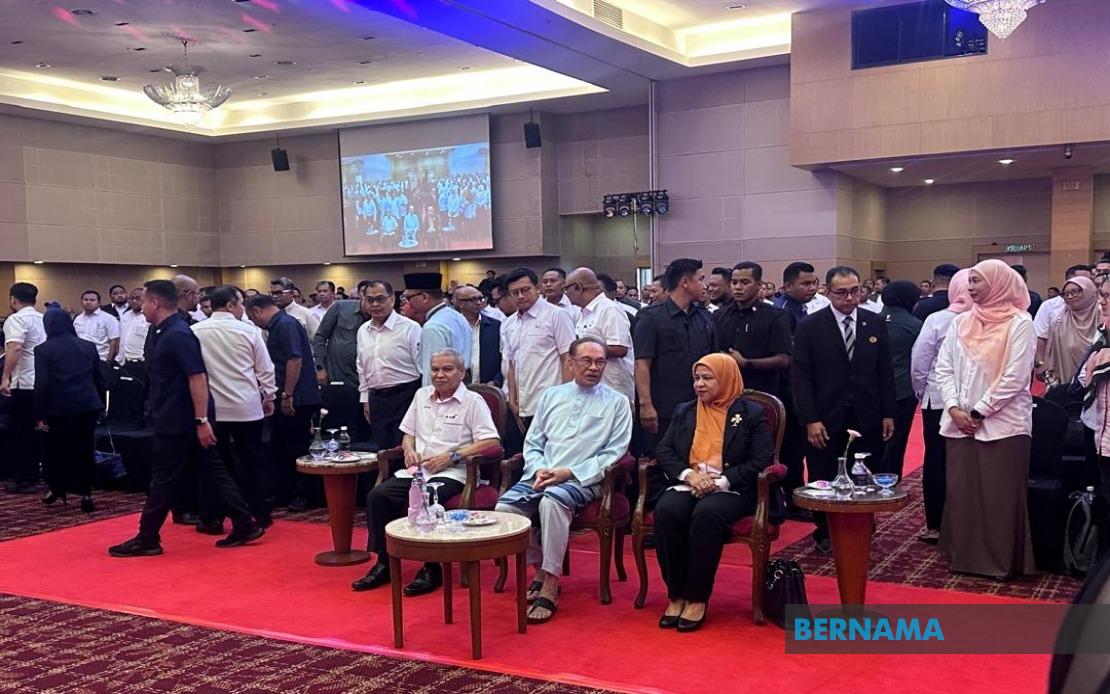
Prime Minister Datuk Seri Anwar Ibrahim has signalled that the government will hold off on any major pronouncements regarding the Federal Land Development Authority until investigators deliver their full findings. Speaking after a management roundtable at Tenera Hotel in Bangi, Anwar indicated that the Special Task Force examining FELDA's operational and administrative frameworks has been mobilised and is progressing with its work, though the timeline for completion remains fluid.
The establishment of this task force reflects growing scrutiny of FELDA's governance structures and financial management practices. As one of Malaysia's oldest and most significant rural development institutions, FELDA's operations touch millions of Malaysians, particularly those in smallholder palm oil communities. Any systemic issues within the authority have ripple effects across rural economies and touch upon agricultural productivity that underpins export revenues. The decision to commission a comprehensive investigation signals that policymakers recognise the institution requires closer examination.
Anwar's measured approach contrasts with the urgency that often characterises government responses to institutional crises. Rather than rushing to announce preliminary findings or immediate reforms, the Prime Minister has elected to await the investigation's conclusion. This stance suggests the government wants to present a complete picture to both the public and stakeholders, avoiding the perception of a piecemeal or reactive response. The investigation will apparently address historical management lapses whilst simultaneously charting a clearer operational direction for FELDA going forward.
The scope of the inquiry encompasses multiple dimensions of institutional functioning. Management efficiency, structural improvements, identification of longstanding operational bottlenecks, and forward-looking governance frameworks all fall within the task force's purview. This comprehensive approach indicates that the investigation will not simply catalogue problems but will provide constructive pathways for institutional renewal. For Malaysian stakeholders invested in rural development, this signals that reforms, when announced, may be substantive rather than cosmetic.
Anwar drew an explicit parallel between the forthcoming FELDA report and the Royal Commission of Inquiry findings on Tabung Haji, suggesting the government intends to treat it with similar transparency and public accessibility. The Tabung Haji RCI, which examined governance failures at the Islamic pilgrimage savings scheme, became a significant policy document that shaped subsequent reforms and public discourse around institutional accountability. By invoking this precedent, Anwar indicated that the FELDA investigation will likewise become a reference point for understanding institutional dysfunction and remedial measures.
The timing of the investigation carries particular significance for Malaysian politics and rural development policy. FELDA settlers represent a traditional constituency whose concerns have shaped electoral outcomes and policy priorities for decades. Any perception that the government is neglecting FELDA's challenges or moving too slowly on reforms could prove politically consequential. Conversely, a thorough, transparent investigation that leads to credible reforms could rebuild confidence among rural stakeholders who have witnessed institutional performance decline over successive administrations.
Present at the management session were FELDA chairman Tan Sri Ahmad Badri Mohd Zahir and director-general Datuk Dr Suzana Idayu Wati Osman, underscoring the engagement between senior leadership and the government during this transition period. This direct interaction suggests ongoing dialogue between the executive and institutional management, potentially positioning the organisation to implement reforms once the task force concludes its work. Such engagement can accelerate the implementation phase and ensure that recommendations align with operational realities.
The regional context adds another layer of importance to FELDA's institutional health. Southeast Asia's agricultural sector faces mounting pressures from climate variability, sustainability demands, and shifting global commodity markets. Malaysia's smallholder palm oil sector, which overlaps significantly with FELDA's operational footprint, must navigate international scrutiny over production practices. FELDA's role in supporting and modernising smallholder operations directly influences Malaysia's capacity to maintain competitive agricultural production whilst meeting environmental standards.
Public release of the investigation findings will provide stakeholders with concrete information about institutional vulnerabilities and reform directions. Farmers, investors, development partners, and civil society organisations all have interests in understanding how FELDA will evolve. Transparent publication of the task force report, following the Tabung Haji model, creates accountability frameworks and allows broader societal input into implementation processes. This approach contrasts with previous patterns where institutional reviews remained confined to government circles before selective policy announcements.
The wait for completion also reflects contemporary governance norms emphasising evidence-based policymaking over rapid-response interventions. Malaysian readers familiar with institutional reform processes in neighbouring countries will recognise this as a deliberate choice to prioritise thoroughness over speed. For FELDA settlers and rural communities dependent on the authority's programmes, this signals a commitment to lasting solutions rather than temporary measures designed primarily for political consumption.
As the task force continues its investigation, multiple stakeholder groups will scrutinise both the process and anticipated findings. Agricultural economists, rural development specialists, and policy analysts will assess whether recommendations adequately address structural challenges whilst remaining implementable within fiscal and institutional constraints. The government's commitment to full public disclosure positions this investigation as a test of its transparency and reform credentials, particularly on economic institutions historically prone to opaque operations.

