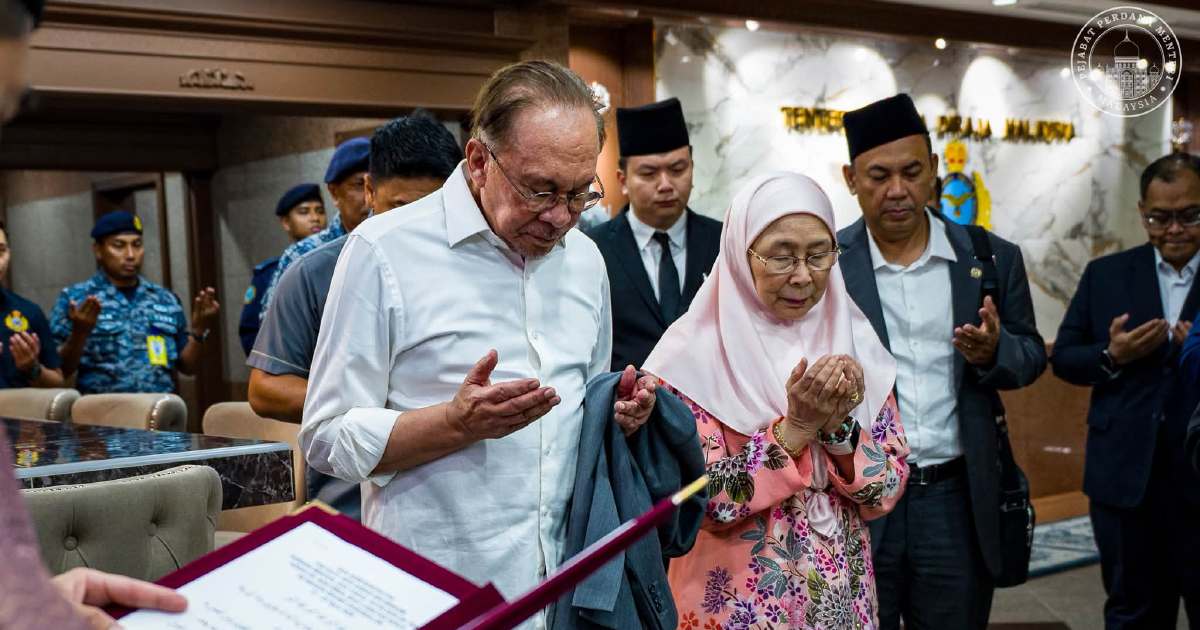
Prime Minister Datuk Seri Anwar Ibrahim has touched down in Bandar Seri Begawan to participate in the 27th Annual Leaders' Consultation between Malaysia and Brunei, embarking on a two-day working visit that underscores the sustained commitment both nations maintain towards strengthening their relationship. The bilateral gathering represents a continuation of the institutional dialogue mechanisms that have long formed the bedrock of Malaysia-Brunei relations, reflecting the two countries' determination to address matters of mutual concern and explore avenues for enhanced cooperation.
The annual consultation format between Malaysia and Brunei serves as a critical juncture for senior leadership to align on regional developments and bilateral initiatives. These high-level dialogues have historically provided a structured platform for candid discussions on trade partnerships, security cooperation, cultural exchanges, and responses to broader Southeast Asian challenges. For Malaysia, the visit reaffirms the nation's commitment to deepening ties with Brunei, one of its most significant neighbours in Borneo, with whom it shares maritime boundaries, historical heritage, and intricate people-to-people connections.
Brunei, as a small but strategically positioned nation on the island of Borneo, holds considerable importance in Malaysia's regional diplomacy. The sultanate sits at the crossroads of major shipping lanes and possesses significant energy resources that influence regional economic dynamics. Malaysia's engagement with Brunei through forums such as the Annual Leaders' Consultation demonstrates recognition of Brunei's role in maintaining stability and prosperity across Southeast Asia, particularly within the context of the Association of Southeast Asian Nations framework.
The timing of this consultation carries particular significance in the current geopolitical landscape of Southeast Asia. With regional powers asserting influence and international focus intensifying on matters ranging from maritime security to economic integration, Malaysia's continued dialogue with Brunei signals the importance of maintaining strong bilateral relations. The working visit allows both nations' leaderships to synchronise their positions on critical regional issues and ensure alignment on approaches to multilateral forums.
Matters likely under discussion during the consultation would encompass economic cooperation and trade facilitation, given the increasing importance of intra-regional commerce to both nations. Malaysia and Brunei share overlapping maritime zones and have had to navigate complex boundary issues with diplomatic sophistication. The leaders' consultation provides an appropriate venue to address such matters and ensure that territorial sensitivities remain managed through dialogue rather than confrontation, a principle that has guided their relationship for decades.
Cultural and educational exchanges represent another significant dimension of the Malaysia-Brunei relationship that such high-level forums invariably address. Both nations maintain substantial ties through religion, language, and shared Malay heritage, facilitating people-to-people contact that enriches bilateral relations beyond formal governmental channels. The consultation provides an opportunity to review ongoing educational partnerships and cultural initiatives that strengthen understanding between their societies.
Security cooperation and law enforcement coordination have similarly grown in importance as both nations contend with transnational challenges ranging from drug trafficking to illegal immigration. The leaders' forum allows senior officials to review the effectiveness of existing agreements and propose enhancements to bilateral mechanisms for addressing these persistent regional challenges. Malaysia's experience managing diverse security concerns positions it as a valued dialogue partner for Brunei on matters affecting the stability of the Borneo region.
From Malaysia's broader diplomatic perspective, maintaining robust bilateral relationships with neighbours like Brunei contributes to the nation's standing within ASEAN and beyond. Strong bilateral consultations enhance Malaysia's credibility as a reliable partner committed to regional stability through dialogue and cooperation. This consistency in bilateral engagement, demonstrated through regular high-level consultations, reinforces Malaysia's role as a constructive force in regional affairs.
The two-day duration of Prime Minister Anwar Ibrahim's visit allows adequate time for comprehensive discussions at various levels of government. Beyond the formal consultation sessions, bilateral meetings between ministers and senior officials enable focused deliberations on specific sectoral issues affecting both nations. Such structured engagements typically result in joint statements or memoranda of understanding that reflect the outcomes of discussions and commitments undertaken by both sides.
Looking forward, the 27th Annual Leaders' Consultation represents an opportunity for Malaysia and Brunei to chart the trajectory of their relationship for the coming year. Both nations benefit from maintaining mechanisms that allow continuous engagement at the highest levels, ensuring that their partnership evolves in response to changing regional circumstances. The working visit demonstrates that despite the prevalence of multilateral engagements, bilateral relationships between neighbouring countries remain essential to regional coherence and prosperity.

