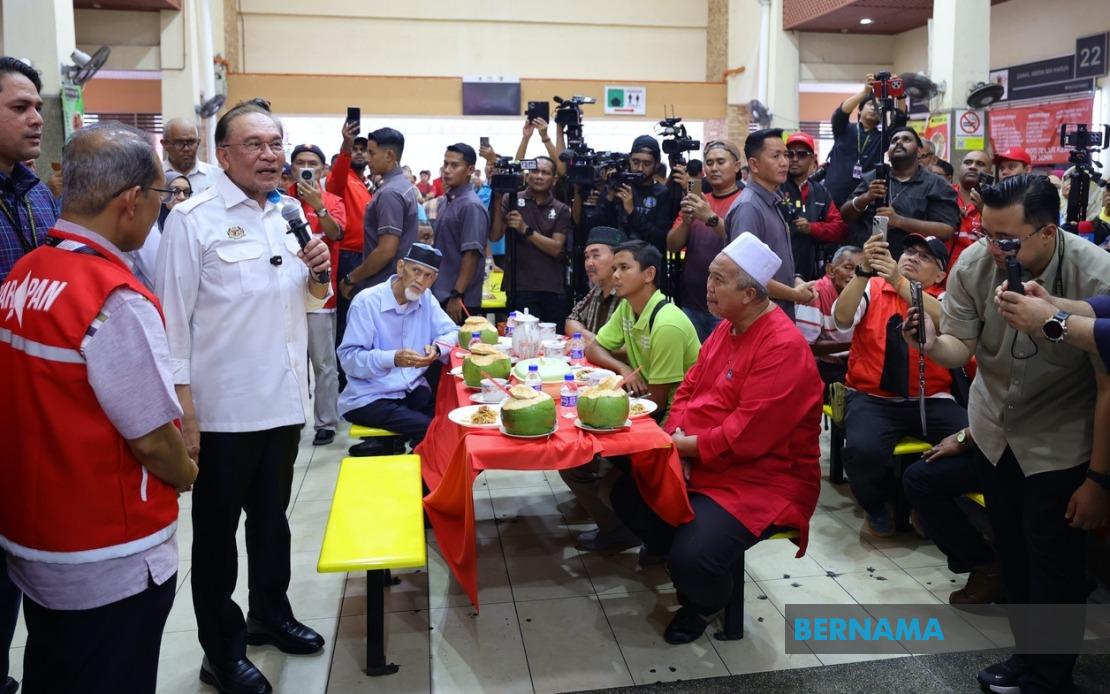
Prime Minister Datuk Seri Anwar Ibrahim made an impassioned appeal to voters in Negeri Sembilan on Monday, urging them to strengthen their backing for Pakatan Harapan ahead of the state election. Addressing a series of campaign events in Seremban, Anwar framed the August 1 polling as a critical opportunity to consolidate the ruling coalition's hold on the state and maintain the political equilibrium that has characterised Negeri Sembilan's recent governance trajectory.
Anwar's central argument centred on the tangible benefits of political continuity. He contended that a robust electoral mandate for Pakatan Harapan would facilitate seamless cooperation between the state administration and federal authorities, thereby accelerating the implementation of development projects and welfare programmes that directly affect constituents' livelihoods. This framing reflects a broader strategy by the ruling coalition to position elections not as contests between competing visions, but as referendums on administrative competence and institutional coordination.
The Prime Minister, who also serves as Pakatan Harapan's chairman, praised the stewardship of Menteri Besar Datuk Seri Aminuddin Harun, highlighting the three years of stability the state has experienced under PH governance. Anwar underscored that this stability stemmed from institutional cooperation and unified political direction, suggesting that fragmented electoral results could jeopardise the development momentum the state has achieved. His remarks reflected a recognition that Negeri Sembilan's relative political tranquility—compared to more fractious states in the federation—represents a valuable asset to preserve.
Yet Anwar's messaging also incorporated a carefully calibrated acknowledgment of imperfection. Rather than presenting Pakatan Harapan's record as flawless, he invited ongoing public scrutiny and feedback, framing the relationship between government and citizens as iterative rather than static. This rhetorical approach attempts to preempt accusations of arrogance while simultaneously appealing to voters who may harbour reservations about specific policies or implementation gaps. By inviting criticism and pledging responsiveness, Anwar sought to position the ruling coalition as accountable and self-correcting.
Packatan Harapan is mounting a comprehensive electoral effort across all 36 state seats, with candidate allocation reflecting the coalition's internal balance. The People's Justice Party (PKR) is fielding 16 candidates, the Democratic Action Party (DAP) is contesting 11 seats, and the National Trust Party (Amanah) is running nine nominees. This distribution underscores the coalition's commitment to maintaining its organizational cohesion despite occasional tensions between its component parties, particularly between PKR and DAP over resource allocation and strategic priorities.
The Election Commission has designated August 1 as polling day, with early voting scheduled for July 28, granting voters extended opportunity to participate. The compressed campaign timeline reflects administrative efficiency but also means political messages must penetrate the electorate with particular clarity and repetition. Anwar's presence in the state demonstrates the federal government's determination to secure Negeri Sembilan, recognizing that state-level victories reinforce the legitimacy and momentum of the national administration.
For Malaysian readers observing this campaign from the broader perspective of regional politics, Negeri Sembilan's election carries significance beyond its immediate territorial scope. The state serves as a bellwether for public sentiment regarding Pakatan Harapan's stewardship, offering early indicators of whether the coalition retains sufficient electoral vitality to maintain federal dominance. Southeast Asian observers also note that Malaysia's state elections function as calibration mechanisms within the federal system, allowing the electorate to register approval or disapproval of national governments without necessarily triggering wholesale regime change.
The emphasis on political stability and inter-party cooperation within Pakatan Harapan also reflects lessons learned from previous election cycles, where coalition fragmentation or internal discord produced electoral setbacks. By highlighting unity as a virtue and presenting opposition victories as a harbinger of political chaos, Anwar attempts to activate voter preferences for predictability and governance continuity over volatility and uncertainty.
Anwar's campaign messaging equally serves to reinforce his position within Pakatan Harapan itself. As party chairman, his personal stake in electoral success extends beyond institutional considerations; strong performances in state elections bolster his authority within the coalition and demonstrate his capacity to mobilize electoral support. Conversely, disappointing results could invite internal questioning about his strategic direction and personal viability.
The substantive policy content of Anwar's remarks remained relatively broad, focusing on governance competence and institutional coordination rather than specific legislative or developmental commitments. This approach reflects political calculations about what messaging resonates with swing voters in state elections, where bread-and-butter governance concerns often supersede ideological positioning or transformative policy agendas.
As Negeri Sembilan voters prepare to cast their ballots, the state election will provide a crucial test of Pakatan Harapan's continued political appeal. Whether the coalition can sustain its support base amid broader economic pressures and evolving voter demographics will partly determine the trajectory of Malaysian politics heading into subsequent electoral cycles.

