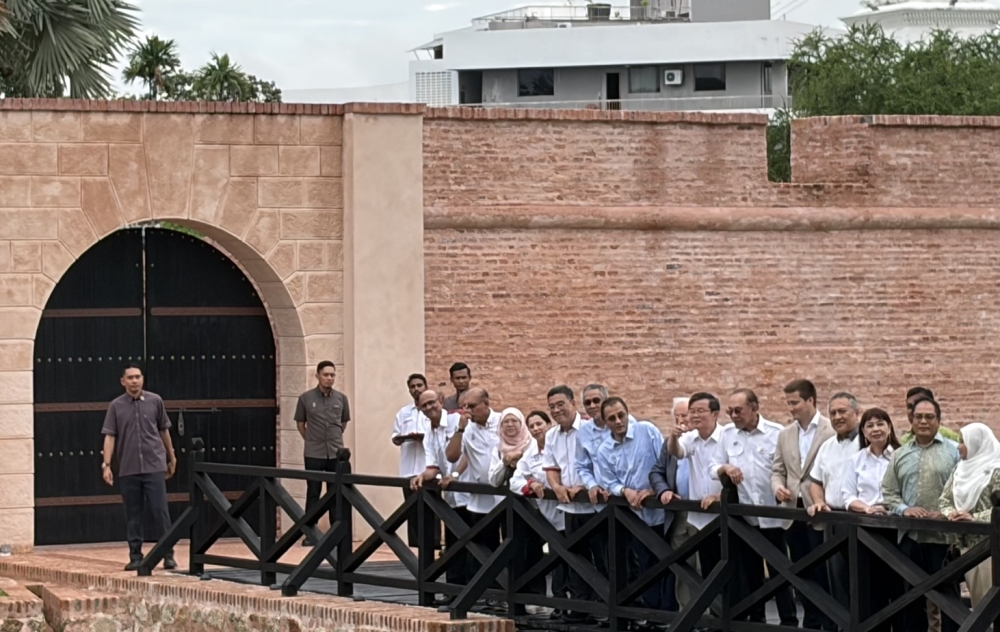
Prime Minister Datuk Seri Anwar Ibrahim has initiated a significant debate about how Malaysia conceptualises its own history, contending that the nation's historical narratives require fundamental reconstruction to better capture the authentic Malaysian experience. Speaking in George Town on July 25, Anwar articulated a vision in which the country's understanding of its past would be reframed to centre Malaysian perspectives and experiences rather than relying solely on inherited colonial-era interpretations or external frameworks.
The Prime Minister's remarks reflect an emerging intellectual movement across Southeast Asia questioning how postcolonial nations have inherited and preserved historical accounts shaped primarily by colonial powers. For Malaysia, this conversation carries particular weight given the nation's complex multiethnic composition and the intricate process through which various communities negotiated independence and nation-building. Anwar's emphasis on reconstructing historical narratives suggests recognition that conventional accounts may not adequately represent the experiences, contributions, and perspectives of all Malaysians.
Historical reconstruction in the Malaysian context necessarily involves examining how different communities—Malays, Chinese, Indians, indigenous peoples, and others—experienced pivotal moments including the colonial period, World War II, the Emergency, and the independence struggle. Dominant narratives have sometimes marginalised or simplified these diverse experiences, presenting sanitised versions that obscure complexity and contested interpretations. By advocating for a reassessment, Anwar appears to acknowledge that Malaysia's historical understanding would benefit from more inclusive and nuanced scholarship that incorporates previously overlooked voices and evidence.
The timing of Anwar's intervention is noteworthy given ongoing national conversations about identity, integration, and social cohesion. Malaysia continues grappling with questions about how its multicultural character should be reflected in education, public discourse, and national institutions. A reconsidered historical narrative could serve as foundation for strengthened national unity by demonstrating that diverse communities have shared stakes in the nation's story and in its future trajectory. This approach differs markedly from historical frameworks that privilege particular groups or present their experiences as paramount.
Education represents a crucial domain where historical reconstruction would manifest tangibly. Malaysian schools currently teach history through prescribed curricula that, while updated periodically, may still reflect older interpretative frameworks. A comprehensive reassessment could inform curriculum development that encourages critical thinking about historical sources, acknowledges historiographical debates, and presents Malaysia's past with appropriate complexity. Students exposed to more comprehensive historical understanding would develop more sophisticated appreciation for how contemporary Malaysia emerged from multifaceted processes involving multiple actors with competing interests and visions.
International precedent exists for such historical reframing. Countries including post-apartheid South Africa, Japan, Germany, and various Southeast Asian neighbours have undertaken significant efforts to reconstruct historical narratives following major political transitions or to correct accounts previously shaped by authoritarian rule or colonialism. These exercises, while sometimes contentious, have generally contributed to deeper national self-understanding and, when handled thoughtfully, to enhanced social reconciliation. Malaysia could potentially benefit from comparable intellectual rigour applied to its own historical understanding.
Anwar's position also intersects with broader questions about national archives, historical research, and public access to primary sources. Reconstructing history with integrity requires that scholars and researchers have adequate access to documentary evidence, government records, and other materials that illuminate how events unfolded and why key actors made consequential decisions. Enhancing transparency around historical materials and supporting rigorous academic inquiry would strengthen any initiative aimed at developing more comprehensive historical accounts. This commitment to evidence-based historical understanding distinguishes legitimate reassessment from politically motivated revisionism.
The intellectual and political challenges in historical reconstruction should not be underestimated. Different communities may have competing interpretations of significant historical events, rooted in their divergent experiences. Some narratives previously treated as settled may become subjects of renewed scholarly and public debate. Managing this process constructively requires fostering open dialogue while maintaining commitment to factual accuracy and logical coherence. Leadership that encourages citizens to engage thoughtfully with contested history rather than retreating into compartmentalised versions of events represents the mature approach Anwar's remarks seem to invite.
For Malaysia's regional standing, demonstrating capacity to engage sophisticatedly with one's own history carries significance. ASEAN neighbours and international observers often assess countries partly through how they handle historical memory and national narratives. A Malaysia that approaches its past with intellectual honesty and inclusivity strengthens its moral authority in regional conversations about shared Southeast Asian history and contemporary challenges. This positions the nation as confident in its identity and secure enough to acknowledge complexity rather than demanding simplified or triumphalist accounts.
Implementing historical reconstruction would require coordination across multiple institutions including the Ministry of Education, academic researchers, cultural organisations, and historical societies. Creating space for scholarly debate while maintaining standards of evidence and logic would be essential. The process should also meaningfully incorporate perspectives from historians, educators, and cultural practitioners representing Malaysia's diverse communities. Such an inclusive approach would enhance both the intellectual quality and societal legitimacy of any revised historical understanding that emerges.
Anwar's call reflects recognition that national narratives are not static artifacts but living frameworks that societies reconstruct as understanding deepens and priorities shift. For Malaysia at this developmental stage, undertaking serious examination of historical narratives represents investment in national self-knowledge. A more comprehensive, nuanced, and inclusive understanding of how Malaysia became the nation it is today could strengthen social cohesion, inform policy-making, and provide younger generations with intellectual foundations for addressing contemporary challenges. The intellectual work of historical reconstruction, while demanding, holds significant potential for advancing both national understanding and social progress.

