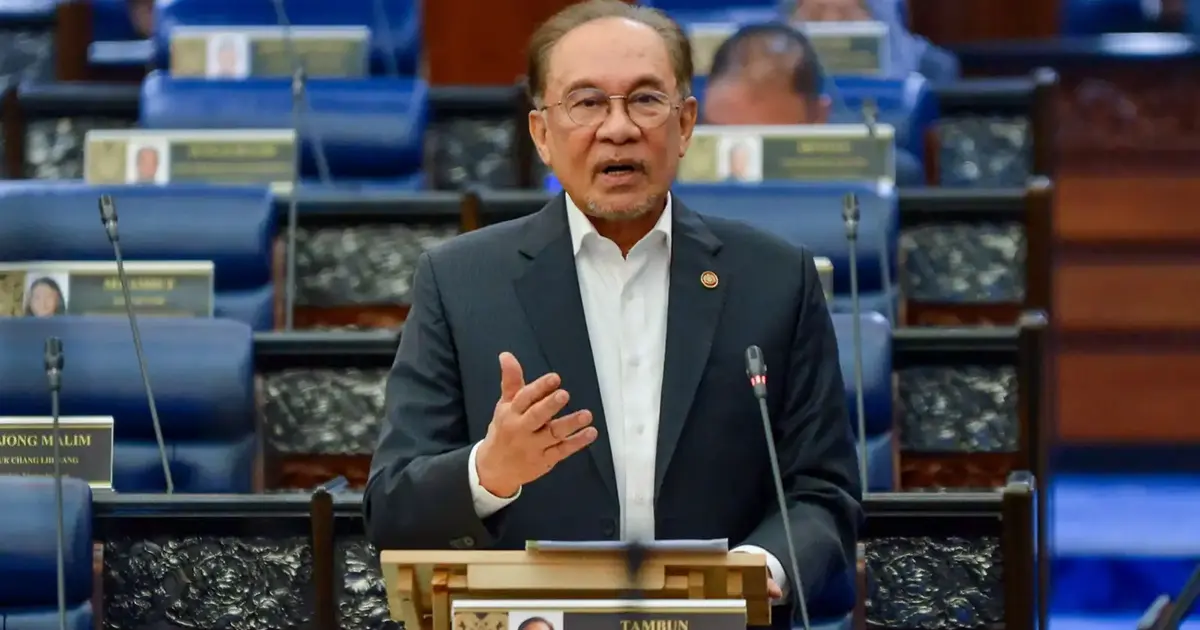
Prime Minister Anwar Ibrahim has once more rejected suggestions that Malaysia should hold elections ahead of schedule, doubling down on his argument that voters fundamentally prefer a government focused on delivering tangible economic improvements rather than one consumed by perpetual campaign cycles.
The renewed statement reflects ongoing tension within Malaysia's political landscape, where opposition voices and some within coalition parties have periodically raised questions about the longevity of the current administration's mandate. Anwar's consistent pushback against such pressure underscores his determination to maintain governmental continuity through the remainder of his term, signalling that his administration views premature elections as a destabilizing distraction from its policy priorities.
At the core of Anwar's position lies a conviction that Malaysians have developed a preference for predictability and sustained policy implementation over the uncertainty that accompanies frequent electoral contests. His framing of the issue casts early elections as fundamentally misaligned with public sentiment, positioning economic advancement and institutional stability as the electorate's true concerns. This narrative appeals to middle-class voters and business communities who worry that political instability could undermine investment confidence and job creation.
The timing of Anwar's remarks carries significance within the broader context of Malaysia's coalition politics. Since the 2022 general election that brought the current government to power, maintaining parliamentary majorities has required careful management of competing interests among coalition partners. The Pakatan Harapan-led administration has navigated several critical moments where its legislative position faced scrutiny, yet has managed to retain sufficient support for major policy initiatives.
From an economic perspective, the government's resistance to electoral disruption reflects legitimate policy concerns. Malaysia's economy requires sustained attention to post-pandemic recovery, foreign direct investment attraction, and regional competitiveness. Frequent elections interrupt ministerial attention, divert state resources toward campaign activities, and create uncertainty that can discourage long-term business planning. The government's economic agenda encompasses infrastructure projects, digital transformation initiatives, and labour market reforms that extend across multiple budget cycles.
However, the Prime Minister's insistence on completing his full mandate also intersects with persistent questions about the stability of coalition arrangements. The Pakatan Harapan partnership with Barisan Nasional components reflects pragmatic necessity rather than ideological cohesion, and tensions periodically surface regarding resource allocation, policy direction, and competing regional interests. By rejecting early elections, Anwar implicitly commits to maintaining these arrangements despite potential friction.
For Malaysian voters, the tension between wanting stable governance and desiring democratic renewal reflects a genuine dilemma in contemporary politics. Frequent elections impose costs—financial, administrative, and opportunity—while also representing a democratic right. Anwar's framing acknowledges this by emphasizing what he characterizes as public preference for stability, effectively arguing that the electorate has already made its choice and seeks opportunity to see it through.
The opposition perspective, meanwhile, contests this interpretation, arguing that voters deserve regular opportunities to assess government performance without artificial delays. Various political actors have suggested that the current administration has moved insufficiently on promised reforms, particularly concerning governance accountability and institutional independence. From this viewpoint, premature resistance to elections reflects governing comfort rather than public interest.
International experience suggests both perspectives contain validity. Stable governments with sufficient majorities do tend to implement longer-term policy agendas more effectively, while democracies require functioning electoral cycles to ensure genuine accountability. Malaysia's challenge involves balancing these imperatives given its coalition-dependent political structure.
Looking at Southeast Asian parallels provides context. Thailand's persistent political instability stems partly from multiple intervention cycles, while Vietnam's single-party continuity enables planning but eliminates electoral accountability. Singapore's dominant-party system combines stability with periodic elections. Malaysia's system, with its genuine electoral competition within a constitutional monarchy framework, occupies a distinct position requiring careful management.
Anwar's messaging also serves a coalition management function, signalling to his partners that he intends to complete the current government's term without sudden disruption. This reassures smaller coalition parties whose representation depends on maintaining current arrangements, while also signalling to potential dissident lawmakers that early dissolution remains improbable.
Looking forward, the government's ability to deliver on its economic and reform promises will substantially shape whether Anwar's arguments about public preference for stability gain credibility. If growth accelerates, inflation moderates, and employment strengthens, voters may feel vindicated in granting the government its full term. Conversely, prolonged economic sluggishness or stalled reform efforts could intensify pressure for electoral renewal regardless of official positions.
The debate over electoral timing ultimately reflects deeper questions about Malaysia's political maturity and institutional development. A confident government secure in public support can afford elections; political fragility prompts resistance. Anwar's repeated rejection of early elections projects confidence while simultaneously revealing the calculation necessary to maintain coalition coherence in Malaysia's complex contemporary politics.

