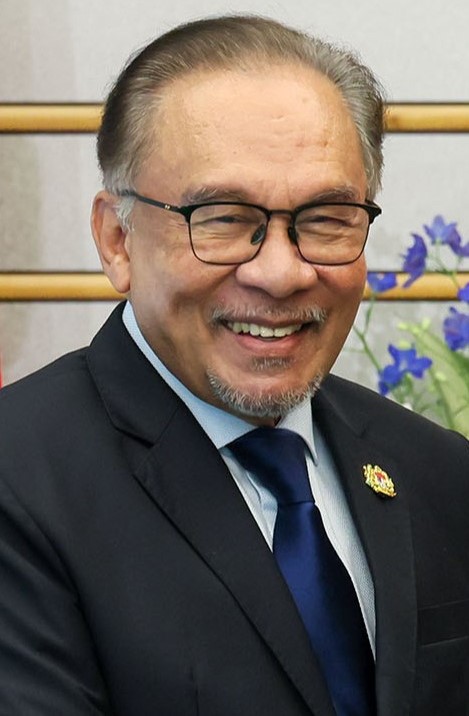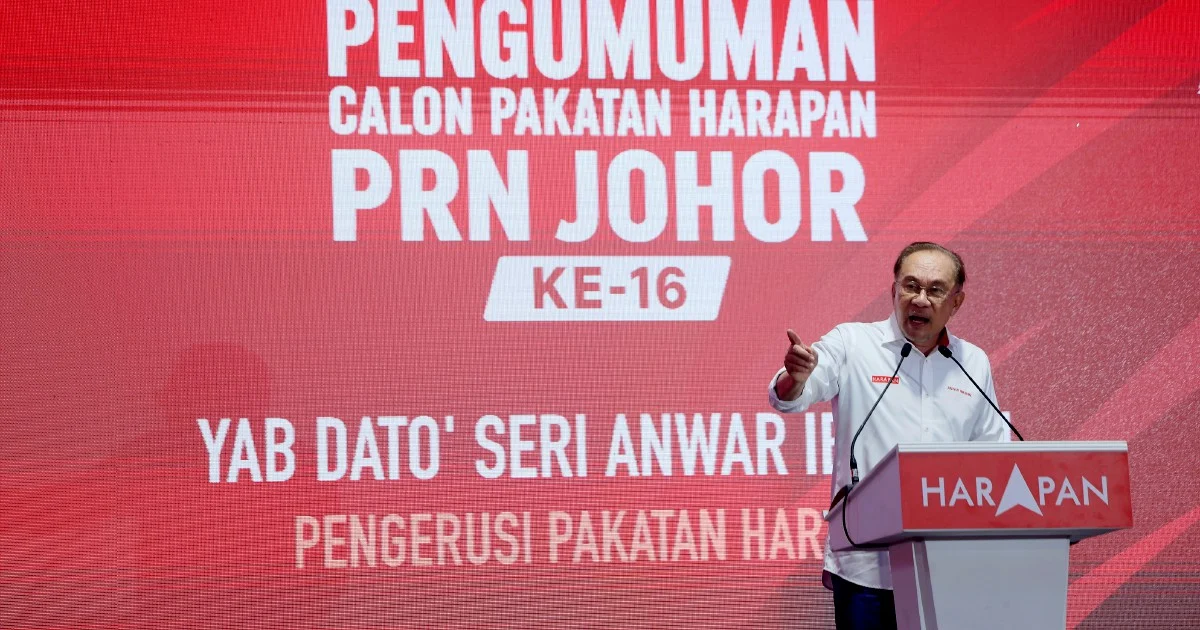
Prime Minister Datuk Seri Anwar Ibrahim has urged Johor's executive council to press the previous Barisan Nasional and Perikatan Nasional federal administrations for clarification on allegations that the state failed to receive its rightful share of federal revenue. Speaking during a campaign event in Tangkak, Anwar encouraged state leaders to rigorously examine the revenue distribution mechanisms that operated under the two preceding governments, indicating that unresolved questions about fiscal fairness remain a significant issue for Johor's development trajectory.
The Premier's intervention underscores mounting concerns about how federal allocations were managed during the tenures of both the long-governing Barisan Nasional coalition and the subsequent Perikatan Nasional administration. These concerns have gained traction among Johor's political circles, where questions persist about whether the state's substantial economic contributions were adequately reflected in federal disbursements. The remarks suggest that the current Pakatan Harapan-led government views this as an opportunity to differentiate itself through greater transparency and fiscal accountability regarding state-level resource distribution.
Johor's position within Malaysia's federal system makes revenue allocation particularly consequential. As one of the nation's most economically productive states, with significant contributions from port operations, petroleum resources, and manufacturing industries, questions about equitable return of revenues carry substantial weight both politically and economically. The state government's ability to fund infrastructure, education, and healthcare initiatives depends significantly on the adequacy of federal transfers, making this an issue that resonates directly with Johor voters' quality of life.
Anwar's encouragement for heightened scrutiny reflects a broader political strategy to address longstanding grievances about governance during the Barisan Nasional era, which lasted through various administrations from 1957 until 2018, and the more recent Perikatan Nasional period from 2020 to 2022. Both administrations made critical decisions regarding how federal revenue was distributed among states, decisions that have come under retrospective examination as the current government seeks to establish itself as more responsive to state-level concerns. The call for accountability also positions the current administration as willing to confront its predecessors' record, a rhetorical strategy designed to build credibility with voters.
For Johor's executive council members, Anwar's remarks provide political cover to pursue deeper investigations into historical revenue allocations without appearing to engage in mere partisan retrospection. By framing the examination as a matter of fiscal justice for their constituents, state leaders can pursue such inquiries with the backing of the Prime Minister's office, lending institutional weight to what might otherwise be characterized as opposition attacks on previous governments. This dynamic reflects how issues of federal fiscal relations remain genuinely contested terrain in Malaysian politics, with genuine disagreements about whether mechanisms for distributing resources have served all states equitably.
The specific focus on both Barisan Nasional and Perikatan Nasional—rather than only one predecessor—suggests Anwar's intention to present the current government as non-partisan on this issue, prepared to hold any previous administration accountable. This approach attempts to broaden the appeal beyond purely partisan constituencies by positioning fiscal justice as a universal concern transcending coalition allegiances. By directing his comments toward an executive councillor rather than making a sweeping policy announcement, Anwar also employed a measured tone that emphasizes dialogue rather than confrontation with previous administrations.
The mechanics of federal-state revenue sharing in Malaysia involve complex formulas established through the federal constitution and periodic renegotiations between federal and state governments. These formulas determine how revenue collected from income tax, customs duties, and excise duties are distributed, alongside grants made for specific purposes. Johor, with its strategic economic importance and substantial resource wealth, has long occupied a particular position within these negotiations, though disputes have occasionally emerged about whether allocation mechanisms fully recognized its contributions.
Anwar's intervention also reflects sensitivity within the federal government to state-level concerns that have occasionally threatened to destabilize federal coalitions. Johor's political dynamics have proven particularly consequential in Malaysian federal politics, and addressing grievances about revenue fairness serves as an attempt to maintain political stability and goodwill at both federal and state administrative levels. The remarks acknowledge that economic grievances, if left unaddressed, can accumulate into significant sources of political friction.
Moving forward, the success of any investigation into historical revenue allocations will depend on the willingness of both federal and state authorities to access detailed financial records and engage in transparent analysis. The complexity of fiscal federalism means that establishing definitive proof of underallocation to Johor would require careful examination of revenue formulas, actual disbursements, and comparative analysis with other states' treatment. Whether such examinations lead to concrete remedial measures or simply serve to air long-standing concerns remains uncertain, but Anwar's encouragement suggests the government recognizes both the political importance and the substantive merit of revisiting this persistent issue.