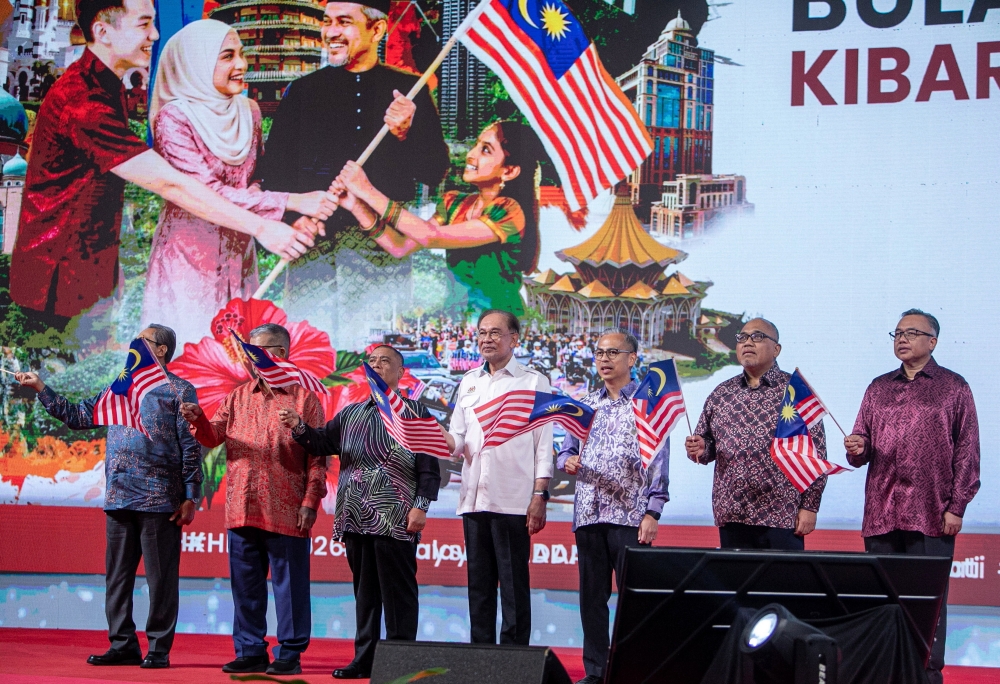
Prime Minister Datuk Seri Anwar Ibrahim delivered a pointed message to Malaysia's younger generation in Ipoh on July 19, urging them to maintain a living connection to the historical struggle that secured their nation's independence. Speaking to assembled youth, Anwar stressed that contemporary Malaysians must not allow the memory of past sacrifices to fade into abstraction, emphasizing instead that this historical awareness should inform present-day national consciousness and civic responsibility.
The appeal comes at a moment when Malaysia's political landscape continues to grapple with questions of national identity and cohesion. Anwar's insistence that young people engage meaningfully with the independence movement reflects broader concerns within government circles about whether successive generations adequately value the foundational work of their predecessors. The Prime Minister framed historical knowledge not as mere academic exercise, but as essential moral grounding for citizens in a multi-ethnic, multi-religious democracy.
Anwar's remarks underscore a recurring tension in Malaysian public discourse: the challenge of transmitting historical memory across generational divides. For many young Malaysians, independence in 1957 represents ancient history rather than a living legacy. The Prime Minister's intervention suggests awareness that this distancing poses risks to national cohesion, particularly as Malaysia navigates contemporary challenges around unity and shared purpose. By invoking the collective sacrifice embedded in the independence narrative, Anwar positioned historical remembrance as foundational to maintaining social stability.
The timing of these comments carries significance within Malaysia's political calendar and developmental arc. As the nation progresses economically and technologically, questions about what binds Malaysians together become more, rather than less, acute. The Prime Minister's emphasis on the independence struggle reflects a calculation that shared historical narrative—particularly one emphasizing collective sacrifice across communal lines—offers essential ballast for national unity. This approach acknowledges that economic development alone cannot sustain the social contracts necessary for a pluralistic nation.
Anwar's statement also reflects the government's broader educational and cultural agenda. Malaysian policymakers have long grappled with how to ensure that younger citizens understand the compromises and achievements embedded in the nation's founding. The independence period was marked by complex negotiations among communal leaders, carefully calibrated constitutional settlements, and explicit agreements about shared citizenship. When this context fades from popular understanding, it becomes easier for citizens to question the legitimacy of these arrangements or to imagine alternative foundational narratives based on narrower communal interests.
The rhetorical strategy deployed by the Prime Minister—emphasizing duty to remember—also carries implicit warnings. In urging youth not to forget, Anwar implicitly cautioned against divisive reinterpretations of history that might prioritize sectional narratives over the broader independence story. Malaysia's social media landscape has increasingly witnessed contestations over how to remember the past, with different communities sometimes advancing competing accounts of the independence movement. The Prime Minister's call for remembrance thus functions partly as a plea for unity around an established historical framework.
For young Malaysians specifically, the appeal intersects with broader questions about generational identity and national belonging. Many youth today encounter Malaysia's independence narrative primarily through formal education, if at all. The Prime Minister's intervention suggests that passive curriculum exposure may be insufficient to generate the emotional and psychological connection necessary for historical memory to truly inform civic consciousness. Anwar's approach implied that active, conscious engagement with history represents a form of patriotic duty rather than nostalgic indulgence.
The emphasis on youth also reflects demographic and political realities. Malaysia's population remains relatively young, with citizens under 40 comprising a substantial proportion of the electorate. Securing the political and ideological allegiance of this cohort has become central to all major political movements. By speaking directly to youth about historical consciousness, Anwar positioned the government as custodian of national memory and guardian of the values embedded in the independence struggle. This framing carries electoral implications, as it associates the ruling coalition with historical legitimacy and national continuity.
Anwar's call for historical remembrance gains additional resonance when considered against Southeast Asian regional trends. Several neighboring nations have experienced political instability partly attributed to weakened consensus around founding narratives and national identity. The Prime Minister's insistence that Malaysians maintain connection to their independence legacy can be read as a cautious acknowledgment that social cohesion cannot be assumed or taken for granted, particularly in an increasingly complex, digitally-connected society where alternative narratives proliferate rapidly. Historical memory, in this view, functions as active bulwark against centrifugal forces.
The practical implications of Anwar's exhortation remain to be seen. Whether appeals to remember independence will substantially reshape youth engagement with national history depends partly on whether such rhetoric receives reinforcement through educational institutions, media, and cultural programming. The government's subsequent investments in history education and commemoration will determine whether the Prime Minister's words constitute genuine commitment or largely symbolic gesture. Nonetheless, Anwar's emphasis on historical consciousness reflects understanding that nations require continuous effort to sustain the narratives that bind diverse populations together.
Moving forward, Malaysian policymakers will likely intensify efforts to make independence history more resonant with contemporary youth. This may involve exploring how the founding generation's achievements speak to present-day challenges around inclusion, democratic participation, and shared prosperity. The effectiveness of such efforts will substantially influence whether Malaysians collectively maintain the historical consciousness that Anwar urged them to preserve.

