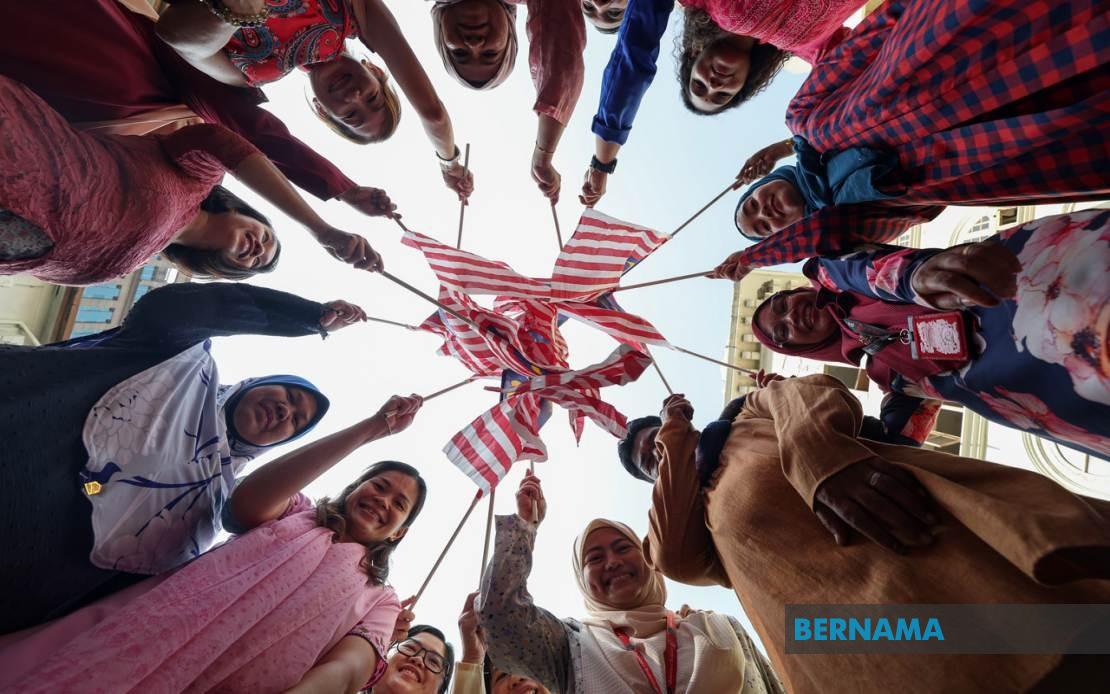
Prime Minister Datuk Seri Anwar Ibrahim has delivered a stirring appeal to Malaysians ahead of tomorrow's 69th National Day celebrations, urging citizens to remain vigilant guardians of their nation's most precious asset: the bonds of unity that hold together one of Asia's most diverse societies. In remarks posted on social media platform X and accompanied by a video message, Anwar framed independence not merely as political sovereignty but as a collective responsibility rooted in the shared aspirations and sacrifices of multiple generations.
Anwar's message reflected a strategic emphasis on Malaysia's multicultural foundations at a time when social cohesion remains a recurring policy priority. He articulated a vision of independence grounded in the confidence and dignity of a people capable of determining their own course. The Prime Minister stressed that freedom carries with it an obligation—that of protecting the territorial integrity and social fabric that enable prosperity to flourish. His framing positioned national guardianship as an individual responsibility distributed across the entire populace rather than concentrated among political institutions alone.
Central to Anwar's address was an explicit recognition of Malaysia's ethnic and cultural diversity as a source of collective strength rather than potential fracture. He invoked the names of the country's principal communities: Malay, Chinese, Indian populations alongside the indigenous peoples of East Malaysia including Iban, Kadazan, Murut, Bidayuh and Orang Ulu communities. This deliberate enumeration underscored a conception of Malaysian identity built upon acknowledging and integrating distinct cultural traditions. The Prime Minister's acknowledgment of indigenous communities in particular reflected broader efforts within his administration to ensure that development and national narratives incorporate Sabah and Sarawak as integral rather than peripheral to Malaysia's identity.
The Prime Minister's reflections on historical achievement carried implicit weight for contemporary Malaysia. Anwar attributed all present accomplishments to the "sweat, blood and tears" of preceding generations, a formulation that situated today's citizens as custodians of an inheritance rather than creators of an entirely new dispensation. This historical consciousness serves multiple purposes within Malaysian political discourse: it anchors current institutions and arrangements in the legitimacy of the past while simultaneously obligating the present generation to transmit these foundations intact to successors. For Malaysian audiences confronting rapid social change and competing modernization pressures, such framings provide reassurance that development need not entail abandonment of foundational principles.
Anwar's message also embedded an explicit governance statement through his insistence that Malaysia's national interest must supersede ethnic and regional considerations. This represents a direct articulation of the integrative nationalism that has underpinned Malaysian statecraft since independence, though such restatements acknowledge ongoing tensions between particularistic and universalist identities. The Prime Minister's call to subordinate sectional interests to national welfare reflects recurrent challenges within plural societies where communal identities and competing resource claims periodically threaten cohesion.
Equally significant was Anwar's invocation of justice as a pillar of national identity. He directed specific attention to communities described as marginalised and sidelined, framing inclusive justice as essential to Malaysia's international reputation and self-conception. This emphasis carries particular resonance for communities in peninsular Malaysia's less developed regions and for populations in East Malaysia who have historically perceived development imbalances. By positioning equitable treatment as constitutive of Malaysian nationhood rather than as a discretionary policy preference, Anwar elevated distributive justice to the status of foundational principle.
The timing of these remarks, coming immediately before National Day celebrations anchored by the theme "Malaysia MADANI: Kesejahteraan Dinikmati" (Malaysia MADANI: Prosperity Enjoyed), suggests deliberate alignment between ceremonial commemoration and forward-looking governance messaging. The MADANI framework, which has become central to Anwar's administration's policy articulation, promises material wellbeing distributed across Malaysian society. The Prime Minister's linkage of unity and shared sacrifice to present-day prosperity attempts to establish that inclusive development represents not a departure from founding principles but their contemporary fulfilment.
For regional observers, Anwar's emphasis on Malaysia's stability through maintained communal harmony carries implications beyond domestic politics. Southeast Asia's regional architecture depends substantially on Malaysian internal cohesion, given the nation's economic importance, geopolitical positioning, and role within ASEAN deliberations. The Prime Minister's restatement of commitment to unity implicitly signals to regional partners that Malaysia remains a stable foundation for regional cooperation and economic integration.
Anwar's invocation of collective effort and shared national endeavour also reflected efforts to cultivate a sense of national ownership extending beyond formal governmental structures. By repeatedly calling upon citizens to "work as one team" and defend the country "with all their might," the Prime Minister distributed agency and responsibility throughout the body politic. This rhetorical strategy acknowledges that national resilience ultimately depends on millions of individual decisions and commitments rather than on policy pronouncements alone.
The Prime Minister's closing appeal to "Merdeka"—independence—represented more than ceremonial invocation of the founding moment. It encapsulated his entire message: that independence achieved through collective strength must be perpetually renewed and defended through continued unity, that prosperity requires justice distributed equitably, and that Malaysia's greatest power resides in its capacity to maintain coherence across remarkable diversity. As Malaysia approaches its 70th anniversary of independence, Anwar's rhetoric positioned the coming decade not as a period of assumed stability but as one requiring renewed commitment from every citizen to the underlying principles of collective endeavour that established the nation.

