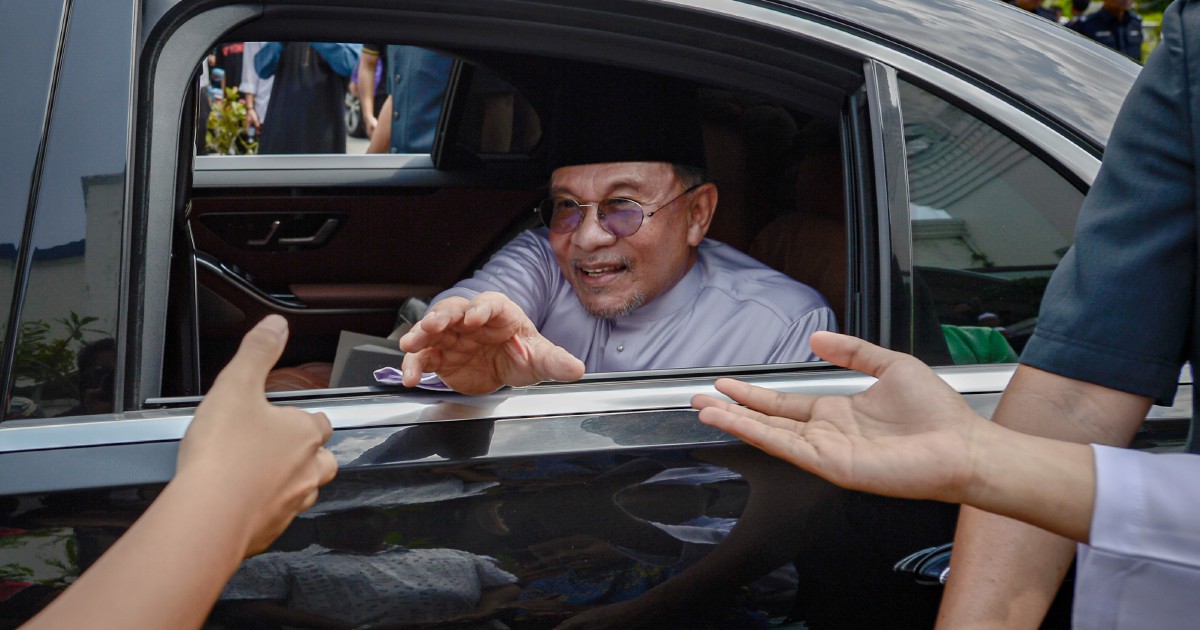
Prime Minister Datuk Seri Anwar Ibrahim is taking his campaign directly to voters in Negri Sembilan, underscoring Pakatan Harapan's determination to maintain its electoral advantages in a state that has long been a battleground between the country's major political coalitions. The decision to deploy the nation's top political figure demonstrates the coalition's confidence in the region whilst also reflecting the competitive nature of state-level contests, where local grievances and community-specific pledges often override national narratives.
Anwar's presence on the campaign trail signals that Pakatan Harapan views Negri Sembilan as strategically significant. The state has historically been a swing region where voter preferences shift based on economic conditions, incumbent performance, and the calibre of local representation. By engaging directly with constituents rather than relying solely on party machinery, Anwar aims to translate national-level approval into specific state-level gains. This hands-on approach has become standard practice among Asian leaders seeking to consolidate electoral support during contested polls.
The timing of Anwar's Negri Sembilan visit reflects broader patterns in Malaysian political campaigns, where prime ministers typically intensify their ground presence as election day approaches. Such tours allow the premier to address voter concerns directly, demonstrate the coalition's capacity to govern, and counter opposition narratives about policy failures or mismanagement. In Negri Sembilan's case, traditional issues including infrastructure development, local employment opportunities, and the preservation of state-specific interests form the backbone of campaign messaging.
Pakatan Harapan's electoral strategy in the state must contend with several competing realities. The coalition faces challenges from Barisan Nasional, which maintains organisational depth and historical support networks in rural constituencies, as well as increasingly competitive independent candidates and smaller parties seeking to disrupt traditional two-coalition dynamics. Anwar's campaign visit represents an attempt to energise the party base, consolidate wavering supporters, and persuade undecided voters that Pakatan Harapan offers superior governance outcomes compared to alternatives.
For Malaysian and Southeast Asian observers, such campaign activities highlight how regional democracies manage electoral competition. Unlike systems with imposed restrictions on campaigning, Malaysia's open approach permits senior leaders to campaign extensively during official election periods. This freedom enhances democratic legitimacy whilst simultaneously creating opportunities for intensive political engagement that can mobilise voters or entrench divisions depending on campaign tone and substance.
Negri Sembilan's particular electoral context demands sophisticated coalition strategy. The state comprises relatively compact constituencies where personal connections between political representatives and constituents remain influential. Urban voters in areas like Seremban increasingly prioritise economic competitiveness and infrastructure quality, whilst rural communities emphasise traditional concerns including agricultural support, road access, and cultural preservation. Pakatan Harapan's campaign messaging must therefore address this diverse spectrum whilst maintaining coherence around core policy commitments.
Anwar's involvement also carries symbolic weight beyond immediate electoral calculations. The Prime Minister's physical presence validates local candidates, demonstrates that national leadership considers Negri Sembilan important enough to warrant personal attention, and attempts to create impressions of momentum and popular support. Media coverage of such visits amplifies these effects, particularly in state-focused news outlets where local political narratives dominate editorial agendas. Conversely, opposition parties typically deploy their own senior figures to contest the same narrative space, creating competitive spectacles that engage journalists and voters simultaneously.
The broader context involves understanding how Malaysian state elections function within the federal system. State governments control significant portfolios including land administration, local development, and state-specific revenue allocation. Negri Sembilan voters therefore assess whether Pakatan Harapan representatives will better advance local interests whilst maintaining productive relationships with the federal government. This calculation differs markedly from parliamentary elections where voters consider broader national governance questions. Anwar's campaign visit thus requires framing state-level concerns within national policy frameworks whilst persuading voters that the coalition offers superior execution capacity at both levels.
Electoral dynamics in Negri Sembilan also reflect demographic shifts occurring across Malaysia. Younger voters, increasingly concentrated in state capitals and secondary towns, display voting patterns less bound by traditional communal loyalties. These cohorts prioritise economic opportunity, government transparency, and policy responsiveness over inherited political affiliations. Pakatan Harapan's campaign strategy must therefore balance efforts to consolidate its existing support base with outreach to younger demographic segments that perceive conventional politics as inadequately responsive to their concerns.
The campaign visit illustrates fundamental principles governing Malaysian electoral politics: that senior leaders must personally invest time and political capital in contested races, that coalitions cannot assume electoral dominance despite previous victories, and that state-level contests require tailored strategies distinct from federal campaigns. Anwar's presence in Negri Sembilan signals recognition of these realities. Whether this investment translates into improved electoral performance depends ultimately on local candidate quality, ground-level party organisation, and whether voters perceive Pakatan Harapan as having delivered on previous commitments. The campaign visit represents necessary but insufficient effort; sustained voter preference requires consistent governance performance and demonstrated attention to community-specific development priorities across multiple electoral cycles.

