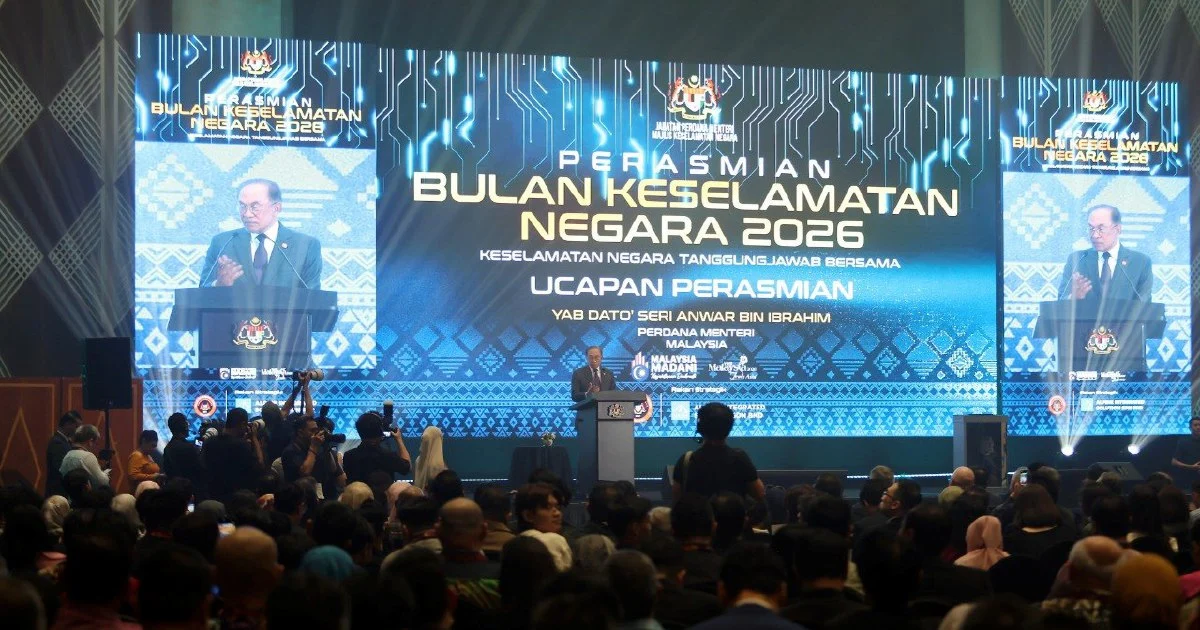
Prime Minister Datuk Seri Anwar Ibrahim has sounded a cautionary note about the persistence of racial and regional fault lines in Malaysian politics, warning that the nation risks becoming ensnared in outmoded frameworks of identity-based conflict. His remarks come at a sensitive juncture as Johor, one of Malaysia's most consequential states, prepares for its electoral contest, signalling broader concerns about the tenor of political campaigns and their potential to amplify communal tensions.
The Prime Minister's intervention reflects a deepening anxiety within the federal government about the direction of political discourse across the country. Rather than moving towards issues of common concern—economic development, service delivery, and social cohesion—electoral campaigns have increasingly revolved around identity politics and ethno-religious narratives that reinforce long-standing divisions. Anwar's comments suggest frustration with a political culture that continually retreats into familiar scripts of racial and regional grievance rather than charting a path toward inclusive governance.
Johor's significance in this conversation cannot be overstated. As a state with substantial Malay-Muslim, Chinese, and Indian populations, and historically a stronghold for both ruling and opposition coalitions, electoral contests there invariably become microcosms of national political trends. The state has experienced considerable economic development and demographic shifts in recent decades, yet election campaigns frequently sidestep these realities in favour of appeals that mobilise voters along ethnic and religious lines. This pattern exemplifies the broader challenge that Anwar appears to be addressing.
The worry embedded in the Prime Minister's statement touches on a structural problem in Malaysian politics: the tendency of politicians, particularly at state and local levels, to exploit communal anxieties for electoral gain. Such tactics, while often effective in the short term, corrode the foundation of plural coexistence that Malaysia's stability has historically depended upon. They also distract from substantive policy debates about education, healthcare, employment, and infrastructure—areas where genuine differences between parties should be debated openly.
Anwar's positioning on this issue carries particular weight given his historical advocacy for multiethnic unity and his current role as Prime Minister of a coalition government that requires cooperation across communal lines. His administration has staked considerable political capital on bridging divides and presenting itself as above narrow sectional interests. Yet the persistence of racialised political rhetoric at the state level suggests that the federal government's efforts to reshape political culture remain incomplete or insufficient.
The timing of Anwar's remarks also carries strategic importance. By speaking out before the Johor elections, he is attempting to establish a frame through which voters and observers might interpret campaign conduct. His intervention implicitly calls upon political parties, regardless of their coalition affiliations, to conduct their campaigns responsibly and to resist the temptation to weaponise identity issues. This represents a form of soft pressure on political actors to self-regulate, albeit one that lacks enforcement mechanisms.
For Malaysian and Southeast Asian observers, Anwar's concern touches on a question that extends beyond electoral politics: whether Malaysia can sustain its multiethnic model if political competition continues to operate primarily through identity mobilisation. Other plural societies in Southeast Asia have grappled with similar challenges, with mixed results. Thailand's periodic flirtations with ethno-centric politics, Myanmar's ethnic tensions, and Indonesia's negotiation of religious identity in electoral contests all offer cautionary tales about the risks of allowing identity politics to dominate public discourse.
The irony underlying this conversation is that contemporary electoral campaigns often invoke racial and regional concerns while the country simultaneously faces genuinely shared challenges—climate impacts on agriculture and coastal areas, youth unemployment, the digital divide, and economic competitiveness—that cut across demographic lines. Yet these collective concerns rarely mobilise voters with the same intensity as narratives of group identity and historical grievance. This mismatch between actual policy concerns and electoral rhetoric represents a significant problem for democratic governance.
Anwar's intervention also reflects generational and ideological shifts within Malaysia's political leadership. While the preceding generation of politicians often took for granted that identity-based appeals were both inevitable and necessary, a newer cohort—including the Prime Minister—appears more convinced that such narratives are liabilities rather than assets. This philosophical difference may eventually reshape how Malaysian elections are contested, though such changes occur gradually and against considerable institutional inertia.
The months ahead will reveal whether the Prime Minister's warning influences conduct on the campaign trail. Political parties seeking to position themselves as responsible stewards of national unity may adopt the framework Anwar has offered, consciously tempering their appeals to communal sentiment. Alternatively, competitors may intensify identity-based messaging, calculating that electoral advantage outweighs reputational costs. The behaviour of candidates and party strategists in Johor will provide early indicators of which tendency prevails in Malaysian electoral politics.

