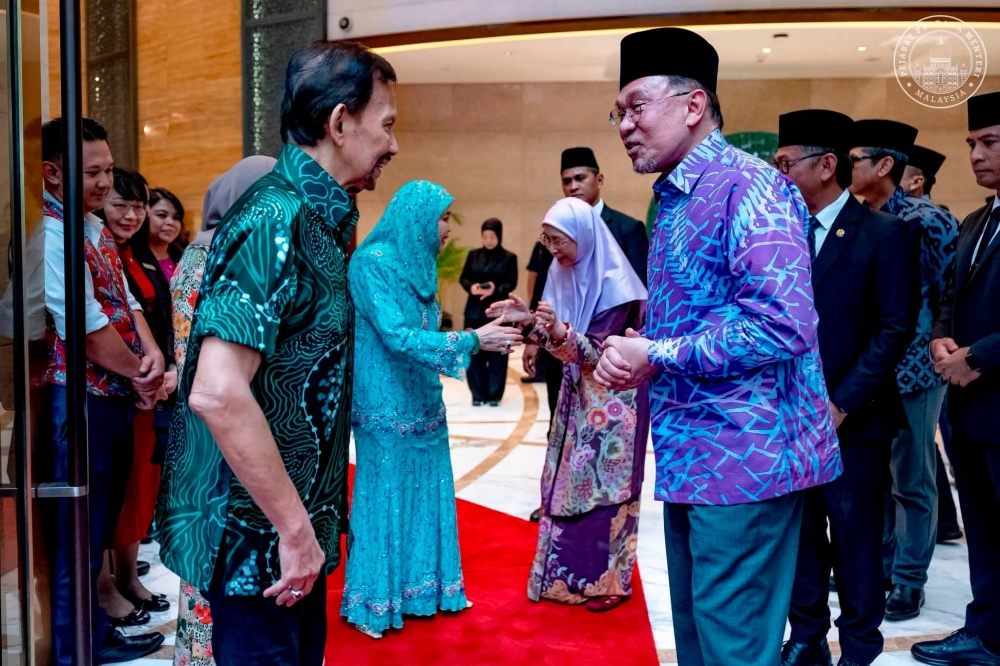
Prime Minister Datuk Seri Anwar Ibrahim has extended birthday congratulations to Brunei's Sultan, marking another instance of ceremonial diplomacy between the two neighbouring Southeast Asian nations. The gesture, delivered on July 15, reflects the ongoing tradition of high-level courtesies that characterise Malaysia-Brunei relations, even as both countries navigate a complex regional landscape.
The warm exchange underscores the importance both governments place on maintaining cordial bilateral relations at the highest level. Such personal gestures from heads of state and government leaders serve as symbolic reinforcements of national partnerships, particularly in a region where personal relationships between leaders often carry significant diplomatic weight. For Malaysia and Brunei, whose shared maritime borders and historical ties create both opportunities and potential friction points, regular affirmation of goodwill remains a pragmatic diplomatic practice.
Anwar's message came at a time when regional dynamics continue to shift. Southeast Asia faces mounting economic pressures, geopolitical uncertainties, and the need for coordinated responses to transnational challenges ranging from climate change to maritime security. Within this context, Malaysia's emphasis on its relationship with Brunei takes on added significance, as the sultanate, though small in population and economic output, occupies a strategically important position on the island of Borneo and maintains considerable reserves of natural resources.
Bilateral engagement between Kuala Lumpur and Bandar Seri Begawan encompasses multiple dimensions. Trade flows remain modest but steady, with both nations maintaining economic partnerships in sectors including energy, agriculture, and tourism. Beyond commerce, cultural and educational exchanges continue to strengthen people-to-people connections, with Malaysian institutions hosting Bruneian students and vice versa. Such foundational ties provide resilience to the overall relationship, ensuring that diplomatic relations rest on something more substantial than government-to-government protocols alone.
The birthday message also arrives amid ongoing discussions about regional cooperation frameworks. Both Malaysia and Brunei are members of ASEAN and participate in various regional initiatives aimed at addressing shared challenges. The Association's consensus-based decision-making model means that maintaining harmonious bilateral relationships between member states facilitates smoother cooperation on the broader regional agenda. When key bilateral relationships are robust, ASEAN itself functions more effectively as a collective voice on the world stage.
For Malaysian readers, understanding the significance of such diplomatic courtesies requires recognising how they fit into broader strategic thinking. Malaysia, as a larger economy and more populous nation, naturally seeks to position itself as a regional anchor and responsible power. Cultivating warm relations with smaller neighbours like Brunei demonstrates this posture while also acknowledging that size alone does not determine the value of a partnership. Brunei's strategic location, resource wealth, and independent voice within regional forums mean that maintaining its goodwill serves Malaysia's interests tangibly.
The reaffirmation of bilateral ties carries particular weight given occasional tensions that have historically marked Malaysia-Brunei relations. Disputes over maritime boundaries and resource management in shared waters have periodically tested the relationship. Both nations have generally handled these differences through diplomatic channels and multilateral frameworks rather than confrontation, but the need for regular reassurance of commitment to the partnership remains valid. Birthday greetings and ceremonial exchanges, therefore, serve a practical function beyond mere courtesy—they remind both publics and policymakers of the fundamental accord underlying the relationship.
Anwar's approach to such diplomatic engagement reflects his broader strategy of emphasising regional integration and cooperation. Since assuming office, the Prime Minister has made numerous regional visits and consistently stressed the importance of ASEAN solidarity and bilateral partnerships. This messaging resonates with constituencies across Southeast Asia that worry about great-power competition and external interference in regional affairs. By strengthening intra-regional bonds, Malaysia under Anwar's leadership positions the country as contributing to a more stable, self-reliant Southeast Asia.
Looking forward, the Malaysia-Brunei relationship will likely continue to be shaped by both structural factors and personality-driven diplomacy. Economic integration remains limited but could expand if both governments prioritise sectoral cooperation in areas like renewable energy and digital innovation. Security cooperation, particularly in addressing transnational crime and maintaining maritime stability, offers another avenue for deeper engagement. Meanwhile, cultural diplomacy and educational exchange programmes can reinforce the people-to-people bonds that ultimately anchor any enduring international relationship.
For Malaysia as a major ASEAN player and moderate Muslim-majority democracy, the cultivation of strong ties with Brunei—another Islamic nation with its own distinct governance model—carries symbolic importance beyond the bilateral level. It signals that Malaysia respects diverse approaches within the Islamic world and seeks partnership with nations regardless of differences in economic size or international profile. This inclusive posture strengthens Malaysia's claim to regional leadership and appeals to the broad spectrum of ASEAN members.
The exchange of birthday greetings may appear routine, yet it embodies the patient, consistent diplomatic work that underpins international relations. In an era of sharp rhetoric and zero-sum thinking in global affairs, Malaysia and Brunei's commitment to maintaining warm, ceremonial exchanges represents a quieter but important form of statecraft. For both nations, preserving this foundation of mutual respect ensures that when more substantive negotiations or collaborations arise, the groundwork of goodwill already exists.

