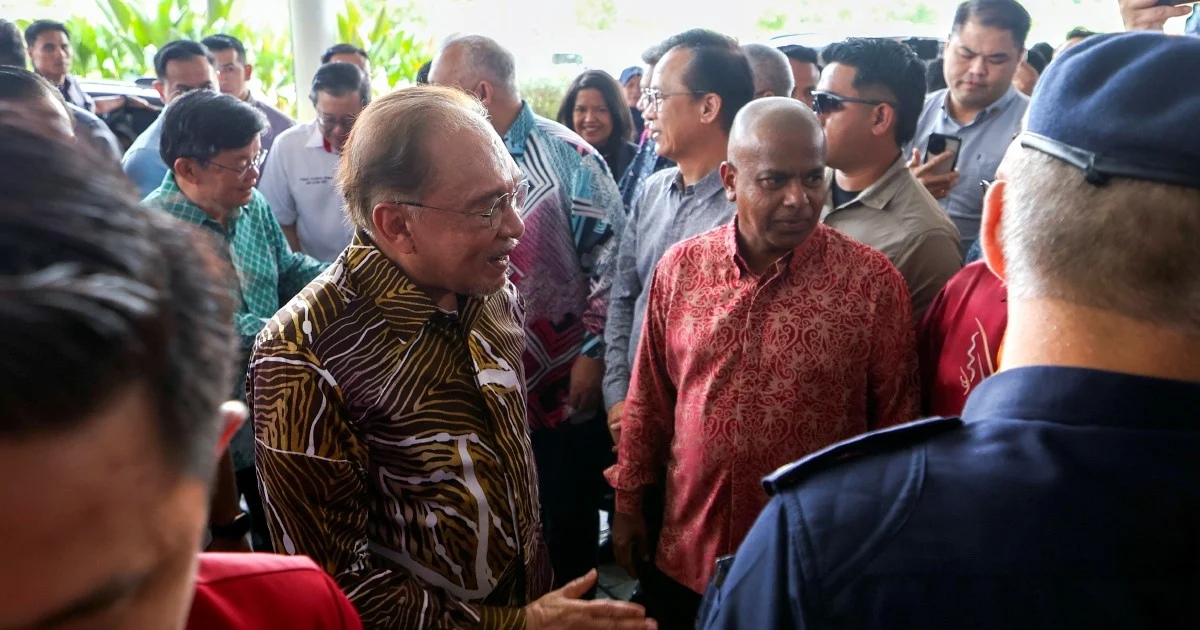
Prime Minister Datuk Seri Anwar Ibrahim has welcomed Petronas's successful bid to develop two substantial gas fields in Turkmenistan, viewing the accomplishment as a watershed moment for Malaysia's capacity to secure its energy supply over the coming decades. Speaking in Permatang Pauh, Anwar underscored the significance of the agreement for the country's broader economic stability and its position within the global energy landscape.
The acquisition represents a meaningful expansion of Petronas's upstream portfolio beyond Malaysia's borders, positioning the national oil and gas corporation to extract and commercialise hydrocarbons from one of Central Asia's richest reserves. By securing access to Turkmenistan's gas fields, Petronas gains exposure to substantial production volumes that can supplement domestic reserves and generate substantial revenues through international markets and liquefied natural gas (LNG) projects.
For Malaysia's energy policy, the deal carries profound implications. Domestically, the country faces the reality of gradually depleting conventional oil and gas reserves in the Peninsular Malaysia and Sarawak basins, where production has been slowly declining over the past decade. By establishing a foothold in Turkmenistan's resource base, Petronas can offset this natural decline and ensure a more stable, diversified revenue stream that protects Malaysia's fiscal position against volatile commodity markets.
The transaction also reflects Petronas's strategic maturation as a globally competitive energy company. Operating in Turkmenistan places the Malaysian corporation alongside international majors in one of the world's most challenging and geopolitically significant hydrocarbon-producing regions. Success in Central Asia demands sophisticated project management, technological expertise, and the capacity to navigate complex regulatory environments—capabilities that Petronas has progressively developed through decades of operating in the South China Sea and Southeast Asia.
From a geopolitical perspective, Malaysia's energy partnership with Turkmenistan strengthens bilateral ties and diversifies the country's strategic relationships in Asia. While Malaysia's energy sector has traditionally focused on regional cooperation through ASEAN and with Middle Eastern suppliers, this Central Asian expansion broadens the nation's diplomatic and commercial networks. It also positions Malaysia as a credible energy partner for countries in Asia's interior, potentially opening doors for future collaborations in the region.
The LNG dimension of this deal deserves particular attention. If the gas from these Turkmenistan fields is developed into LNG export projects, it would substantially increase the volumes available to Petronas for global marketing. Malaysia already operates significant LNG facilities, and additional feedstock from Central Asia would enable Petronas to enhance production capacity and capture greater value from downstream liquefaction processes. This vertical integration strengthens the company's competitive position in the fiercely contested Asian LNG market, where demand from Japan, South Korea, and China remains robust despite energy transition pressures.
Energy transition considerations also frame this investment's relevance. Although natural gas is increasingly regarded as a transitional fuel in the shift toward renewable energy, it remains essential for baseload power generation and industrial processes throughout Asia for at least the next two decades. Malaysia's commitment to developing gas resources in Turkmenistan acknowledges this reality while the nation simultaneously invests in renewable energy infrastructure. The strategy balances immediate economic needs with longer-term sustainability imperatives, allowing Malaysia to maintain energy revenues during the decades-long process of global decarbonisation.
The commercial structure of the agreement likely involved competitive bidding among international operators, making Petronas's selection noteworthy. Turkmenistan, despite possessing vast gas reserves, has historically struggled to attract major foreign investment due to geopolitical risks, regulatory uncertainty, and limited export infrastructure. That Petronas succeeded in this environment suggests the corporation possesses either unique technological advantages, favourable financing terms, or diplomatic relationships that competing bidders could not match. These competitive advantages will be critical for executing the project successfully and generating acceptable returns for Malaysia.
For Malaysian policymakers, the timing of this announcement carries symbolic weight. As the country navigates the post-pandemic economic recovery and seeks to strengthen its position as a regional economic hub, securing new sources of energy wealth provides tangible evidence of Malaysia's capacity to attract and execute major international projects. This success story can be leveraged to encourage foreign direct investment in other sectors and reinforce Malaysia's credentials as a stable, capable partner for multinational corporations.
The practical realisation of this gas deal depends on numerous factors, including completion of final contracts, securing necessary approvals from Turkmenistan's authorities, and successfully overcoming the technical and logistical challenges inherent in developing offshore or remote gas fields in Central Asia. Petronas will need to establish local partnerships, manage supply chain complexities, and coordinate with international contractors across potentially volatile geographies. Nevertheless, the company's track record in similarly demanding environments provides reasonable confidence in its capacity to deliver.
Looking forward, this Turkmenistan agreement may signal the beginning of a broader diversification strategy for Petronas across Asia and beyond. As the corporation matures and seeks growth opportunities in an energy market fundamentally shifting toward renewables, securing long-term contracts for traditional hydrocarbon production becomes increasingly important for shareholder value and Malaysia's economic resilience. The Anwar administration appears to recognise this imperative, making the timing and political backing for such international energy ventures strategically sound.
%22%2F%3E%3C%2Fpattern%3E%3C%2Fdefs%3E%3Crect%20width%3D%22100%25%22%20height%3D%22100%25%22%20fill%3D%22url(%23ph3e992g)%22%2F%3E%3Crect%20width%3D%22100%25%22%20height%3D%22100%25%22%20fill%3D%22url(%23ph3e992p)%22%2F%3E%3Ctext%20x%3D%2250%25%22%20y%3D%2250%25%22%20text-anchor%3D%22middle%22%20dominant-baseline%3D%22central%22%20fill%3D%22rgba(255%2C255%2C255%2C0.95)%22%20font-family%3D%22Georgia%2C%20'Times%20New%20Roman'%2C%20serif%22%20font-weight%3D%22700%22%20font-size%3D%22194%22%20letter-spacing%3D%22-0.02em%22%3EMorocco%3C%2Ftext%3E%3C%2Fsvg%3E)