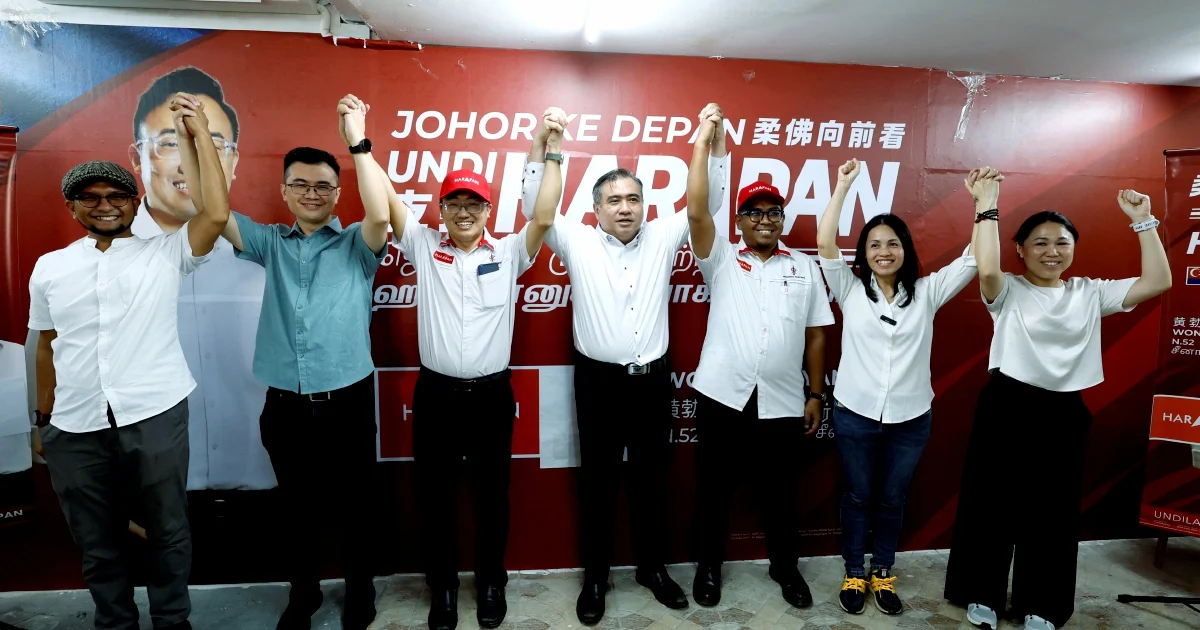
Pakatan Harapan is keeping its cards close to the chest regarding who will lead Johor if the coalition succeeds in the upcoming state election, with party officials indicating that the crucial decision will be postponed until after votes are counted. The question of which candidate should occupy the coveted position of Menteri Besar will rest entirely with the senior leadership of the three-party coalition, rather than being announced during the campaign.
This measured approach reflects a calculated political strategy. By declining to name a candidate prematurely, Pakatan Harapan avoids potential complications that could undermine its electoral chances. Naming a frontrunner too early opens the door to targeted attacks from opposition parties and allows rival coalitions to focus their messaging on a single personality rather than broader policy platforms. In Johor's deeply competitive political environment, where incumbents have traditionally maintained strongholds, every tactical advantage matters.
The deferral also allows flexibility within the coalition itself. Pakatan Harapan comprises three distinct parties—the Democratic Action Party, Amanah, and PKR—each with its own power brokers and regional interests. Rather than settling leadership questions during campaign season when tensions run high, postponing the announcement gives coalition leaders breathing room to negotiate positions and build consensus after the election outcome becomes clear. This approach has become standard practice in Malaysian coalition politics, where post-election horse-trading often determines ministerial appointments.
For Johor specifically, the stakes are exceptionally high. The state has been a Barisan Nasional stronghold for decades, making it one of Malaysia's most conservative political territories. Taking control of the state apparatus would represent a historic breakthrough for Pakatan Harapan and signal shifting voter sentiment in a traditionally opposition-resistant region. The party leadership recognizes that maintaining unity and voter focus throughout the campaign period is essential to achieving this ambitious goal.
The decision also reflects awareness that Menteri Besar selection requires broader consensus beyond the coalition's inner circle. The appointment ultimately needs the blessing of the Sultan of Johor, Malaysia's constitutional monarch for the state. Royal approval cannot be assumed or taken for granted, and the need to secure palatial endorsement after securing an electoral mandate adds another layer of complexity to the eventual decision-making process.
From a voter perspective, this pragmatic silence may frustrate those seeking clarity on who would lead Johor under a Pakatan Harapan government. Many citizens prefer knowing exactly who their future leaders will be before casting votes. However, party strategists argue that emphasizing policy platforms, anti-corruption credentials, and development promises resonates more broadly with undecided voters than focusing on individual personalities. The logic suggests that securing electoral victory takes precedence over satisfying demands for leadership transparency during the campaign phase.
Historically, this pattern has played out repeatedly in Malaysian state elections. Coalitions announcing their preferred chief minister candidates before winning elections sometimes find those candidates becoming liabilities if they generate controversy or fail to inspire voter confidence. By contrast, naming leaders after victory allows the winning coalition to present its choice as inevitable and backed by popular mandate, effectively pre-empting dissent and establishing immediate authority.
The Johor state election represents a critical test of Pakatan Harapan's broader political trajectory. Success in reclaiming Johor would cement the coalition's recovery from the 2023 general election disappointment and demonstrate that its appeal extends into traditionally hostile territory. Conversely, defeat would reinforce perceptions that the opposition coalition faces a durable structural disadvantage in certain regions. Against this backdrop, subordinating the Menteri Besar question to the overarching campaign objective makes strategic sense.
For Malaysian political observers, this announcement illustrates how coalition management functions at state level. The decision reflects calculations about voter behavior, internal party dynamics, and institutional constraints—including the constitutional role of state rulers. Rather than a sign of weakness or disorganization, the deferred announcement demonstrates sophisticated political calculation by experienced operators who understand that timing matters enormously in competitive elections.
The approach also maintains flexibility regarding which party within Pakatan Harapan supplies the chief minister. While each coalition partner naturally harbors hopes of securing the position for one of its own figures, announcing the selection beforehand could provoke resentment among partners who feel passed over. The post-election timeline allows coalition leaders to negotiate these sensitivities away from public view, reducing the risk that internal disputes undermine campaign momentum.
Ultimately, Pakatan Harapan's decision reflects a fundamental principle of electoral politics: winning comes first, everything else follows. For a coalition seeking to overturn decades of entrenched opposition control in Malaysia's second-largest state, maintaining strategic discipline and party cohesion throughout the campaign period takes absolute priority. The Menteri Besar question, however important, can wait until victory is secured.