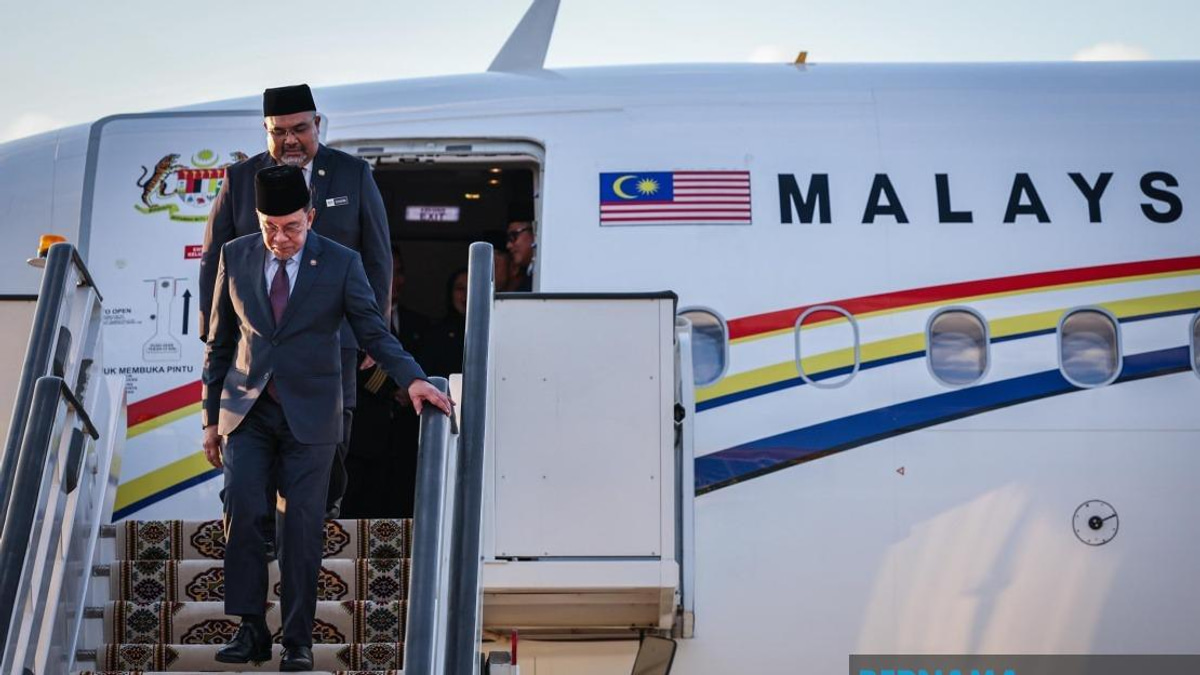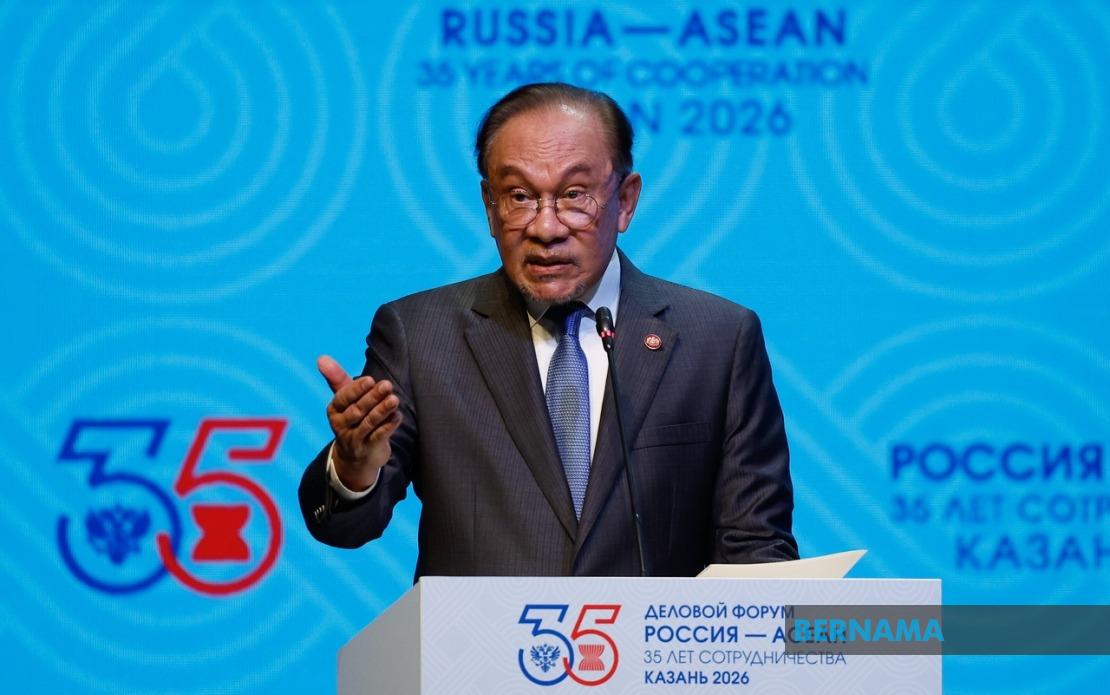
Prime Minister Datuk Seri Anwar Ibrahim has mapped an ambitious expansion of ASEAN-Russia relations, characterizing bilateral potential as dramatically underutilized compared to the bloc's established partnerships. Speaking during the ASEAN-Russia Business Forum in Kazan, Anwar positioned the relationship as standing at a crossroads, with opportunities spanning sectors from energy security and cybersecurity to agricultural development and scientific collaboration. His remarks suggest Malaysia sees Russia not as a peripheral actor in regional affairs but as a strategic partner whose role remains constrained by historical patterns and institutional underdevelopment rather than inherent limitations.
The Prime Minister's assessment carries particular weight given ASEAN's historical inclination toward balanced engagement with major powers. While the region has cultivated deep economic interdependencies with the United States, China, and India over decades, institutional frameworks with Russia have largely remained episodic and transactional. Anwar's explicit statement that "the potential is enormous" represents a deliberate recalibration, suggesting that Malaysian policymakers view the bloc's Russian engagement as commercially and strategically deficient. This positioning occurs against a backdrop of regional economic diversification efforts and the search for alternative partnerships amid great-power competition in Southeast Asia.
Anwar specifically highlighted Tatarstan's technological and scientific capabilities as a model for expanded cooperation. The Russian republic's development trajectory in advanced technology, research infrastructure, defence manufacturing, and higher education presents concrete avenues for knowledge transfer and institutional partnerships. By singling out Tatarstan's achievements, Anwar appears to be signalling that ASEAN-Russia collaboration need not remain concentrated at federal level but can develop through sub-national actors and specialized sectors. This approach mirrors successful engagement models ASEAN has employed with Chinese provinces and Indian states, allowing for deeper technical cooperation without requiring comprehensive diplomatic frameworks.
The conversation with international media revealed Anwar's pragmatic view that sectoral cooperation must extend well beyond conventional commercial domains. He identified energy security as a critical area, reflecting legitimate Southeast Asian concerns about supply chain vulnerabilities and the region's continued petroleum import dependency. Cybersecurity cooperation gained emphasis amid growing digital threats to regional infrastructure, while agricultural collaboration addresses food security pressures facing many ASEAN members. The inclusion of digital technology and higher education research reflects recognition that competitive advantage increasingly flows from innovation ecosystems rather than traditional commodity exports.
Yet Anwar's intervention carried a distinctly humanistic dimension that distinguishes his approach from purely transactional statecraft. His recent meeting with Russian President Vladimir Putin reportedly focused heavily on economic cooperation and energy frameworks, but the Prime Minister later emphasised that genuine strategic partnerships require cultural foundations. His appreciation of Russian literature—particularly the works of Leo Tolstoy, Anton Chekhov, and Boris Pasternak—was not incidental commentary but rather a considered argument about the role of cultural understanding in international relations. By highlighting that many Russian literary classics exist in Malay translation, Anwar suggested organic pathways for deepening mutual comprehension between societies.
The lighter moment regarding Russian songs on his Instagram account, including "Matushka," "Zemlya," and "Kalinka Malinka," reflected Anwar's conviction that cultural exchange operates alongside diplomatic channels. His comment that his children memorise Russian songs while he appreciates the music itself illustrated how cultural products penetrate households and shape affective relationships between peoples. This emphasis on cultural vectors of influence runs counter to the purely strategic calculus that often dominates discussion of great-power relations, yet possesses considerable validity for sustained partnership. Cultural familiarity creates constituencies for engagement and diminishes the prospect that diplomatic setbacks breed lasting alienation.
Anwar's opening remarks at the forum, delivered through recitation of verse by Tatar poet Abdullah Tukay, demonstrated deliberate cultural sensitivity to host context. The choice to quote a regional Tatar literary figure rather than invoking generic Russian cultural references suggested genuine engagement with Tatarstan's distinct identity and intellectual traditions. Such performative gestures matter considerably in multilateral diplomacy, signalling respect for local particularities and awareness of regional histories. For Malaysian audiences, Anwar's demonstrated knowledge of Russian cultural figures and his investment in literary exchange positioned Malaysia as intellectually serious about partnership rather than merely seeking transactional advantages.
The discussion's pivot toward international affairs reflected the reality that bilateral economic discussions cannot be entirely insulated from geopolitical context. Anwar's reported communications with Iranian President Masoud Pezeshkian, Pakistani Prime Minister Shehbaz Sharif, Egyptian President Abdel Fattah El-Sisi, and Turkish President Recep Tayyip Erdogan illustrated Malaysia's role as a voice advocating de-escalation amid regional tensions. His engagement with the Iran-United States situation positions ASEAN's leading voice as an active diplomatic intermediary rather than a passive observer of great-power manoeuvring. This approach aligns with Malaysia's traditional emphasis on bridge-building between Islamic-majority nations and Western powers.
Anwar's forceful comments regarding the Gaza humanitarian crisis articulated frustration with what he characterised as inconsistent application of international human rights principles. His assertion that the international community cannot simultaneously profess democratic values while tolerating systematic violence against civilians reflects moral seriousness often absent from diplomatic discourse. By connecting economic and technological partnership with Russia to broader humanitarian concerns, Anwar suggested that strategic partnerships must incorporate ethical dimensions. This stance resonates with Malaysian constituencies sensitive to Palestinian issues and concerned about perceived double standards in international advocacy.
The Prime Minister's emphasis that culture and poetry prove as consequential as technology and commerce represents a sophisticated counter-argument to purely technocratic understandings of statecraft. His assertion that cultural exchange fosters "better affection and understanding of people and human beings" articulates a view that sustainable relationships between nations rest upon more than institutional agreements or commercial contracts. For Malaysian policymakers and observers, Anwar's intellectual engagement with Russian letters and his articulation of cultural diplomacy's importance provide framework for understanding how smaller powers maintain relevance and agency within great-power competition. By investing genuine attention in Russian intellectual and artistic traditions, Malaysia signals that engagement with Russia derives from substantive interest rather than strategic convenience alone.
The broader implications of Anwar's Kazan intervention extend beyond bilateral Malaysia-Russia relations toward the positioning of ASEAN itself within evolving regional hierarchies. His characterisation of untapped cooperation potential implicitly challenges the notion that Russian capacity to engage Southeast Asia has been permanently diminished by sanctions, geographic distance, or Western strategic pressure. The assertion that cultural, educational, and technological partnerships remain available suggests ASEAN need not accept Western frameworks prescribing which partnerships are legitimate or strategically appropriate. Yet the emphasis on energy security and cybersecurity cooperation also reflects genuine Southeast Asian vulnerabilities and the reasonable desire to diversify supplier and partner relationships.
Moving forward, the question remains whether the vision articulated in Kazan translates into sustained institutional development or remains confined to diplomatic rhetoric. The ASEAN-Russia Business Forum itself represents nascent infrastructure for commercial engagement, yet successful partnership typically requires dedicated resource commitment, regulatory harmonization, and sustained high-level attention. Malaysian advocacy for deeper ties will prove more persuasive if accompanied by concrete Malaysian initiatives in specific sectors—whether technology partnerships with Russian research institutions, energy security arrangements, or educational exchange programmes. The cultural diplomacy Anwar emphasized provides necessary foundation but insufficient condition for transforming bilateral potential into measurable cooperation.
For regional observers, Anwar's performance in Kazan reflects Malaysia's continuing effort to maintain strategic autonomy amid competing pressures toward alignment with either Western or Chinese-led frameworks. By championing ASEAN-Russia engagement, Malaysia positions itself as architect of genuine non-alignment rather than reluctant participant in predetermined partnerships. The inclusion of Gaza, Iran, and humanitarian concerns within discussions of energy cooperation and technological partnership demonstrates that Malaysian strategic vision integrates moral dimensions alongside material interests. Whether this approach generates diplomatic returns or provokes counterbalancing responses from other powers remains to be determined, yet it articulates clearly the intellectual and ethical commitments underlying Malaysia's multilateral engagement.